Key takeaways
- Tooth count: Blades with more teeth generally produce smoother crosscuts, while lower tooth counts remove material faster and suit rough cuts, ripping, or framing.
- Blade diameter: Match the blade diameter to your saw’s specification. A 10-inch blade belongs on a 10-inch saw, and a 12-inch blade belongs on a 12-inch saw unless the manufacturer explicitly states otherwise.
- Tooth geometry: Alternate-top-bevel, or ATB, teeth are well suited to clean cuts across wood grain. Specialized grinds can improve longevity, speed, or resistance to chipping.
- Kerf: Thin-kerf blades remove less material, which can reduce waste and make cutting easier for some saws. Confirm that the blade remains stable and properly supported on your model.
- Arbor and material: Check the arbor size before ordering, then look for carbide-tipped teeth if you want dependable sharpness and a longer working life across repeated projects.
What's inside
Choosing a miter saw blade is less about finding the highest tooth count and more about matching the blade to the finish, material, and saw in your workshop. A blade that leaves crisp edges on picture-frame trim may be too slow for dimensional lumber, while an aggressive framing blade can leave tear-out across an otherwise polished furniture project.
This guide compares five standout options for 2026, from ultra-fine finishing blades to versatile multi-pack sets. The focus is on tooth count, carbide construction, kerf, compatibility, and the kind of cut each blade is best equipped to deliver, so you can choose with confidence rather than shop by packaging alone.
As an Amazon Associate we earn from qualifying purchases.


How to Choose a/an Blades For Miter Saw (2026)
- Tooth count: Blades with more teeth generally produce smoother crosscuts, while lower tooth counts remove material faster and suit rough cuts, ripping, or framing.
- Blade diameter: Match the blade diameter to your saw’s specification. A 10-inch blade belongs on a 10-inch saw, and a 12-inch blade belongs on a 12-inch saw unless the manufacturer explicitly states otherwise.
- Tooth geometry: Alternate-top-bevel, or ATB, teeth are well suited to clean cuts across wood grain. Specialized grinds can improve longevity, speed, or resistance to chipping.
- Kerf: Thin-kerf blades remove less material, which can reduce waste and make cutting easier for some saws. Confirm that the blade remains stable and properly supported on your model.
- Arbor and material: Check the arbor size before ordering, then look for carbide-tipped teeth if you want dependable sharpness and a longer working life across repeated projects.
The Best Blades For Miter Saw (2026)s Reviewed
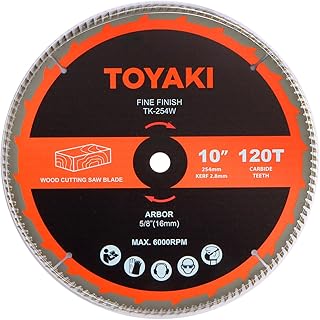
10-Inch 120-Tooth Fine-Finish Blade
This 10-inch, 120-tooth blade is aimed squarely at detail work where a clean edge matters more than cutting speed. Its fine tooth profile makes it a compelling choice for trim, cabinetry components, moldings, and furniture parts that will be visible after assembly. The 5/8-inch arbor suits many common 10-inch miter and table saws, but compatibility should still be verified before purchase.
WEN BL1080 80-Tooth Ultra-Fine Finish Blade
The WEN BL1080 offers a practical balance between finish quality and everyday usability. Its 80 carbide-tipped teeth are well suited to crosscutting hardwoods, softwoods, and sheet goods when you want cleaner results than a general-purpose blade can provide. It is a sensible pick for a home workshop that regularly moves between shelves, trim, and small furniture builds.
DEWALT DWA112100 12-Inch 100-Tooth Blade
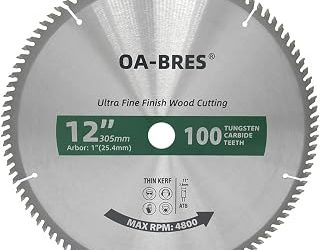
For owners of a 12-inch miter saw, the DEWALT DWA112100 brings a high tooth count and an ultra-sharp carbide design to precision crosscutting. It is particularly appealing for finish carpentry and furniture work where reduced splintering and a polished cut line are priorities. This is a focused finishing blade rather than the best choice for fast rough construction cuts.
Freud LU91R012 12-Inch 72-Tooth Thin-Kerf Blade
Freud’s LU91R012 stands out for its thin-kerf construction and Premium TiCo high-density carbide blend. The 72-tooth ATB configuration is designed to deliver smooth crosscuts while removing less material, making it attractive for sliding compound miter saws and projects where efficiency and clean edges need to coexist. It is a strong premium option for frequent users who value refined performance.
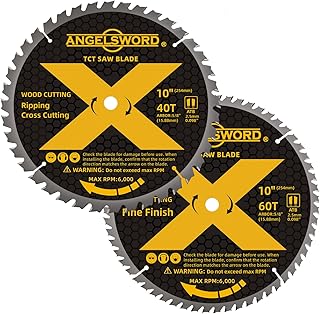
10-Inch Three-Pack: 32T, 60T, and 80T
This three-pack is built around versatility: a 32-tooth blade for faster framing-style work, a 60-tooth option for general fine cutting, and an 80-tooth blade for ultra-fine results. It gives a home workshop an easy way to change the saw’s character from efficient stock preparation to furniture-ready finishing. The set is most useful for buyers who would rather cover several applications than commit to one specialized blade.
Frequently Asked Questions
What tooth count is best for a miter saw?
For clean wood crosscuts, 60 to 100 teeth is a useful range on many saws. Choose fewer teeth for speed and rough work, and more teeth when cutting trim, hardwoods, veneers, or visible furniture components.
Can a table saw blade be used on a miter saw?
Often, yes, provided the diameter, arbor size, maximum RPM, and intended material are compatible with the miter saw. Always follow the saw and blade manufacturer’s specifications, and avoid using a blade that is not rated for the tool’s speed or application.
Are more teeth always better?
No. Higher tooth counts can improve finish quality but usually cut more slowly and may clear sawdust less aggressively. The right choice depends on whether you are crosscutting, ripping, framing, or making a presentation-grade finish cut.
How often should a miter saw blade be replaced?
Replace or sharpen a blade when cuts become noticeably rough, the saw requires unusual pressure, burning appears, or the blade begins wandering. Carbide-tipped blades can often be professionally sharpened, while damaged or heavily worn teeth call for replacement.
Final Thoughts
For ultra-clean detail work, the 10-Inch 120-Tooth Fine-Finish Blade is a compelling choice, while the WEN BL1080 is a practical all-around finishing option for many home workshops. Owners of 12-inch saws should consider the DEWALT DWA112100 for crisp precision cuts or the Freud LU91R012 for premium thin-kerf performance; the three-pack is the most flexible route for mixed project demands.