Key takeaways
- Inside diameter: Choose 1.5–1.75 inches for the broadest napkin compatibility.
- Interior finish: Run a fingertip around the opening to check for burrs, sharp seams, or exposed adhesive.
- Base stability: Decorative figures should have a flat base or enough weight to avoid tipping.
- Construction: Welded, molded, or mechanically joined rings generally outlast pieces held together with visible glue.
- Cleaning instructions: Confirm whether the set is dishwasher-safe, hand-wash only, or unsuitable for prolonged moisture.
- Storage: Four to six rings usually fit in a small drawer divider, while oversized ceramic designs may need a dedicated box.
- Set size: Buy one ring per regular seat plus two extras if the table is used for guests.
The best decorative napkin ring set for most homes is a set of 1.5–2-inch-diameter metal or glazed ceramic rings with a smooth, sealed finish: large enough for standard cloth napkins, compact enough for everyday place settings, and durable enough for repeated cleaning.
Our top picks
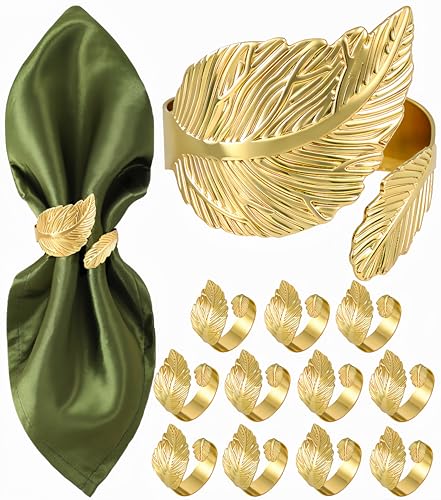


As an Amazon Associate we earn from qualifying purchases at no extra cost to you. Ratings are shown as listed on Amazon.
Best Decorative Napkin Ring Sets by Dining Situation
| Situation | Best ring type | Recommended diameter | Why it works |
|---|---|---|---|
| Everyday family meals | Stainless steel or sealed resin | 1.5–1.75 inches | Easy to wipe clean, resistant to chips, and suitable for frequent handling |
| Formal dinners | Brass, pewter-look metal, or glazed ceramic | 1.5–2 inches | Adds visual weight and coordinates with polished flatware and glassware |
| Small apartment table | Low-profile metal or slim wood | 1.25–1.5 inches | Provides decoration without crowding a 30–36-inch-wide table |
| Children, pets, or outdoor use | Silicone, acrylic, or powder-coated metal | 1.5–1.75 inches | Lightweight, less fragile, and practical around spills |
| Seasonal tablescapes | Interchangeable themed sets | 1.5–2 inches | Works with holiday, coastal, rustic, or botanical napkins |
How Ring Diameter Affects Fit
Diameter is more important than appearance when choosing napkin rings. A ring with a 1.25-inch inside diameter creates a tailored fold and suits thin cotton or linen napkins. It may feel tight around thick dinner napkins, heavily embroidered fabric, or napkins folded into a fuller shape.
A 1.5–1.75-inch opening is the most versatile range. It accommodates a standard 18-by-18-inch cotton or linen napkin folded into a rectangle, as well as casual fabric blends. A 2-inch opening works well for loose folds, bulky woven napkins, and decorative styling, but a thin napkin may slide down or look undersized inside it.
Measure the inside opening rather than the outside diameter. A wide decorative band can make the outside measurement look substantial while leaving less clearance for fabric. Also check the ring’s interior edges: a smooth, rounded opening protects linen from snags, while a sharp seam or rough cast edge can pull threads over time.
A practical fit test
For a neat everyday fold, gather the napkin into a band approximately 2–3 inches wide and slide it through the ring. The napkin should move with moderate resistance but should not require pulling. For a formal fan or rosette fold, choose at least 1.75 inches, provided the ring has enough weight to remain upright.
Material Comparison: Appearance Versus Long-Term Use
| Material | Strengths | Trade-offs | Cleaning and finish notes |
|---|---|---|---|
| Stainless steel | Strong, stable, rust-resistant, highly versatile | Can show fingerprints and water spots | Wipe with mild soap and dry promptly; avoid abrasive powders |
| Brass or brass-finish metal | Warm color and formal character | Uncoated brass can darken or develop patina | Use a soft cloth; lacquered finishes need gentle cleaning only |
| Powder-coated metal | Many colors, good resistance to everyday scuffs | Edges may chip if dropped on hard flooring | Clean with a damp cloth; do not soak or scrape damaged coating |
| Glazed ceramic | Rich color, handmade appearance, substantial feel | Can chip or break; usually heavier than metal | Wipe clean unless the maker specifically permits dishwasher use |
| Wood | Warm, lightweight, and well suited to rustic or Scandinavian tables | Absorbs moisture and can stain if poorly sealed | Never leave submerged; dry immediately and occasionally refresh the seal |
| Resin, acrylic, or silicone | Lightweight, colorful, and generally safer around children | May scratch, fade, or appear less formal | Use mild soap; avoid high heat unless labeled dishwasher-safe |
Finish Durability and Cleanability
For the longest-lasting finish, look for solid stainless steel, PVD-coated metal, or well-applied powder coating. PVD finishes bond color to the surface more securely than a thin decorative plating, making them a useful choice for gold, black, or bronze rings used several times a week. They can still scratch, so store them in a divided drawer or soft container rather than allowing them to rub against cutlery.
Plated finishes offer attractive color at a lower general market price, usually about $15–$35 for a set of four to six, but wear tends to appear first on the inner rim and contact points. A set with a clear protective lacquer may resist tarnishing, though harsh cleaners and repeated soaking can cloud or weaken the coating.
Dishwasher compatibility is helpful but not universal. Metal rings without glued decorations are usually the easiest to maintain, while wood, natural stone, woven fibers, and ceramic designs with metallic accents are safer when hand-washed. Avoid bleach, steel wool, and abrasive sponges. For rings used with oily or sauced meals, a smooth interior is more hygienic than a heavily textured one because fewer food particles remain in crevices.
Head-to-Head: Metal, Ceramic, Wood, or Fabric
Metal rings
Metal is the strongest all-purpose choice. It gives a napkin enough weight to stay in place, occupies little room, and moves easily between casual and formal tables. Silver, pewter, and matte black suit contemporary settings; antique brass and bronze complement traditional or earthy palettes. Choose rounded edges and a welded or seamless construction when durability matters.
Ceramic and stone-look rings
Ceramic creates more visual presence than a thin metal band and works especially well with plain linen napkins. It is a good choice for a dining room centerpiece, but less practical where rings are frequently dropped or stored in a crowded drawer. Check the underside for felt or another smooth surface that will not scratch a wood or glass tabletop.
Wood and natural materials
Wood, rattan, seagrass, and bamboo bring texture to farmhouse, coastal, and organic modern settings. They are usually light and affordable, often $12–$30 for a set of four to six. Their weakness is moisture: food residue and damp storage can cause staining, swelling, mildew, or loose fibers. Select sealed wood for regular use and reserve untreated woven rings for dry, occasional entertaining.
Fabric and soft rings
Fabric-covered rings are comfortable against napkins and can create a coordinated seasonal look, but they collect crumbs and may require spot cleaning. They are best for decorative use rather than daily family dining. If choosing them, prefer removable covers or tightly woven upholstery fabric over loosely knitted material.
Style Versatility: Choosing Rings That Earn Their Storage Space
The most versatile set has a restrained shape rather than a highly literal motif. A smooth oval, rounded rectangle, twisted band, or simple botanical outline can work with multiple napkin colors and table linens. Metallic rings coordinate with white, gray, navy, sage, and natural flax napkins. Wood suits terracotta, cream, olive, and checked cotton. Bright resin is more expressive and works best when its color repeats in dishes, flowers, or glassware.
For a table measuring about 36 inches wide, leave roughly 4 inches of space between the place setting and the table edge. A 1.5-inch ring adds negligible crowding, while a bulky 3-inch sculptural ring may compete with plates, serving bowls, and glassware. On a 30-inch-wide apartment table, slim rings are preferable, particularly if each place setting already includes a charger or large dinner plate.
What to Check Before Buying
- Inside diameter: Choose 1.5–1.75 inches for the broadest napkin compatibility.
- Interior finish: Run a fingertip around the opening to check for burrs, sharp seams, or exposed adhesive.
- Base stability: Decorative figures should have a flat base or enough weight to avoid tipping.
- Construction: Welded, molded, or mechanically joined rings generally outlast pieces held together with visible glue.
- Cleaning instructions: Confirm whether the set is dishwasher-safe, hand-wash only, or unsuitable for prolonged moisture.
- Storage: Four to six rings usually fit in a small drawer divider, while oversized ceramic designs may need a dedicated box.
- Set size: Buy one ring per regular seat plus two extras if the table is used for guests.
Bottom Line
Choose a 1.5–1.75-inch stainless steel, PVD-coated, or smooth powder-coated set if you want the best balance of durability, cleanability, and styling flexibility in 2026. Select ceramic for a more substantial formal look, sealed wood for warmth, and resin or silicone for homes where spills, children, pets, or outdoor meals are part of normal use. The right best decorative napkin ring set is not necessarily the most elaborate one; it is the set whose opening fits your napkins, whose finish survives your cleaning routine, and whose scale leaves enough room for the rest of the place setting.