Key takeaways
- Slide or fixed: A non-sliding 10 or 12-inch saw handles baseboard, frame stock, and most furniture parts. A sliding head earns its cost the moment you start crosscutting wide shelves, stair treads, or 12-inch panels in a single pass.
- Single vs. double bevel: Single bevel means flipping the workpiece for opposing angles. Double bevel tilts both directions, which cuts errors and time on crown, coved plinths, and anything with mirrored miters. If your projects lean architectural, pay for the second bevel.
- Cut line visibility: Shadow-line LEDs project the blade’s actual position onto the wood, and unlike lasers they never need calibration. For dark walnut or pre-finished stock where a test cut is expensive, this is the single most useful feature on a modern saw.
- Fence height and detents: Look for a tall fence that supports crown nested vertically and positive stops you can override for those in-between angles old houses insist on. A detent that clicks firmly is a detent you can trust twice.
- Weight and dust control: A 33-pound saw travels between rooms; a 56-pound slider mostly stays put. Neither collects dust well with the bag alone, so plan on a shop vac port if you work anywhere near finished floors.
What's inside
Anyone who has built a floating shelf, a plinth base, or a run of picture-frame paneling knows the moment of truth: the corner. A joint that sits half a degree open reads as sloppy from across the room, no matter how good the oak was. That gap is rarely a skill problem. It is usually a saw that flexes, a detent that drifts, or a blade path you cannot actually see until the cut is already made.
This guide looks at compound miter saws through the lens of finished work rather than raw specs. We covered what actually matters for furniture, trim, and casework in a home shop, then narrowed the field to five machines that hold an angle, cut cleanly through hardwood, and fit in a garage bay without taking it over. Capacity, bevel range, sightlines, and portability all get weighed here.
As an Amazon Associate we earn from qualifying purchases.



How to Choose a Compound Miter Saw (2026)
- Slide or fixed: A non-sliding 10 or 12-inch saw handles baseboard, frame stock, and most furniture parts. A sliding head earns its cost the moment you start crosscutting wide shelves, stair treads, or 12-inch panels in a single pass.
- Single vs. double bevel: Single bevel means flipping the workpiece for opposing angles. Double bevel tilts both directions, which cuts errors and time on crown, coved plinths, and anything with mirrored miters. If your projects lean architectural, pay for the second bevel.
- Cut line visibility: Shadow-line LEDs project the blade’s actual position onto the wood, and unlike lasers they never need calibration. For dark walnut or pre-finished stock where a test cut is expensive, this is the single most useful feature on a modern saw.
- Fence height and detents: Look for a tall fence that supports crown nested vertically and positive stops you can override for those in-between angles old houses insist on. A detent that clicks firmly is a detent you can trust twice.
- Weight and dust control: A 33-pound saw travels between rooms; a 56-pound slider mostly stays put. Neither collects dust well with the bag alone, so plan on a shop vac port if you work anywhere near finished floors.
The Best Compound Miter Saws Reviewed (2026)
DEWALT DWS780 12-Inch Double Bevel Sliding
The XPS shadow light is the reason this saw stays on so many benches, casting a crisp blade-width line that makes cutting to a pencil mark genuinely repeatable. Combined with double bevel and a 12-inch sliding head, it handles wide shelving and mitered casework with the kind of accuracy that makes glue-ups uneventful.
DEWALT DWS779 12-Inch Double Bevel Sliding
Mechanically close to the 780 but without the shadow light, the DWS779 delivers the same crosscut capacity and 3,800 RPM motor for noticeably less. If you already work with a stop block and trust your fence, this is the value pick in the sliding category.
DEWALT DWS715 12-Inch Single Bevel
A 12-inch blade on a fixed head gives you real crown and wide-baseboard capacity without the footprint or price of a slider. The tall sliding fence supports nested crown up to 6.5 inches, which covers most residential trim you will meet.
DEWALT DWS713 10-Inch Single Bevel
The most sensible first saw for furniture makers: light enough to carry up stairs, accurate out of the box, and perfectly matched to frame stock, table aprons, and standard baseboard. You give up capacity on wide panels, but gain a machine that stores easily and starts cleanly for years.
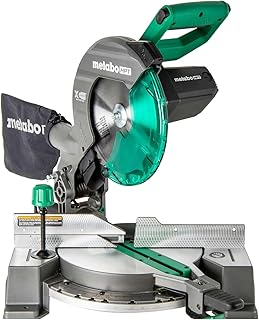
Metabo HPT C10FCG2 10-Inch Single Bevel
At roughly 24 pounds with an Xact Cut shadow line, this is the lightest credible saw here and the easiest to move between a garage and a job site. The trade-off is a lighter build overall, so it rewards patient feed rates in dense hardwood.
Frequently Asked Questions
Do I need a 12-inch saw for furniture work?
Not usually. Most furniture parts fall well within a 10-inch saw’s capacity. Step up to 12 inches when you regularly cut wide boards, thick stock, or tall crown standing against the fence.
Is a sliding saw worth the extra cost?
If you build shelving, benches, or anything with panels wider than about 8 inches, yes. For frames, legs, and trim, a fixed head is stiffer, cheaper, and takes less bench depth.
How much does the stock blade matter?
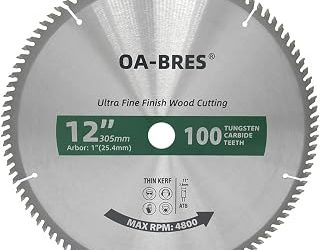
Considerably. Factory blades are general-purpose; swapping to an 80-tooth fine-finish blade transforms cut quality in veneered ply and hardwood, often more than upgrading the saw itself would.
Can these saws cut aluminum or plastic?
With the right blade and a slow, steady feed, non-ferrous aluminum trim and PVC cut fine. Use a blade rated for the material, clamp the work, and never freehand it.
Final Thoughts
For a shop where the work keeps getting more ambitious, the DEWALT DWS780 remains the most complete choice, with the shadow light and double bevel doing real work on mitered casework. The DWS779 gets you most of the way there for less, and the DWS713 stays the smartest entry point for anyone building furniture rather than framing houses.