Key takeaways
- Stain type: Organic growth and traffic film respond well to peroxide-based cleaners; petroleum stains need a degreasing surfactant built to lift oil out of porous concrete rather than spread it around.
- Dilution economics: Read the finished-gallon yield, not the bottle size. A pint that makes 40 gallons of working solution outperforms a ready-to-use gallon on cost per square foot.
- Surface compatibility: If your project runs from broom-finish concrete to brick borders to a cedar deck, choose a multi-substrate formula so you are not switching chemistry mid-afternoon.
- Landscape safety: Runoff goes somewhere. Look for biodegradable formulas or EPA Safer Choice certification when beds, turf, or a pool deck sit downhill from the work.
- Delivery method: Detergent works best paired with a rotary surface cleaner. Confirm PSI rating and 1/4″ quick-connect fit before you buy the attachment.
What's inside
Concrete is the quiet backdrop of nearly every exterior. It frames the entry, carries the eye toward the front door, and sets the visual temperature of a patio before a single chair is placed. When that surface turns gray-green with algae, freckled with tannin, or shadowed by an old oil stain, the whole composition reads as neglected — no matter how considered the furniture on top of it is. Most people reach for the pressure washer, blast away for an hour, and end up with clean stripes and a faintly striped ghost of everything they missed.
The fix is chemistry, not pressure. A detergent formulated for masonry loosens what water alone only polishes, which means fewer passes, less surface etching, and a finish that looks uniform in raking afternoon light. Below are the concentrates and surface attachments worth your money in 2026, plus a short buying framework so you can match the product to your slab rather than guessing in the aisle.
As an Amazon Associate we earn from qualifying purchases.



How to Choose a Concrete Cleaner For Pressure Washer (2026)
- Stain type: Organic growth and traffic film respond well to peroxide-based cleaners; petroleum stains need a degreasing surfactant built to lift oil out of porous concrete rather than spread it around.
- Dilution economics: Read the finished-gallon yield, not the bottle size. A pint that makes 40 gallons of working solution outperforms a ready-to-use gallon on cost per square foot.
- Surface compatibility: If your project runs from broom-finish concrete to brick borders to a cedar deck, choose a multi-substrate formula so you are not switching chemistry mid-afternoon.
- Landscape safety: Runoff goes somewhere. Look for biodegradable formulas or EPA Safer Choice certification when beds, turf, or a pool deck sit downhill from the work.
- Delivery method: Detergent works best paired with a rotary surface cleaner. Confirm PSI rating and 1/4″ quick-connect fit before you buy the attachment.
The Best Concrete Cleaner For Pressure Washer (2026)s Reviewed
KÄRCHER Concrete & Driveway Cleaner
Highly concentrated and engineered around Kärcher’s own detergent injection systems, this one stretches to roughly 40 gallons of working solution — the best value here if you have a large driveway or a run of masonry hardscape. It handles general grime and weathering on concrete, brick, and stone with a single dwell period, though it is less aggressive on set-in automotive stains.
Krud Kutter Concrete & Driveway Concentrate
This is the specialist to keep on the shelf for oil, grease, and transmission drips, and it works either through a pressure washer or scrubbed by hand on tight spots. Expect to pretreat and give it real dwell time on older stains; the payoff is a slab that no longer shows a dark halo where the car sits.
Simple Green Oxy Solve Concrete and Driveway
A peroxide-driven formula that excels at the biological side of the problem — algae, mildew, and the flat gray dullness that accumulates on north-facing concrete. It brightens without bleach, which matters if your slab is integrally colored or sits next to planted beds.
Simple Green Oxy Solve Total Outdoor Cleaner
The generalist, and the smartest single purchase if your spring reset covers concrete plus siding, fencing, and furniture. EPA Safer Choice certification and broad substrate compatibility mean you can move from patio to pergola without swapping chemistry or worrying about overspray on nearby wood.
LidoDola 14″ Pressure Washer Surface Cleaner
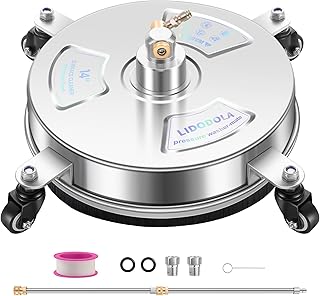
A stainless housing, four wheels, and two extension wands make this the accessory that turns detergent into an even, wand-mark-free finish across wide slabs. The rolling design keeps the nozzles at a consistent height, which is precisely what prevents the striping most DIY jobs leave behind.
Frequently Asked Questions
Do I really need a detergent, or is pressure enough?
Water displaces loose debris; detergent breaks the bond between the stain and the concrete’s pore structure. Skipping it usually means raising pressure, which is how homeowners etch a surface permanently.
Can I run these concentrates through any pressure washer?
Most electric and gas units have a detergent tank or siphon tube that draws solution at low pressure with the black soap nozzle installed. Check your manual, and never pour concentrate directly into a pump inlet.
How long should the cleaner dwell before rinsing?
Five to ten minutes for general grime, longer for oil. The rule that matters most: never let the surface dry, and work in shade or on an overcast day when you can.
Will these products harm plants or pets?
Biodegradable and Safer Choice formulas are the safer bet, but you should still pre-wet adjacent beds, keep pets inside during application, and rinse thoroughly after.
Final Thoughts
For most homes, the Simple Green Oxy Solve Total Outdoor Cleaner is the one bottle that earns its shelf space across concrete, wood, and siding, while the KÄRCHER concentrate delivers the lowest cost per gallon on large driveways. Add the LidoDola 14″ surface cleaner and you have the combination that turns a stained slab into an intentional, quietly handsome foundation for everything you place on it.