Key takeaways
- Measure the overhang, not the counter: Standard counters run 36 inches, which calls for a 24- to 26-inch seat. Leave 10 to 12 inches between the seat top and the underside of the countertop so knees clear comfortably.
- Prioritize tuck-under depth: Backless saddle stools disappear under the counter completely, freeing walkway space when not in use. If you want a back, look for one that sits below counter height so it can still slide in.
- Watch the base geometry: Four splayed legs claim more floor than a straight-legged or pedestal base. In a narrow kitchen, a compact footprint beats a dramatic stance every time.
- Match the material to the traffic: Faux leather and PU wipe clean in seconds, which matters when the stool doubles as a homework desk. Linen and woven fabrics look softer but need a stain treatment if kids are involved.
- Check weight rating and assembly: Look for 300 pounds minimum, and read the assembly notes. Pre-attached seats and pre-drilled frames turn a two-hour job into fifteen minutes.
What's inside
Small kitchens punish bad seating decisions. A stool that looks slim in a product photo can eat eight inches of walkway once it’s parked at the island, and the ones with tall backs and wide arms turn a galley into an obstacle course. The math that actually matters isn’t just seat height — it’s footprint, tuck-under clearance, and whether the silhouette reads as visual noise or quiet furniture when nobody’s sitting on it.
This guide focuses on counter stools built for tight square footage: backless saddle seats that slide fully under a 36-inch counter, low-profile backrests that stay below the countertop line, and swivel models that let you get in and out without dragging the stool sideways. Below you’ll find the standouts for 2026, plus the measurements and construction details worth checking before you commit.
As an Amazon Associate we earn from qualifying purchases.



🛒 Best Price Today on Amazon
Prime members get fast, free shipping on everything above, plus member-only deals. New members get a 30-day free trial — cancel anytime.
How to Choose a Counter Stools For Small Spaces (2026)
- Measure the overhang, not the counter: Standard counters run 36 inches, which calls for a 24- to 26-inch seat. Leave 10 to 12 inches between the seat top and the underside of the countertop so knees clear comfortably.
- Prioritize tuck-under depth: Backless saddle stools disappear under the counter completely, freeing walkway space when not in use. If you want a back, look for one that sits below counter height so it can still slide in.
- Watch the base geometry: Four splayed legs claim more floor than a straight-legged or pedestal base. In a narrow kitchen, a compact footprint beats a dramatic stance every time.
- Match the material to the traffic: Faux leather and PU wipe clean in seconds, which matters when the stool doubles as a homework desk. Linen and woven fabrics look softer but need a stain treatment if kids are involved.
- Check weight rating and assembly: Look for 300 pounds minimum, and read the assembly notes. Pre-attached seats and pre-drilled frames turn a two-hour job into fifteen minutes.
The Best Counter Stools For Small Spaces (2026)s Reviewed
Compact 24 Inch Counter Height Saddle Stools, Set of 2
These are the purest expression of small-space seating: a scooped faux leather saddle seat on slim metal legs, with nothing above the seat line to interrupt sightlines across the room. The 15-minute assembly claim holds up, and the brown upholstery reads warmer and less plasticky than most budget faux leather.
Sweetcrispy 24 Inch PU Leather Counter Stools
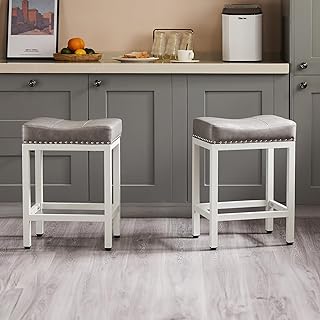
The grey PU and blackened metal base give these a slightly more urban, tailored look than the standard saddle stool, and the integrated footrest ring adds real comfort for longer sits. A smart pick for apartment kitchens where you want the stool to feel intentional rather than utilitarian.
HOOBRO 23.6 Inch Saddle Bar Stools
Industrial styling done with restraint — rustic brown engineered wood tops over a black steel frame, with cross-braced legs that keep wobble out of the equation. At 23.6 inches these sit a hair lower than the rest, so measure twice if your counter runs above 36 inches.
Ashley Skempton Counter Height Bar Stool, Set of 2
Ashley’s Skempton brings a farmhouse note to the category with a distressed wood frame and a genuinely supportive 18.5-inch foam-cushioned saddle seat, which is wider and more forgiving than the typical hard wood top. The best choice if your kitchen leans traditional and you want cushioning without upholstery upkeep.
Nalupatio Adjustable Swivel Bar Stools
Height adjustability plus a full 360-degree swivel makes this the most flexible option here, useful if you’re between counter and bar height or moving into an unknown rental. The low black faux leather back offers lumbar support while staying compact enough not to visually crowd an island.
Frequently Asked Questions
What seat height do I need for a 36-inch counter?
A 24- to 26-inch seat is correct. That leaves roughly 10 to 12 inches of knee clearance, which is the comfort standard. Bar-height stools at 29 to 30 inches are meant for 41- to 43-inch bar tops and will feel cramped at a standard counter.
Are backless stools actually better for small kitchens?
Generally, yes. They tuck fully under the counter, reduce visual bulk, and let people slide in from either side. The tradeoff is support — if anyone in the household sits for extended stretches, a low back like the Nalupatio or a barrel-style seat is the better call.
How many stools fit at my island?
Allow 26 to 30 inches of counter width per stool, measured center to center. A 60-inch island comfortably seats two; three requires narrow stools and cooperative elbows.
Do swivel stools take up more space?
The footprint is identical, but you gain usable space in practice because you don’t need to pull the stool back to get out. In narrow galleys that’s a meaningful advantage.
Final Thoughts
For the tightest kitchens, the Compact 24 Inch saddle set is the most efficient choice — it vanishes under the counter and costs little. The Sweetcrispy PU stools are the better-looking upgrade for modern apartments, and the Nalupatio swivels are worth the extra outlay if you need adjustable height or back support without sacrificing footprint.