Key takeaways
- Working pressure over headline PSI: Look for the PWMA-rated or continuous figure, not the peak. For paint, 1,300 to 1,900 PSI at the nozzle is the sweet spot, which means a 2,000 to 2,500 max-PSI unit gives you range without forcing you to stand ten feet back.
- Flow rate does the rinsing: GPM moves dirt off the panel; PSI only loosens it. Anything at or above 1.2 GPM will sheet water cleanly, and 1.7-plus makes a noticeable difference on a full-size SUV.
- Foam delivery method: Onboard soap tanks are tidier and better for quick weekend washes. Detachable foam cannons produce thicker, longer-clinging lather for proper contactless detailing. Decide which ritual you actually want.
- Reach and stability: Add the power cord to the hose length to get your true working radius, then check the base. Narrow-footprint units tip when you tug the hose, which is the single most common annoyance owners report.
- Storage geometry: Integrated hose reels, nozzle docks, and a real carry handle determine whether this lives on a shelf or sprawls across the garage floor. Vertical formats disappear far better in tight spaces.
What's inside
A car that gleams in the driveway does something quietly powerful to a home’s exterior. It finishes the picture the same way a well-chosen console table finishes an entryway. Yet most people trying to get there are still dragging a kinked garden hose across the gravel, working a sponge in circles, and watching hard water dry into a constellation of spots before they can reach the far door. The friction isn’t the washing. It’s the setup, the sprawl, and the storage problem afterward.
Electric pressure washers solve that, but the category has grown noisy. Specs get inflated, “max PSI” rarely reflects working pressure, and a machine sized for stripping a deck will lift clear coat off a bumper. This guide sorts the 2026 field with an eye on what actually matters for vehicles: controlled pressure, decent foam delivery, cable and hose length you can live with, and a footprint that tucks into a garage corner without becoming an eyesore.
As an Amazon Associate we earn from qualifying purchases.


How to Choose an Electric Car Pressure Washer (2026)
- Working pressure over headline PSI: Look for the PWMA-rated or continuous figure, not the peak. For paint, 1,300 to 1,900 PSI at the nozzle is the sweet spot, which means a 2,000 to 2,500 max-PSI unit gives you range without forcing you to stand ten feet back.
- Flow rate does the rinsing: GPM moves dirt off the panel; PSI only loosens it. Anything at or above 1.2 GPM will sheet water cleanly, and 1.7-plus makes a noticeable difference on a full-size SUV.
- Foam delivery method: Onboard soap tanks are tidier and better for quick weekend washes. Detachable foam cannons produce thicker, longer-clinging lather for proper contactless detailing. Decide which ritual you actually want.
- Reach and stability: Add the power cord to the hose length to get your true working radius, then check the base. Narrow-footprint units tip when you tug the hose, which is the single most common annoyance owners report.
- Storage geometry: Integrated hose reels, nozzle docks, and a real carry handle determine whether this lives on a shelf or sprawls across the garage floor. Vertical formats disappear far better in tight spaces.
The Best Electric Car Pressure Washers of 2026, Reviewed
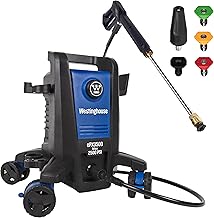
Westinghouse ePX3500
The most complete package here, pairing 2,500 max PSI and 1.76 max GPM with anti-tipping geometry that genuinely holds its ground when you pull the hose taut. The onboard soap tank and five-nozzle set cover cars, fences, and driveways without swapping accessories, and the pro-style steel wand feels a tier above the plastic assemblies common at this price.
Sun Joe SPX3000
A long-running benchmark for good reason: 2,500 max PSI with a 2,030 PSI PWMA rating means the numbers hold up under real load, and the dual detergent tanks let you keep wheel cleaner and body soap loaded at once. The horizontal chassis takes more shelf space than the Westinghouse towers, but few machines are this proven on patios and sidewalks.
Westinghouse ePX3100v
The gentler sibling, dialed back to 2,100 max PSI while keeping the same 1.76 max GPM, which is arguably the smarter ratio for paint and trim. The detachable foam cannon produces genuinely thick lather, and the built-in carry handle makes it the easiest unit here to move between the driveway and a back patio.
Hiclean 2100 PSI
A compact, well-priced entry that punches above its footprint for detailing work, arriving with a foam cannon plus turbo and fan nozzles rather than charging extra for them. The green housing reads more utilitarian than refined, though it stows small enough that aesthetics rarely come into play.
CRAFTSMAN CMEPW1700
At 1,700 PSI and 1.2 GPM, this is the low-risk pick for anyone nervous about pressure near clear coat or older trim. It is light, corded, genuinely simple to operate, and the right answer for apartment garages, though you will notice the slower pace on caked-on driveway grime.
Frequently Asked Questions
What PSI is safe for washing a car?
Stay between roughly 1,200 and 1,900 PSI at the nozzle. Use a 25-degree or 40-degree tip, keep the wand about a foot from the surface, and never point a zero-degree nozzle at bodywork or badges.
Do I need a foam cannon, or is a soap tank enough?
A soap tank is fine for maintenance washes. A foam cannon creates denser lather that dwells on the panel and lifts grit before your mitt touches it, which meaningfully reduces swirl marks over time.
Can these run off a rain barrel or bucket?
Most electric units require pressurized inlet water and will starve without it. Some models support siphoning with an accessory kit, so confirm before you plan around a tank.
Will an electric washer damage window seals or wraps?
Not at moderate pressure and a sensible angle. Avoid spraying directly into seam edges or wrap borders, and keep the fan pattern moving rather than dwelling in one spot.
Final Thoughts
For most homes, the Westinghouse ePX3500 is the machine to buy, delivering serious flow, real stability, and a tool kit that handles the whole property rather than just the car. Choose the ePX3100v if paint safety and easy portability matter more than raw power, or the Sun Joe SPX3000 if you want a proven workhorse with dual detergent tanks and pressure figures that hold up in practice.