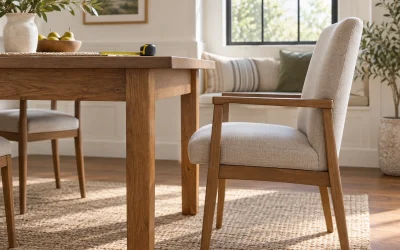
Key takeaways
- Weave density: Hold the fabric to a window. If light passes through easily, it will thin out fast under repeated seat pressure. Tight, heavy weaves resist the friction that turns dining seats fuzzy.
- Stretch behavior: A little give helps you pull fabric smoothly around a rounded seat corner without puckering. Rigid materials fight you on curves; heavily stretchy knits sag over time.
- Cleanability: Dining means food. Look for performance finishes, solution-dyed fibers, or wipeable surfaces. Vinyl and treated faux linens forgive far more than untreated natural cotton.
- Yardage math: Measure your seat, add four inches per side for wrapping, then multiply by chair count and add fifteen percent for pattern matching and mistakes. Running short mid-project is the most common regret.
- Pattern scale: Dining seats are small canvases. Large-repeat damasks and florals get visually cropped, so either center the motif deliberately or choose a subtle texture that reads as solid from across the room.
What's inside
Dining chairs live a harder life than almost any seat in the house. They absorb spilled wine, dragged-in denim, elbows, sauce splatter, and the daily scrape of being pulled in and out from a table. Yet most people shop for upholstery fabric the way they shop for a throw pillow, choosing on color alone, then wonder six months later why the seat has gone pilled, shiny, or stained beyond rescue. The truth is that the fabric decision matters more than the cushion, the foam density, or the frame finish, because it is the only part of the chair your household actually touches.
This guide looks at upholstery fabric specifically through the lens of dining seating: what holds a crisp edge over a curved seat pan, what survives a wipe-down, what plays well with a staple gun in the hands of a first-timer. Below you will find current standouts across faux linen, velvet, vinyl, and jacquard, along with the selection criteria worth applying before you commit to yardage.
As an Amazon Associate we earn from qualifying purchases.




🛒 Best Price Today on Amazon
Prime members get fast, free shipping on everything above, plus member-only deals. New members get a 30-day free trial — cancel anytime.
How to Choose a Fabric For Upholstering Dining Chairs (2026)
- Weave density: Hold the fabric to a window. If light passes through easily, it will thin out fast under repeated seat pressure. Tight, heavy weaves resist the friction that turns dining seats fuzzy.
- Stretch behavior: A little give helps you pull fabric smoothly around a rounded seat corner without puckering. Rigid materials fight you on curves; heavily stretchy knits sag over time.
- Cleanability: Dining means food. Look for performance finishes, solution-dyed fibers, or wipeable surfaces. Vinyl and treated faux linens forgive far more than untreated natural cotton.
- Yardage math: Measure your seat, add four inches per side for wrapping, then multiply by chair count and add fifteen percent for pattern matching and mistakes. Running short mid-project is the most common regret.
- Pattern scale: Dining seats are small canvases. Large-repeat damasks and florals get visually cropped, so either center the motif deliberately or choose a subtle texture that reads as solid from across the room.
The Best Fabric For Upholstering Dining Chairs (2026)s Reviewed
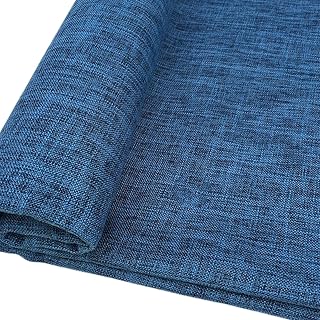
TinaKim Thick Upholstery Fabric, Faux Linen (Grey Blue)
The thickness here is the selling point: it has enough body to hide staple lines and foam irregularities, which is exactly what a beginner needs. The grey-blue tone is muted enough to sit alongside oak, walnut, or painted frames without clashing, and the two-yard cut handles roughly two to three standard drop-in seats.
Faux Linen Needlework Fabric, 3.3 Yards x 57 Inch (Grey Blue)
A generous cut that solves the most frequent upholstery headache, which is running out of material halfway through a matching set of four. The slightly textured hand reads as genuine linen from conversational distance while resisting the deep creasing that real linen develops on a seat surface.
TinaKim Upholstery Fabric, Linen Type (Navy Blue)
Navy is the quietly practical choice for dining seating because it disguises the inevitable coffee ring far better than any pale neutral. The single-yard cut makes this a sensible test purchase: reupholster one chair, live with it for a week, then buy the rest with confidence.
TinaKim Velvet Upholstery Cloth (Light Green, 6 Yards)
Velvet on dining chairs is a designer move that pays off visually, adding depth and a light-catching quality that flat weaves cannot match. The six-yard length covers a full set of six, and the soft green leans contemporary rather than period, though be aware velvet does require attention to nap direction so every chair reflects light the same way.
Faux Leather Vinyl Upholstery Fabric (Cocoa)
For households with young children, this is the pragmatic answer: waterproof, wipeable, and thick enough at 1.3mm to feel substantial rather than plasticky. The composite backing keeps it from stretching out of shape, and the vintage texture in cocoa avoids the shiny diner-booth look that cheaper vinyls fall into.
Frequently Asked Questions
How much fabric do I need per dining chair?
Most standard drop-in seats take between half a yard and three quarters of a yard. Measure the seat width and depth, add four inches on every side for wrapping under, and buy extra if your fabric has a repeating pattern.
Is velvet actually practical for a dining room?
Modern polyester velvets hold up better than people expect, since the dense pile resists abrasion well. The caveat is liquid: velvet shows water marks, so treat it with a fabric protector before installation.
Do I need to remove the old fabric first?
Ideally yes, because layering adds bulk that prevents the seat from seating flush in the frame. If the existing layer is clean, flat, and thin, leaving it can work as extra padding on a single chair.
What weight of fabric counts as upholstery grade?
Anything designed for seating rather than apparel or drapery. As a practical test, upholstery fabric should feel stiff enough to stand up on its own edge when you hold a length vertically.
Final Thoughts
For most dining rooms, the TinaKim Thick Faux Linen in Grey Blue hits the best balance of forgiveness, texture, and neutrality for a first project. Families who prioritize cleanup should go straight to the Faux Leather Vinyl in Cocoa, while anyone wanting the room to feel considered rather than merely functional will get the most visual return from the TinaKim Light Green Velvet.