Key takeaways
- Weight and thickness: Look for stated weights around 11 oz or thicknesses near 1.2mm. Anything lighter reads as apparel fabric and will thin out where the sitter’s weight concentrates.
- Weave density: Hold the swatch to a window. A tight, opaque weave resists pilling and keeps staples from tearing through at the corners; open weaves snag on belt buckles and chair rails.
- Yardage math: Budget roughly half a yard per standard drop-in seat, three-quarters for a fully upholstered seat and back. A 57-inch width usually yields two seats side by side, so a 2-yard cut covers four chairs with margin for error.
- Fiber blend: Polyester and poly-linen blends shrug off spills and sunlight better than pure natural fibers. Reserve heavy pure linen for lower-traffic rooms or chairs you’re happy to see soften with age.
- Pattern scale: Small repeats and solids forgive imprecise centering. Damasks and jacquards look richer but demand you align the motif on every seat, which means buying extra.
What's inside
Dining chairs live a harder life than almost anything else in a home. They take the weight of a seven-course holiday meal, the scrape of a table edge, the occasional glass of red, and the daily friction of being pulled out and pushed back in. That’s why so many reupholstery projects look flawless in week one and tired by month six: the fabric was chosen for its color, not its constitution. Add to that the vague language on most fabric listings — “thick,” “heavy,” “premium” — and it’s genuinely hard to tell which bolt will survive a household.
This guide narrows the field to upholstery fabrics that hold up on a seat deck, wrap cleanly around foam, and still look considered in a modern dining room. Below you’ll find the picks worth your yardage, plus a short framework for matching weave, weight, and color to the way you actually use your table.
As an Amazon Associate we earn from qualifying purchases.



🛒 Best Price Today on Amazon
Prime members get fast, free shipping on everything above, plus member-only deals. New members get a 30-day free trial — cancel anytime.
How to Choose an Upholstery Fabric For Dining Chairs (2026)
- Weight and thickness: Look for stated weights around 11 oz or thicknesses near 1.2mm. Anything lighter reads as apparel fabric and will thin out where the sitter’s weight concentrates.
- Weave density: Hold the swatch to a window. A tight, opaque weave resists pilling and keeps staples from tearing through at the corners; open weaves snag on belt buckles and chair rails.
- Yardage math: Budget roughly half a yard per standard drop-in seat, three-quarters for a fully upholstered seat and back. A 57-inch width usually yields two seats side by side, so a 2-yard cut covers four chairs with margin for error.
- Fiber blend: Polyester and poly-linen blends shrug off spills and sunlight better than pure natural fibers. Reserve heavy pure linen for lower-traffic rooms or chairs you’re happy to see soften with age.
- Pattern scale: Small repeats and solids forgive imprecise centering. Damasks and jacquards look richer but demand you align the motif on every seat, which means buying extra.
The Best Upholstery Fabrics For Dining Chairs (2026) Reviewed
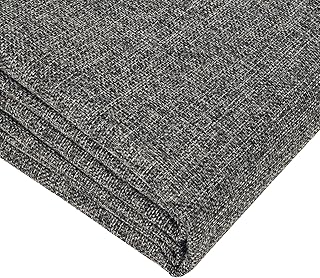
TinaKim Thick Upholstery Fabric (Grey Blue)
The 2-yard, 57×72-inch cut is the sweet spot for a set of four drop-in seats, and the faux-linen surface has enough body to pull taut without cupping at the corners. The grey-blue tone sits comfortably between warm and cool woods, which makes it a low-risk choice if your table and chairs don’t match.
LaSilk Premium Upholstery Fabric (Navy Blue)
Sold by the single yard, this thickened faux linen is the one to reach for when you’re refreshing one or two chairs rather than a whole set. The navy is deep and even, and it hides crumbs and daily marks better than any mid-tone in this lineup.
11OZ Polyester Blend Upholstery Fabric (Khaki)
An honest workhorse: the stated 11-ounce weight tells you exactly what you’re getting, and the polyester blend is the most spill-tolerant option here. Khaki is the quiet neutral that lets a sculptural chair frame or a bold table do the talking.
Heavy Linen Fabric, 1.2mm (Dark Grey)
At 1.2mm and 80×57 inches, this has the most substantial hand of the group, with a visible linen texture that photographs beautifully in natural light. Best for dining rooms that see dinners more than homework sessions, since the natural fiber will relax and patina over time.
Damask Jacquard Upholstery Fabric (Sand)
The specialist pick, and the only one with real pattern presence. The woven jacquard motif adds depth to plain wood frames, and the sand ground keeps it from reading period-heavy — order about 20% extra so you can center the repeat on every seat.
Frequently Asked Questions
How much fabric do I need per dining chair?
Plan on roughly 0.5 yards per removable seat pad and 0.75 to 1 yard for chairs with an upholstered back. Measure across the widest point of the seat, then add 4 inches on every side for wrapping and stapling underneath.
Is linen durable enough for everyday dining chairs?
Heavy linen and faux-linen blends are, provided the weave is tight and the weight is up around 11 oz. Lightweight or loosely woven linen isn’t — it will pill and thin at the front edge of the seat within a year of regular use.
Do I have to strip the old fabric first?
On removable seat pads you can often staple the new layer directly over the old one if the existing fabric is clean, dry, and flat. Strip it if the foam is compressed, there’s any odor, or a third layer would stop the pad from seating properly in the frame.
Can I wash upholstery fabric after it’s installed?
No. Spot-clean with a damp cloth and mild soap, blotting rather than rubbing. Applying a fabric protector before you staple is the single best thing you can do for a dining chair’s lifespan.
Final Thoughts
For most dining rooms, the TinaKim faux linen in grey blue is the efficient answer: enough yardage for a full set of four, in a color that plays well with mixed woods. If your chairs see heavy daily use, the 11 oz polyester blend in khaki is the more forgiving fabric, and the LaSilk navy is the smart single-yard buy when you only need to rescue a chair or two.