Key takeaways
- Measure to the sill, not the floor: Stand at the window you’d actually use and measure from the sill down to the ground below. Second-story windows typically need 13 to 15 feet; third-story windows need 23 to 25 feet. Buy a length that reaches, with a little slack to spare.
- Check the anchor, then check your sill: Most residential ladders hook over the window frame and rely on your sill for support. Confirm the hooks fit your sill depth, and be honest about whether the frame is solid wood or a shallow vinyl replacement. Casement and slider windows sometimes need a different approach entirely.
- Standoffs are not a luxury: Look for rungs or side rails that hold the ladder away from the siding. Without that gap, your toes have nowhere to go and the climb becomes a scrape down the wall. This is the single biggest comfort difference between models.
- Match it to the least capable climber: Rope-and-rung ladders demand grip strength and nerve. If a child, an older parent, or anyone with limited mobility sleeps upstairs, prioritize wide flat steps and a stabilizing center rail over compact packing size.
- Storage that doesn’t hide it: Weight ratings on quality ladders run around 1,000 pounds, so durability is rarely the issue. Accessibility is. Choose a form factor that fits inside the room it serves, in a spot anyone in the house can reach in the dark.
What's inside
Most of us curate a home with real intention. We agonize over the drape of a linen curtain, the exact warmth of a bulb, the grain direction on a walnut credenza. Then we leave the second-floor bedrooms with exactly one way out: a staircase that, in a fire, becomes a chimney. It’s the least glamorous gap in an otherwise considered house, and it’s the one that matters most.
A fire escape ladder is the rare purchase where the goal is that you never use it. That changes how you should shop. You’re not buying features; you’re buying a device that will sit untouched in a closet for a decade and then perform flawlessly on the worst night of your life. This guide covers what actually separates a dependable ladder from a novelty, how to size one to your window height, and which models are worth stowing beneath the window seat.
As an Amazon Associate we earn from qualifying purchases.


How to Choose a Fire Escape Ladder (2026)
- Measure to the sill, not the floor: Stand at the window you’d actually use and measure from the sill down to the ground below. Second-story windows typically need 13 to 15 feet; third-story windows need 23 to 25 feet. Buy a length that reaches, with a little slack to spare.
- Check the anchor, then check your sill: Most residential ladders hook over the window frame and rely on your sill for support. Confirm the hooks fit your sill depth, and be honest about whether the frame is solid wood or a shallow vinyl replacement. Casement and slider windows sometimes need a different approach entirely.
- Standoffs are not a luxury: Look for rungs or side rails that hold the ladder away from the siding. Without that gap, your toes have nowhere to go and the climb becomes a scrape down the wall. This is the single biggest comfort difference between models.
- Match it to the least capable climber: Rope-and-rung ladders demand grip strength and nerve. If a child, an older parent, or anyone with limited mobility sleeps upstairs, prioritize wide flat steps and a stabilizing center rail over compact packing size.
- Storage that doesn’t hide it: Weight ratings on quality ladders run around 1,000 pounds, so durability is rarely the issue. Accessibility is. Choose a form factor that fits inside the room it serves, in a spot anyone in the house can reach in the dark.
The Best Fire Escape Ladder (2026)s Reviewed
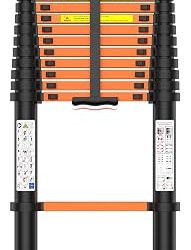
Retractable 3 Story Fire Escape Ladder, 25 Feet
Third-floor bedrooms are where most homeowners quietly give up, and this 25-foot retractable design is the straightforward answer. The retractable deployment means you’re not wrestling 25 feet of tangled rope out a window under stress, which is precisely when tangles happen.
Retractable 2 Story Fire Escape Ladder, 13 Feet
The same controlled-deployment logic in the size most houses actually need. At 13 feet it covers a standard second-story sill with a sensible margin, and the compact footprint tucks into a nightstand drawer or a bench with a lift-top lid.
Kidde 2-Story Rope Ladder, 13 Feet
Kidde has built residential fire safety equipment for generations, and that track record counts for something on a product you’ll inspect once a year at best. Anti-slip rungs, a fast hook-and-drop setup, and a name your insurance agent recognizes.
First Alert Two-Story Fire Escape Ladder, 14 Feet
Steel construction and a matte black finish give this one a heft and discretion the plastic-heavy competition lacks. The extra foot of length over the 13-foot standard is quietly useful on homes with taller first-floor ceilings.
Fire Escape Ladder, 15-Foot with Wide Steps and V Center
The wide steps and stabilizing center rail make this the pick for households with kids or anyone uneasy about heights, since it climbs more like a ladder and less like rigging. At 15 feet it also handles the awkward in-between sills that leave 13-foot models straining.
Frequently Asked Questions
How many ladders does one house need?
One per upstairs sleeping room is the standard fire-safety recommendation. A ladder in the hallway does no good if a hallway fire is what trapped you.
Should I practice with it?
Practice deploying it from the window, but skip the actual climb unless a ground-floor window is available. Everyone in the house should know where it’s stored and how the hooks seat on the sill.
Do these ladders expire?
Most are single-use by design and should be replaced after any deployment. Inspect annually for rust, frayed strapping, or cracked rungs, and store away from damp basements and hot attics.
Will it damage the window frame?
Under load, hooks can scuff or dent trim, and that’s an acceptable trade. What isn’t acceptable is discovering your sill can’t bear the weight, so verify frame construction now rather than later.
Final Thoughts
For most two-story homes, the Retractable 13-Foot ladder offers the best balance of quick deployment and discreet storage, while the Kidde 2-Story earns its place on reputation alone. If your bedrooms sit on a third floor, the Retractable 25-Foot version is the one to buy, and buy one for each room.