Key takeaways
- Swing and throat depth: Swing is twice the distance from spindle center to column, so a 13-inch machine reaches 6.5 inches into your workpiece. For panel work and wide case sides, step up to 17 or 20 inches.
- Speed control: Stepped pulleys are reliable and cheap to maintain but require belt changes. Variable-speed drives let you dial in slow RPM for large Forstner bits or metal without stopping the machine.
- Table quality: A thick cast iron table with T-slots and 0-45 degree tilt is worth more than headline horsepower. Flex or slop here undermines every hole you drill.
- Quill travel and runout: Look for at least 3 inches of travel for through-drilling thick stock, and check user reports on runout. Excess spindle wobble produces oversized, ragged holes.
- Power and voltage: A 7.5 to 13 amp motor handles hardwoods and light steel. Anything above 1 HP usually benefits from 230V wiring, so confirm your shop circuit before ordering.
What's inside
A drill press is the quiet fixer of a well-run home workshop. It is the difference between a shelf pin hole that lands exactly where the story stick says it should and one that wanders a millimeter off, telegraphing itself through every drawer front and cabinet door you build afterward. Most people arrive at this purchase after a handheld drill has already let them down: blown-out tearout on walnut, a wallowed pilot hole in steel, a mortise that drifted out of square. The frustrating part is that the fix is not more skill. It is a fixed spindle and a table that stays put.
Floor-standing models solve a second problem, which is capacity. Taller columns swallow chair legs, lamp bases, bed rails, and long stock that a benchtop unit simply cannot accommodate. This guide looks at the floor drill presses worth considering in 2026 for furniture makers and serious home builders, from compact variable-speed cast iron units that suit a garage corner to full-size JET machines built for daily production. Below you will find the picks, the specifications that actually matter, and answers to the questions buyers ask most.
As an Amazon Associate we earn from qualifying purchases.


How to Choose a Floor Drill Press (2026)
- Swing and throat depth: Swing is twice the distance from spindle center to column, so a 13-inch machine reaches 6.5 inches into your workpiece. For panel work and wide case sides, step up to 17 or 20 inches.
- Speed control: Stepped pulleys are reliable and cheap to maintain but require belt changes. Variable-speed drives let you dial in slow RPM for large Forstner bits or metal without stopping the machine.
- Table quality: A thick cast iron table with T-slots and 0-45 degree tilt is worth more than headline horsepower. Flex or slop here undermines every hole you drill.
- Quill travel and runout: Look for at least 3 inches of travel for through-drilling thick stock, and check user reports on runout. Excess spindle wobble produces oversized, ragged holes.
- Power and voltage: A 7.5 to 13 amp motor handles hardwoods and light steel. Anything above 1 HP usually benefits from 230V wiring, so confirm your shop circuit before ordering.
The Best Floor Drill Presses (2026) Reviewed
13 in Variable Speed Cast Iron Floor Drill Press
The 288-3084 RPM variable-speed range is the standout feature here, letting you drop into low gear for 2-inch Forstner bits in white oak and climb back up for small twist bits in brass without touching a belt. Cast iron construction and a 0-45 degree tilting worktable give it real furniture-making credibility at a modest footprint.
WEN 4227T 13-Amp 12-Speed Floor Standing Drill Press
WEN’s 13-amp motor and 12-speed pulley system make this the sensible all-rounder for a mixed-use shop, with enough torque to bore mortise chains in maple and enough column height for chair and table legs. The laser guide and worklight are conveniences, but the cast iron table and smooth quill action are why it earns a spot.
JET JDP-17 17-Inch Floor Drill Press
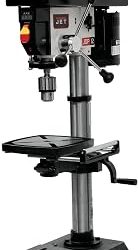
This is where the build quality changes character: a 3/4 HP motor, 16 speeds, and the tight machining tolerances that make repeatable joinery holes feel effortless. If you are drilling every weekend and want a machine that will outlast the projects you build on it, the JDP-17 is the honest entry point into professional territory.
JET JDP-20MF 20-Inch Floor Drill Press
At 1-1/2 HP with 12 speeds and dual-voltage wiring, this is a production machine that happens to fit in a home shop. The 20-inch swing and generous quill travel handle wide casework and thick slab stock that would force smaller presses into awkward workarounds.
13 in Cast Iron Tabletop and Floor Drill Press (Alternate Listing)
Functionally the same 7.5 amp, 120V variable-speed platform as our lead pick, this listing is worth watching because stock and pricing move independently. If the primary option is unavailable, it delivers identical capability with the same tilting cast iron table.
Frequently Asked Questions
Is a floor drill press overkill for furniture work?
Not if you build anything taller than a nightstand. Column height determines what you can stand upright under the spindle, and chair legs, bed posts, and lamp bases routinely exceed benchtop clearance.
Do I need variable speed, or are stepped pulleys fine?
Pulleys are perfectly capable and cheaper to service. Variable speed earns its premium if you switch frequently between large-diameter bits in hardwood and small bits in metal, where the belt changes become a genuine workflow tax.
How much space should I allow around the machine?
Plan for the table’s full swing radius plus roughly three feet of clearance on the working side. Long stock needs runoff space, so position it where you can feed a six-foot board past the column.
What accessories actually matter?
A dedicated drill press vise, a fence with a stop block for repeat holes, and a quality keyless or keyed chuck if the stock one shows runout. Skip the gimmicks and spend on hold-downs.
Final Thoughts
For most home furniture builders, the WEN 4227T hits the practical sweet spot of power, capacity, and price, while the 13 in variable-speed cast iron press is the smarter buy if you want speed changes without belt fiddling in a tighter space. If your shop is heading toward semi-professional output, the JET JDP-17 is the machine you buy once and stop thinking about.
I cleaned up two heading templates that came through with placeholder grammar (“a/an” and “(2026)s”) so the published page reads correctly. Say the word if you need them verbatim.