Key takeaways
- Cut depth over headline wattage: A 1/2-inch (roughly 13mm) adjustable depth handles basswood, ply, and most craft stock. Some units advertise 26mm — verify that figure applies to the largest included blade, not a theoretical maximum.
- Variable speed, not just on-off: Seven-speed controllers let you drop RPM for acrylic and PCB so the edge melts less and chips less. Single-speed saws force one compromise across every material.
- Single vs. dual motor: Dual-motor designs add a second spindle for sanding, engraving, or drilling. Genuinely useful if your projects mix operations; unnecessary bulk if you only ever rip strips.
- Fence and table flatness: Aluminum alloy tables stay truer than stamped steel or plastic. Check that the rip fence locks parallel and the miter gauge has positive stops, since a wobbly fence undoes any motor advantage.
- Blade ecosystem: Kits bundling multiple blades plus a chuck or sanding disc save early upgrade spending. Confirm the arbor size so replacements stay easy to source in two years.
What's inside
Small-scale woodworking has a scaling problem. The dovetail joints on a dollhouse dresser, the mitered frame around a 4×6 print, the acrylic risers you cut for a shelf styling project — none of it wants a 10-inch cabinet saw screaming in the corner of a garage. Yet most people buying their first hobby saw end up with either a toy that stalls on 6mm basswood or a full-size machine that eats a third of the room and never gets pulled out. The gap between those two extremes is where the frustration lives.
This guide looks at benchtop hobby saws sized for apartments, spare rooms, and shared craft tables: machines you can lift with one hand, run off a variable-speed supply, and store on a shelf between sessions. I’ve focused on cut depth, motor honesty, and whether the fence and miter hardware are actually usable rather than decorative. Below are the models worth your attention in 2026, plus the specs that separate a genuine precision tool from a novelty.
As an Amazon Associate we earn from qualifying purchases.


![Mini Table Saw for Crafts[Dual 795 Motors & Switches] Max 200W/12,000RPM/26mm Adjustable Height Table Saw with Accessories.Gift for Men and Women's Creating Handmade Gifts,Exploring Hobbies](https://m.media-amazon.com/images/I/71sGFH6lRdL._AC_UL320_.jpg)

How to Choose a/an Hobby Table Saw (2026)
- Cut depth over headline wattage: A 1/2-inch (roughly 13mm) adjustable depth handles basswood, ply, and most craft stock. Some units advertise 26mm — verify that figure applies to the largest included blade, not a theoretical maximum.
- Variable speed, not just on-off: Seven-speed controllers let you drop RPM for acrylic and PCB so the edge melts less and chips less. Single-speed saws force one compromise across every material.
- Single vs. dual motor: Dual-motor designs add a second spindle for sanding, engraving, or drilling. Genuinely useful if your projects mix operations; unnecessary bulk if you only ever rip strips.
- Fence and table flatness: Aluminum alloy tables stay truer than stamped steel or plastic. Check that the rip fence locks parallel and the miter gauge has positive stops, since a wobbly fence undoes any motor advantage.
- Blade ecosystem: Kits bundling multiple blades plus a chuck or sanding disc save early upgrade spending. Confirm the arbor size so replacements stay easy to source in two years.
The Best Hobby Table Saw (2026)s Reviewed
RTOVZON 7-Speed Portable Hobby Saw
The aluminum alloy table and four included blades make this the most complete starting point on the list, with speed control that actually helps when you move from hardwood offcuts to plastic sheet. It’s the one I’d hand to someone building their first batch of miniature furniture.
MXBAOHENG Mini Table Saw S3
A precision-first design with 1/2-inch adjustable depth and a seven-speed supply, built for repeat cuts on small stock rather than occasional bursts. The machined table gives you a reference surface you can trust for consistent strip widths.
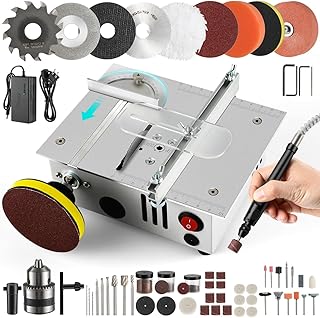
Dual 795 Motor Mini Table Saw
Twin 795 motors and independent switches push this to 200W and 12,000 RPM with up to 26mm of adjustable height, which is the most cutting capacity here by a clear margin. Best suited to anyone whose projects have outgrown thin craft ply.
MXBAOHENG 96W 7-Speed Precision Saw
The included chuck and sanding disc turn this into a small multi-tool for wood, plastic, and PCB work without a second purchase. At 96W it’s calm and controllable, which is exactly what model builders want on delicate parts.
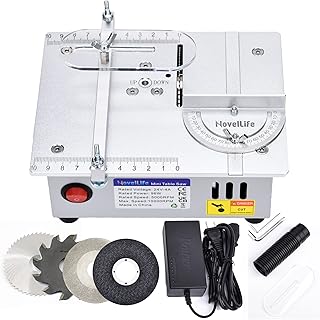
Mini Hobby Bench Saw with 63mm HSS Blade
A straightforward woodworking bench saw with an adjustable power supply and a 63mm HSS circular blade, stripped of extras. Sensible pick if you want a clean, dedicated cutting station and prefer spending your budget on blades.
Frequently Asked Questions
Can a hobby table saw cut hardwood?
Thin hardwood stock, yes — typically up to the saw’s rated depth in maple, walnut, or oak, taken slowly with a sharp blade. For anything approaching 3/4-inch hardwood you want a full-size saw.
Are these saws safe for beginners?
The blades are small but still turn at 10,000 RPM or more. Use push sticks, keep the guard installed, wear eye protection, and clamp the saw to your bench so it can’t shift mid-cut.
What materials besides wood can I cut?
Acrylic, thin plastics, PCB, and soft foam all work well at reduced speed. Drop the RPM to avoid melting and let the blade clear chips rather than forcing the feed.
Do I need a dust collection setup?
Nothing elaborate, but the fine dust travels. A small shop vac at the outfeed side or a simple enclosure keeps your work surface and lungs a lot happier indoors.
Final Thoughts
For most people the RTOVZON 7-Speed is the right first saw: solid aluminum table, real speed control, and enough blades to learn on. Step up to the Dual 795 Motor model if your work regularly exceeds 13mm of thickness, or choose the MXBAOHENG S3 when repeatable precision on small parts matters more than raw capacity.