Key takeaways
- Duty rating over raw height: Look for the ANSI Type designation, not just the pound figure. Type IA (300 lbs) and the 330 lbs ratings common on telescoping models account for you plus tools plus a paint can, so treat the number as a working budget rather than a personal weight limit.
- Storage footprint: A 14-foot telescoping ladder that collapses to roughly a yard tall lives in a closet. A 14-foot extension ladder lives in your garage forever, in the way. If you’re in a condo, townhouse, or anything without a dedicated utility wall, collapsibility is the single most valuable feature you can buy.
- Material and electrical safety: Fiberglass rails don’t conduct, which makes them the correct choice for any work near a panel, junction box, or ceiling fixture. Aluminum is lighter and cheaper, and fine for painting, cleaning, and general reach tasks where wiring isn’t in play.
- Stabilizers, feet, and stair capability: Wide stabilizer bars and adjustable legs are what let a ladder sit safely on a staircase or a sloped driveway. If you have a split-level entry or a two-story stairwell, prioritize a multi-position model with an independently adjustable base.
- Step geometry: Deep, ribbed treads change how long you can comfortably stand. Narrow round rungs bite into your arch within minutes. For repetitive indoor work like painting or hanging shelving, wide flat steps are worth more than an extra two feet of reach.
What's inside
Every home reaches a point where design ambition outpaces arm span. The pendant that needs rewiring, the gallery wall you keep re-hanging, the gutter that quietly fills with maple seeds, the closet shelf you installed too high on purpose. Most homeowners solve this once, badly, with a wobbly aluminum relic inherited from a previous owner, and then spend a decade making peace with a tool they don’t trust. That hesitation is the real problem. A ladder you dread using is a ladder that turns small maintenance into deferred maintenance.
This guide looks at ladders the way we’d look at any other piece of household equipment that has to live in a real home: how it stores, how it moves between rooms, how it behaves on a stair tread or an uneven patio, and how confident it feels underfoot at hour two. We’ve focused on telescoping and multi-position models that collapse into a coat closet, plus a couple of classic step ladders worth keeping around for the fifteen-minute jobs. Below are the picks worth your money in 2026.
As an Amazon Associate we earn from qualifying purchases.




How to Choose a Ladder For Homeowner (2026)
- Duty rating over raw height: Look for the ANSI Type designation, not just the pound figure. Type IA (300 lbs) and the 330 lbs ratings common on telescoping models account for you plus tools plus a paint can, so treat the number as a working budget rather than a personal weight limit.
- Storage footprint: A 14-foot telescoping ladder that collapses to roughly a yard tall lives in a closet. A 14-foot extension ladder lives in your garage forever, in the way. If you’re in a condo, townhouse, or anything without a dedicated utility wall, collapsibility is the single most valuable feature you can buy.
- Material and electrical safety: Fiberglass rails don’t conduct, which makes them the correct choice for any work near a panel, junction box, or ceiling fixture. Aluminum is lighter and cheaper, and fine for painting, cleaning, and general reach tasks where wiring isn’t in play.
- Stabilizers, feet, and stair capability: Wide stabilizer bars and adjustable legs are what let a ladder sit safely on a staircase or a sloped driveway. If you have a split-level entry or a two-story stairwell, prioritize a multi-position model with an independently adjustable base.
- Step geometry: Deep, ribbed treads change how long you can comfortably stand. Narrow round rungs bite into your arch within minutes. For repetitive indoor work like painting or hanging shelving, wide flat steps are worth more than an extra two feet of reach.
The Best Ladder For Homeowner (2026)s Reviewed
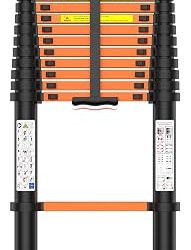
SocTone 12.5FT Telescoping Ladder with Stabilizers
This is the default recommendation for most homeowners: a straight telescoping extension that reaches single-story gutters and second-floor windows, then folds down to something you can carry one-handed. The stabilizer bar makes a genuine difference against siding, and the 330 lb rating gives you comfortable headroom with a tool belt on.
LANBITOU 14FT A-Frame Extension Ladder
The most versatile pick here, converting between a four-step A-frame and a 14-foot straight extension without tools. The anti-slip feet and independent leg adjustment make it the one we’d choose for stairwell light fixtures, which is where most household ladders fail.
Louisville Ladder 6-Foot Fiberglass Step Ladder (FS1506)
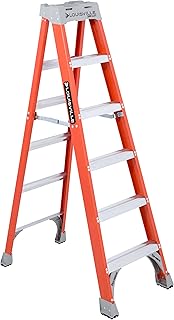
A Type IA fiberglass workhorse from a brand contractors actually use, and the right answer for any electrical work in the house. It’s heavier and bulkier than the telescoping options, but the rigidity is immediately noticeable and the 300 lb rating holds up to decades of casual use.
5-Step Folding Ladder with Anti-Slip Wide Steps
The everyday utility piece: broad flat treads, a compact fold, and just enough reach for ceiling fans, upper cabinets, and seasonal storage. If you own one taller ladder already, this is the one that actually gets used weekly.
17FT Telescoping A-Frame Ladder with Stabilizer Bar & Wheels
The maximum-reach option, with wheels that make repositioning around a driveway or deck genuinely painless. Best suited to homeowners handling roofline work, exterior painting, or tall foyer ceilings, though the added weight is real.
Frequently Asked Questions
What ladder height do I actually need?
Working height is roughly four feet above the ladder’s top usable step. For eight-foot ceilings a six-foot step ladder is plenty; for single-story gutters, plan on 12 to 14 feet of extension.
Are telescoping ladders safe for regular use?
Yes, provided each section audibly locks and you inspect the latches periodically. The failure mode to watch for is partial extension, so always confirm every rung is seated before you climb.
Fiberglass or aluminum for home use?
Choose fiberglass if you do your own electrical work. Choose aluminum if weight and storage matter more, and keep it well away from any live wiring.
Can I use a ladder on stairs?
Only a multi-position model with independently adjustable legs, set so both feet sit fully on tread surfaces. Never prop a standard A-frame across steps.
Final Thoughts
For most homes, the LANBITOU 14FT multi-position ladder covers the widest range of jobs while disappearing into a closet, and the SocTone 12.5FT telescoping model is the smarter pick if your work is mainly exterior reach. Add the Louisville FS1506 fiberglass step ladder if you handle your own wiring, and you have a setup that will outlast several renovations.