Key takeaways
- Stairwell Geometry: Measure the width of your staircase and the height of your highest ceiling before shopping. A multi-position ladder that adjusts in asymmetric configurations — one side shorter than the other — is essential for standing on two different steps simultaneously.
- Weight Rating: Look for at least a Type IA (300 lb) rating if you’re factoring in tools, paint cans, or a second person stabilizing the base. Fiberglass models like the Little Giant Dark Horse 2.0 and MightyLite handle heavier loads and won’t conduct electricity if you’re working near wiring.
- Footprint and Storage: Stairwells are narrow. A telescoping A-frame collapses to a slim profile you can slide behind a door or into a closet. If you rarely need the full extension, a compact 4-foot fiberglass stepladder takes up almost no room at all.
- Material Trade-offs: Aluminum is lighter and easier to carry upstairs, but fiberglass wins on durability and electrical safety. DeWalt’s fiberglass stepladder is a good example — heavier to haul, but noticeably more planted once it’s set up.
- Safety Features: Prioritize wide anti-slip steps, a locking spreader or hinge mechanism, and stabilizer bars on taller models. Wheels on a telescoping ladder add convenience for repositioning, but only if they lock during use.
What's inside
Stairs create an uneven, unpredictable surface that most ladders simply weren’t designed to handle. Whether you’re touching up a two-story foyer ceiling, swapping a fixture on a stairway landing, or reaching a window that overlooks your entryway, you need a ladder that locks securely on steps at different heights — without wobbling, slipping, or forcing you into an uncomfortable lean.
We spent weeks evaluating the current crop of multi-position and stepladder options specifically for stair use, weighing weight capacity, material, adjustability, and real-world stability. Below you’ll find our curated picks for 2026, along with a straightforward buying guide so you can match the right ladder to your space and your project.
As an Amazon Associate we earn from qualifying purchases.


How to Choose a Ladder For Stairs (2026)
- Stairwell Geometry: Measure the width of your staircase and the height of your highest ceiling before shopping. A multi-position ladder that adjusts in asymmetric configurations — one side shorter than the other — is essential for standing on two different steps simultaneously.
- Weight Rating: Look for at least a Type IA (300 lb) rating if you’re factoring in tools, paint cans, or a second person stabilizing the base. Fiberglass models like the Little Giant Dark Horse 2.0 and MightyLite handle heavier loads and won’t conduct electricity if you’re working near wiring.
- Footprint and Storage: Stairwells are narrow. A telescoping A-frame collapses to a slim profile you can slide behind a door or into a closet. If you rarely need the full extension, a compact 4-foot fiberglass stepladder takes up almost no room at all.
- Material Trade-offs: Aluminum is lighter and easier to carry upstairs, but fiberglass wins on durability and electrical safety. DeWalt’s fiberglass stepladder is a good example — heavier to haul, but noticeably more planted once it’s set up.
- Safety Features: Prioritize wide anti-slip steps, a locking spreader or hinge mechanism, and stabilizer bars on taller models. Wheels on a telescoping ladder add convenience for repositioning, but only if they lock during use.
The Best Ladder For Stairs (2026) Reviews
LANBITOU 14 ft Multi-Position Folding Ladder
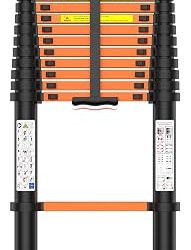
The LANBITOU 14-foot ladder earns its spot as a budget-friendly all-rounder for homeowners who need asymmetric stair configurations without a premium price tag. Its telescoping aluminum build keeps weight manageable for solo carries upstairs, and the 330-pound capacity gives you room for tools and materials without cutting it close. The anti-slip feet grip well on hardwood steps, though on stone or tile you may want to add rubber pads for extra confidence.
Telescoping A-Frame 17 ft with Stabilizer Bar
At 17 feet of reach with a built-in stabilizer bar, this telescoping A-frame solves the wobble problem that plagues taller ladders in confined stairwells. The integrated wheels make it surprisingly easy to roll between rooms on flat floors, and the locking indicators at each rung let you confirm full extension before climbing. It’s a smart choice for two-story homes where ceiling fans and high windows live directly above stairway landings.
Little Giant Velocity 18 ft
The Little Giant Velocity remains the gold standard for multi-position versatility, transitioning from an A-frame to an extension ladder to a staircase configuration with minimal fuss. The 18-foot reach covers most residential needs, and the aerospace-grade aluminum keeps the weight under 30 pounds despite the size. If you only want one ladder in the garage that does everything, this is the one.
DeWalt 4 ft Fiberglass Stepladder
Not every stair job demands a towering extension. The DeWalt 4-foot fiberglass stepladder is purpose-built for quick tasks — changing a bulb over a half-flight, accessing a high shelf on a stairway landing, or painting a ceiling section you can nearly reach from a step. The 375-pound rating is overkill in the best way, and the fiberglass construction means you can work near electrical fixtures without thinking twice.
Little Giant Dark Horse 2.0
The Dark Horse 2.0 brings fiberglass construction to the multi-position category at a weight and price point that finally competes with aluminum alternatives. The hi-viz green finish makes it instantly visible on a cluttered job site or in a dim stairwell, and the 300-pound Type IA rating covers solo work with a loaded tool belt. For homeowners who want fiberglass safety without giving up configuration flexibility, this is the sweet spot.
Frequently Asked Questions
Can I safely use a regular stepladder on stairs?
A standard A-frame stepladder with two equal-length legs will sit at a dangerous angle on stairs. You need a ladder designed for asymmetric positioning — either a dedicated multi-position ladder or a stepladder with individually adjustable legs — so both base points contact the steps securely.
What weight capacity should I look for in a stair ladder?
For most homeowner tasks, a Type IA ladder rated for 300 pounds is the minimum. Add up your body weight, the tools you’ll carry, and materials like paint or replacement parts. If you’re close to the limit, step up to a Type IAA (375 lb) model like the DeWalt DXL3410.
Is aluminum or fiberglass better for indoor stair use?
Aluminum is lighter and cheaper, which matters when you’re carrying the ladder up a flight of stairs. Fiberglass is heavier but non-conductive and more resistant to dents and wear. If you’re working near any electrical — ceiling fixtures, hallway outlets, smart home wiring — fiberglass is the safer bet.
How tall a ladder do I need for a standard two-story home?
Most two-story interiors have ceilings between 18 and 20 feet. A ladder that reaches 17 to 18 feet in extension mode, or a multi-position model configured as an A-frame, will comfortably cover those heights. The LANBITOU 14-foot or the Little Giant Velocity 18-foot are solid matches depending on your ceiling height.
Final Thoughts
For most homeowners tackling stairway projects, the Little Giant Velocity offers the best combination of reach, versatility, and build quality. If budget is a primary concern, the LANBITOU 14-foot delivers surprising capability at a fraction of the cost. And for anyone who prioritizes electrical safety and doesn’t mind a few extra pounds, the Little Giant Dark Horse 2.0 brings fiberglass durability to the multi-position category without compromise.