Key takeaways
- Independent leg adjustment: This is the non-negotiable feature for stair work. Each side of the ladder must extend separately so the two feet can land on different treads while the rails stay plumb and the rungs stay level.
- Reach vs. ceiling height: Measure from the lowest step you’ll stand on to the fixture, then subtract roughly four feet from the ladder’s stated length for realistic working reach. Most two-story stairwells need 14 to 17 feet of ladder to work comfortably.
- Duty rating and weight: Type IAA (375 lbs) gives you the stiffest, least flexy climb, which matters when a ladder is fully extended in a stairwell. The tradeoff is mass, so consider whether you can carry it up a flight of stairs alone.
- Storage footprint: Telescoping designs collapse to about three feet, which is why they win in townhouses and apartments. Traditional multi-position ladders are more rigid but need garage or basement wall space.
- Feet and stabilizers: Look for wide non-slip pads that grip hardwood and tile without marking them. If you already own a good extension ladder, a leveler such as the Ladder Extender Pro can add 13 to 19 inches of adjustment for less than the cost of a new ladder.
What's inside
The double-height stairwell is one of modern architecture’s best moves and one of its most annoying maintenance problems. That soaring void looks incredible with a sculptural pendant hanging in it, right up until a bulb dies, a cobweb appears in the corner, or the paint above the landing starts looking tired. Standard step ladders are the wrong tool here: the floor beneath you is sloped, split across treads, or simply eighteen feet below the surface you need to reach. Balancing a ladder on stairs is how weekend projects become emergency room visits.
This guide covers the ladders that actually solve stairwell geometry: adjustable extension stepladders with independently extending legs, telescoping multi-position frames that collapse into a coat closet, and the leveling hardware that turns an ordinary ladder into a safe one. Below you’ll find our current picks, a short buying framework, and answers to the questions that come up most often.
As an Amazon Associate we earn from qualifying purchases.


How to Choose a Ladder for a Stairwell (2026)
- Independent leg adjustment: This is the non-negotiable feature for stair work. Each side of the ladder must extend separately so the two feet can land on different treads while the rails stay plumb and the rungs stay level.
- Reach vs. ceiling height: Measure from the lowest step you’ll stand on to the fixture, then subtract roughly four feet from the ladder’s stated length for realistic working reach. Most two-story stairwells need 14 to 17 feet of ladder to work comfortably.
- Duty rating and weight: Type IAA (375 lbs) gives you the stiffest, least flexy climb, which matters when a ladder is fully extended in a stairwell. The tradeoff is mass, so consider whether you can carry it up a flight of stairs alone.
- Storage footprint: Telescoping designs collapse to about three feet, which is why they win in townhouses and apartments. Traditional multi-position ladders are more rigid but need garage or basement wall space.
- Feet and stabilizers: Look for wide non-slip pads that grip hardwood and tile without marking them. If you already own a good extension ladder, a leveler such as the Ladder Extender Pro can add 13 to 19 inches of adjustment for less than the cost of a new ladder.
The Best Ladders for Stairwells (2026), Reviewed
Little Giant Skyscraper 17 ft Adjustable Extension Stepladder
The specialist pick, and the one professional painters reach for in tall stairwells: it stands as a self-supporting A-frame while extending to 17 feet, so you don’t need a wall to lean against. The Type IAA rating and safety straps make full extension feel genuinely solid rather than nerve-wracking.
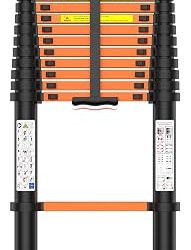
Telescoping A-Frame Ladder, 17 ft Multi-Position
Best value for serious height. The stabilizer bar widens the base for lateral stability and the wheels solve the real-world problem of moving a heavy ladder across a finished floor. At 330 lbs capacity it handles a person plus tools comfortably.
Little Giant Jumbo Step 3-Step Aluminum Stool
Not a stairwell ladder, but the piece most homes are actually missing. The extra-wide stair-like treads and rotating handrail make it stable enough to leave out for landings, sconces, and upper shelving, and it folds flat against a wall.
SocTone 12.5 ft Telescoping Ladder
The right choice for standard-height stairwells and small spaces. It collapses to roughly the size of a duffel bag, which makes it the ladder you’ll actually use instead of postponing the job.
LANBITOU 14 ft Multi-Position Folding Ladder
A flexible middle ground: four-step A-frame, extension ladder, or staggered configuration for stairs, all in one aluminum frame. Anti-slip feet and a 330 lbs rating cover most interior and exterior tasks.
Frequently Asked Questions
Can I set a regular step ladder on stairs?
No. A step ladder with fixed-length legs on uneven treads puts your weight on two points instead of four, and the rungs tilt as you climb. Use a ladder with independently adjustable legs or a leveler designed for the purpose.
How tall a ladder do I need for a two-story stairwell?
Most two-story voids run 16 to 20 feet at the tallest point. A 17 foot adjustable extension ladder covers the majority of them; measure from the tread you’ll place it on rather than from the lower floor.
Are telescoping ladders safe at full height?
Reputable models with ANSI or OSHA certification are, provided every section locks audibly and you check the locks before climbing. Extend fully, confirm each latch, and keep your hips between the rails.
Will aluminum feet scratch hardwood?
Quality ladders use rubber or plastic pads that won’t mark finished floors. On stone or polished tile, a scrap of carpet under each foot adds grip and insurance.
Final Thoughts
For tall stairwells where you need real reach and zero wobble, the Little Giant Skyscraper is the ladder that earns its price. If you’re balancing capability against closet space, the 17 ft telescoping A-frame with stabilizer bar delivers nearly the same reach in a fraction of the footprint. And the Little Giant Jumbo Step is the quiet workhorse worth adding to either one, for the everyday jobs that don’t warrant hauling out a full extension ladder.