Key takeaways
- Tooth count: For trim, more teeth means smaller bites and cleaner exit points. An 80-tooth 10-inch blade is the practical sweet spot for painted and stained millwork; 100 to 120 teeth gets you closer to a sanded finish but demands a slower, more patient feed to avoid burning.
- Grind geometry: ATB (alternate top bevel) teeth slice wood fibers and are the default choice for solid stock and veneered profiles. TCG (triple chip grind) is the one you want for aluminum extrusions, PVC, and dense composites, where a beveled tooth would grab.
- Diameter and arbor: Match the blade to the saw, not the ambition. Ten-inch saws almost always take a 5/8-inch arbor; 12-inch saws typically use a 1-inch bore. A 12-inch blade gives you more crosscut capacity for wide base and nested crown, but tip speed climbs, so tooth quality matters more.
- Plate and kerf: A thin kerf removes less material and puts less strain on smaller motors, which helps on cordless saws. Look for laser-cut expansion slots and a stiff, flat plate — a blade that flexes under load will wander and open up your miters.
- Carbide grade: Fine finish depends on edge sharpness holding through hundreds of cuts. Micro-grain carbide tips and a hook angle near zero or slightly negative keep the blade from self-feeding into delicate stock and extend the interval between sharpenings.
What's inside
Trim is where a room gets its manners. Crown, casing, base cap, shoe molding — these are the lines your eye follows without being asked to, and they are also the least forgiving surfaces in the house. A miter that closes with a hairline gap reads as craftsmanship. A miter that fuzzes at the edge, splinters the primed face, or leaves a whisper of a shadow line reads as a rush job, no matter how good the paint is. Most of the time the saw is not the culprit. The blade is.
The general-purpose 24- or 40-tooth blade that shipped with your miter saw was designed to cut framing lumber quickly, not to leave a glass-smooth end grain on a piece of poplar you plan to caulk-free butt against a wall. This guide covers the fine-finish blades worth putting on a trim saw in 2026, what tooth count and grind geometry actually do to a cut edge, and how to match a blade to the material you are running — softwood, hardwood, MDF, PVC, or aluminum trim profiles.
As an Amazon Associate we earn from qualifying purchases.



How to Choose a Miter Saw Blade For Trim (2026)
- Tooth count: For trim, more teeth means smaller bites and cleaner exit points. An 80-tooth 10-inch blade is the practical sweet spot for painted and stained millwork; 100 to 120 teeth gets you closer to a sanded finish but demands a slower, more patient feed to avoid burning.
- Grind geometry: ATB (alternate top bevel) teeth slice wood fibers and are the default choice for solid stock and veneered profiles. TCG (triple chip grind) is the one you want for aluminum extrusions, PVC, and dense composites, where a beveled tooth would grab.
- Diameter and arbor: Match the blade to the saw, not the ambition. Ten-inch saws almost always take a 5/8-inch arbor; 12-inch saws typically use a 1-inch bore. A 12-inch blade gives you more crosscut capacity for wide base and nested crown, but tip speed climbs, so tooth quality matters more.
- Plate and kerf: A thin kerf removes less material and puts less strain on smaller motors, which helps on cordless saws. Look for laser-cut expansion slots and a stiff, flat plate — a blade that flexes under load will wander and open up your miters.
- Carbide grade: Fine finish depends on edge sharpness holding through hundreds of cuts. Micro-grain carbide tips and a hook angle near zero or slightly negative keep the blade from self-feeding into delicate stock and extend the interval between sharpenings.
The Best Miter Saw Blade For Trim (2026)s Reviewed
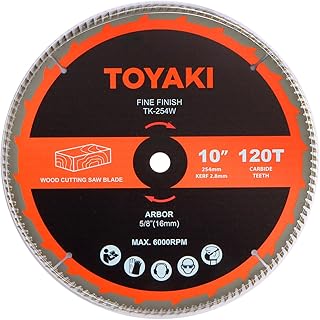
10-Inch 120-Tooth Fine-Finish Woodworking Blade
The highest tooth count in this group, and it shows on end grain — cuts come off needing little more than a scuff with 220 before finish. Feed it slowly and it excels on hardwood casing, veneered plywood edges, and anything you plan to stain rather than paint.
WEN BL1080 10-Inch 80-Tooth Carbide-Tipped
The most sensible everyday trim blade here. Eighty carbide-tipped teeth clear chips well enough to resist burning while still leaving a clean, paint-ready edge, which makes this the blade to leave mounted on a 10-inch saw for a whole-house baseboard and casing run.
10-Inch TCG 120-Tooth Aluminum-Working Blade
Triple chip grind is the right tool for non-wood trim: aluminum L-channel, PVC brick mold, cellular composite base. The flat-topped teeth shear rather than hook, so the blade tracks predictably in material that would otherwise chatter or melt.
DEWALT 12-Inch 100-Tooth Fine Finish (DWA112100)
The reliable choice for a 12-inch saw, with ultra-sharp carbide and a plate flat enough to keep long nested crown cuts closing tight. Capacity plus finish quality makes this a strong single-blade solution for a dedicated trim station.
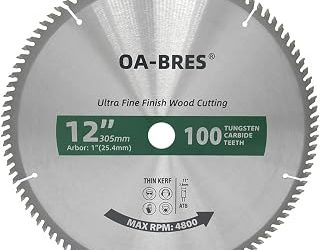
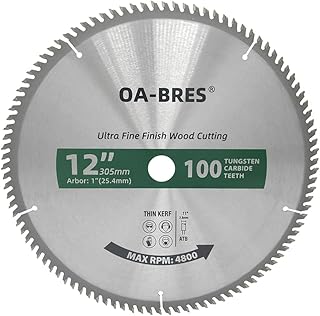
12-Inch 100-Tooth ATB TCT Ultra Fine Finish
An ATB alternative for 1-inch arbor saws that punches above its price on softwood and MDF, where the shearing bevel minimizes fuzzy edges. A solid backup blade to rotate in while your primary is out for sharpening.
Frequently Asked Questions
How many teeth do I really need for trim?
Eighty teeth on a 10-inch blade or 100 on a 12-inch will handle nearly all interior millwork. Step up to 120 only if you are cutting figured hardwood or veneer and want to skip sanding.
Will a fine-finish blade cut framing lumber?
It can, but it shouldn’t. High tooth counts clear chips poorly in thick stock, which causes burning and dulls the carbide fast. Keep a 40-tooth general-purpose blade for rough work.
Why are my miters still gapping?
Check the saw before the blade. Fence squareness, bevel calibration, and detent wear cause more open joints than tooth count. Also confirm the blade is seated flat with no debris behind the washer.
Can one blade cut wood and PVC trim?
An ATB fine-finish blade will manage PVC in a pinch, but a TCG grind cuts synthetics and aluminum far cleaner without gumming or grabbing. If you run both materials regularly, own both.
Final Thoughts
For most 10-inch saws, the WEN BL1080 80-tooth is the blade that earns its keep day to day, balancing finish quality against feed speed. If you want the cleanest possible edge on stain-grade stock, the 120-tooth fine-finish blade is worth the slower pace, and on 12-inch saws the DEWALT DWA112100 remains the dependable pick for wide base and nested crown.