Key takeaways
- Usable track length: Match the span to your typical work. Cabinet and shelf builders rarely need more than 48 inches of stop travel, while trim and stair projects benefit from a 68-inch expandable track that reaches into longer stock without repositioning the stop.
- Stop repeatability: A flip stop should return to the same position after being lifted a hundred times. Look for a positive locking cam and a wide bearing face against the track — thin stamped stops flex under a heavy board and lose accuracy quietly.
- Dual-direction scale: Left-and-right reading tape saves constant mental math when you work both sides of the blade. It also makes the system usable at a drill press or radial arm saw without recalibrating your habits.
- Mounting and profile: Confirm the T-track height clears your saw’s factory fence and that mounting holes align with your bench or stand. Extruded aluminum with a milled face stays flatter over the years than folded steel.
- Zero-clearance support: If you cut veneered plywood, hardwood trim, or anything prone to blowout, a fence that supports the fibers right at the blade line matters more than added length.
What's inside
Anyone who has built a run of floating shelves or a set of matching picture frames knows the frustration: the saw cuts beautifully, but the parts still don’t match. A pencil line drifts a sixteenth. The tape hooks differently on the tenth piece than it did on the first. By assembly time, the miters gap and the stiles sit proud, and the blame lands on the saw when the real culprit was measurement. A miter saw fence system removes that variable by turning the cut into a repeatable position rather than a fresh judgment call every time.
This guide looks at the fence and stop systems worth building a bench around in 2026, from expandable aluminum tracks that bolt onto an existing station to zero-clearance fences engineered for specific sliding saws. We compare travel length, stop repeatability, mounting flexibility, and how each system handles the small stuff — the 4-inch blocking and thin trim returns that most setups fumble.
As an Amazon Associate we earn from qualifying purchases.




How to Choose a Miter Saw Fence System (2026)
- Usable track length: Match the span to your typical work. Cabinet and shelf builders rarely need more than 48 inches of stop travel, while trim and stair projects benefit from a 68-inch expandable track that reaches into longer stock without repositioning the stop.
- Stop repeatability: A flip stop should return to the same position after being lifted a hundred times. Look for a positive locking cam and a wide bearing face against the track — thin stamped stops flex under a heavy board and lose accuracy quietly.
- Dual-direction scale: Left-and-right reading tape saves constant mental math when you work both sides of the blade. It also makes the system usable at a drill press or radial arm saw without recalibrating your habits.
- Mounting and profile: Confirm the T-track height clears your saw’s factory fence and that mounting holes align with your bench or stand. Extruded aluminum with a milled face stays flatter over the years than folded steel.
- Zero-clearance support: If you cut veneered plywood, hardwood trim, or anything prone to blowout, a fence that supports the fibers right at the blade line matters more than added length.
The Best Miter Saw Fence System (2026)s Reviewed
O’SKOOL 68-Inch Expandable Aluminum Fence System (RTS024)
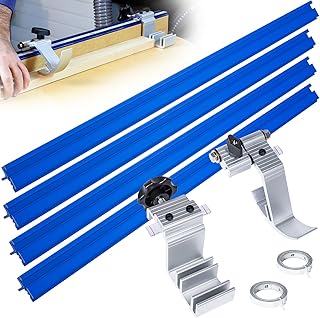
The 68-inch expandable track is the standout here, giving you real reach for baseboard and stair parts while collapsing back to a manageable footprint on a smaller bench. The adjustable flip stop locks firmly and the dual-direction tape reads cleanly from either side, which makes it the most versatile choice for a shop that shifts between furniture and trim work.
POWERTEC Miter Saw Fence with T-Track Stop Kit (71742)
A well-judged package that includes the T-track fence cap, tape measures, and stop kit, so you are not sourcing hardware after the fact. It moves easily between a miter saw, drill press, and radial arm saw, making it a smart pick if one accurate fence has to serve several stations.
Aluminum Zero Clearance Fence for DeWalt Sliding Saws
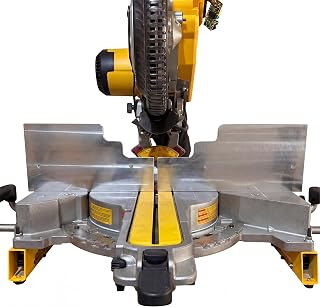
The stairstep cutout is the clever detail: it preserves full slide travel on the DWS779, DWS780, DWS782, DHS780, and DHS790 while backing the cut right up to the blade. For anyone cutting prefinished trim or veneered panels, the reduction in tearout is immediately visible on the first pass.
Kreg KMS8000 Precision Trak & Stops Kit
Kreg’s system remains the benchmark for repeatability, with stops that seat positively and a scale that holds calibration through hard use. It is the one to buy if you cut production batches and want parts that stack without sorting.
POWERTEC 71391 Precision Miter Gauge System
Technically a table saw miter gauge, but the 27 positive angle stops and 24-inch T-track fence with flip stop make it a genuine accuracy upgrade for crosscutting sheet goods and small furniture parts. The removable T-slot plate helps it fit a wider range of saws than most gauges in this class.
Frequently Asked Questions
Will a fence system work with any miter saw?
Universal track systems mount to your bench or stand rather than the saw, so they suit almost any setup. Zero-clearance fences are the exception — those are cut for specific models and should be matched exactly.
How short a piece can I cut safely with a stop?
Most systems handle down to about 4 to 6 inches comfortably. Below that, use a sacrificial block against the stop rather than placing fingers near the blade path.
Do these systems need recalibrating?
Check the scale against a known measurement every few months or after moving the bench. Recalibration usually means loosening two fasteners and sliding the tape, not rebuilding the fence.
Is a stop system worth it for occasional projects?
Yes, if your projects involve matching parts. Even one bookcase or a set of drawer fronts pays back the setup time in fit and finish.
Final Thoughts
For most shops, the O’SKOOL RTS024 offers the best balance of reach and price, while the Kreg KMS8000 is the choice when repeatability matters above all. Add the DeWalt-specific zero clearance fence if clean edges on prefinished stock are part of your work.