Key takeaways
- Slot fit and bar adjustment: The near-universal standard is a 3/4″ x 3/8″ T-slot, but tolerances vary between saws. Look for a bar with adjustable nylon or set-screw expanders so you can dial out side-to-side play. A gauge that shifts even a few thousandths in the slot will telegraph straight into your miters.
- Angle stop count and design: Detents at common angles beat freehand protractor guesswork every time. Thirteen stops covers the standard woodworking angles; twenty-seven gets you finer increments for polygon work like hexagonal trays or octagonal frames. A spring-loaded plunger that seats firmly matters more than the raw number of positions.
- Fence length versus your saw: An 18-inch fence suits jobsite and hybrid saws. Extendable fences reaching 30-plus inches earn their keep on cabinet saws where you’re crosscutting shelf stock and wide panels. On a compact saw, an oversized fence just collides with the blade guard and your bench.
- Flip stop quality: This is the feature you’ll use most. A flip stop with micro-adjust lets you sneak up on a dimension in thousandths, then produce a dozen identical parts without re-measuring. Cheap stops flex under workpiece pressure and quietly ruin batch consistency.
- Materials and mass: Extruded aluminum fences with steel bars hit the practical sweet spot for rigidity per dollar. Brass and steel builds add heft that dampens vibration and holds calibration longer, though they cost more and demand a little rust prevention in humid shops.
What's inside
The stock miter gauge that ships with most table saws is a compromise part. It’s stamped thin, it rattles in the slot, and its angle detents are approximate at best. That’s tolerable when you’re ripping construction lumber, but it falls apart the moment you’re building furniture that has to look intentional in a room. Mitered picture frames show hairline gaps at the corners. A run of drawer fronts drifts a sixteenth over eight pieces. Case sides that should be dead square end up with a rack you can’t clamp out. The saw isn’t the problem — the guide riding in the slot is.
A dedicated aftermarket miter gauge fixes the two things that actually determine crosscut quality: how tightly the bar tracks the miter slot, and how repeatable the fence and stops are. This guide breaks down what separates a genuinely precise gauge from a heavier version of the same problem, then reviews five models that cover the range from compact benchtop saws to full cabinet saws handling wide casework. Whether you’re outfitting a small apartment shop or upgrading a garage setup you’ve outgrown, there’s a sensible option here.
As an Amazon Associate we earn from qualifying purchases.


How to Choose a Mitre Gauge For Table Saw (2026)
- Slot fit and bar adjustment: The near-universal standard is a 3/4″ x 3/8″ T-slot, but tolerances vary between saws. Look for a bar with adjustable nylon or set-screw expanders so you can dial out side-to-side play. A gauge that shifts even a few thousandths in the slot will telegraph straight into your miters.
- Angle stop count and design: Detents at common angles beat freehand protractor guesswork every time. Thirteen stops covers the standard woodworking angles; twenty-seven gets you finer increments for polygon work like hexagonal trays or octagonal frames. A spring-loaded plunger that seats firmly matters more than the raw number of positions.
- Fence length versus your saw: An 18-inch fence suits jobsite and hybrid saws. Extendable fences reaching 30-plus inches earn their keep on cabinet saws where you’re crosscutting shelf stock and wide panels. On a compact saw, an oversized fence just collides with the blade guard and your bench.
- Flip stop quality: This is the feature you’ll use most. A flip stop with micro-adjust lets you sneak up on a dimension in thousandths, then produce a dozen identical parts without re-measuring. Cheap stops flex under workpiece pressure and quietly ruin batch consistency.
- Materials and mass: Extruded aluminum fences with steel bars hit the practical sweet spot for rigidity per dollar. Brass and steel builds add heft that dampens vibration and holds calibration longer, though they cost more and demand a little rust prevention in humid shops.
The Best Mitre Gauge For Table Saw (2026)s Reviewed
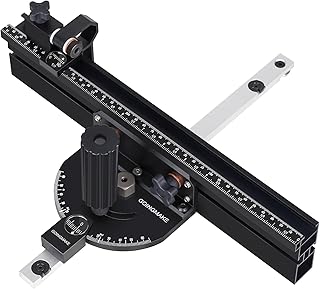
GOINGMAKE Compact Miter Gauge with 360mm Fence
The right call for benchtop and portable saws where a long fence is a liability rather than a feature — the 360mm fence clears the guard without fuss and still supports typical frame stock. Positive angle stops plus a multifunction flip stop deliver repeatable short crosscuts, making this a strong pick for small-space shops building trays, boxes, and light casework.
GOINGMAKE Miter Gauge with 18-Inch Fence
Thirteen precision detents and a micro-adjust flip stop put this squarely in do-everything territory for hybrid and contractor saws. The micro-adjust is the standout: it lets you correct a fitting error by a hair instead of re-clamping and hoping, which is exactly what furniture joinery demands.
GOINGMAKE Extendable 18–32 Inch Miter Gauge
The extendable fence is the reason to pick this over its 18-inch sibling — collapse it for frame work, extend it to 32 inches when you’re squaring shelves and panels. If you build cabinets or built-ins on a cabinet saw, the extra support at the far end of a wide crosscut noticeably reduces tearout and drift.
VEVOR Precision Miter Gauge
A well-specified aluminum alloy gauge with an 18-inch grating fence, 15 angle stops, and a spring-loaded plunger that seats confidently. The removable disc and adjustable bar make it easy to tune fit to your specific slot, and it represents solid value for someone upgrading from a factory gauge without going premium.
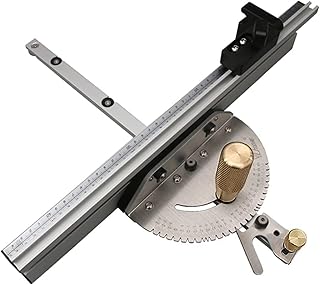
WEN Steel and Brass Premium Miter Gauge (WA1401)
Twenty-seven angle stops and a steel-and-brass build give this the most refined feel of the group, and it crosses over neatly to router tables and band saws. Choose it if you do frequent segmented or polygonal work and want a gauge that holds calibration through years of use.
Frequently Asked Questions
Will these fit my table saw?
Almost certainly, if your saw uses the standard 3/4″ x 3/8″ T-slot found on most DeWalt, SawStop, Bosch, Delta, and Ridgid models. Measure your slot width and depth before ordering, and note that some older or import saws use non-standard dimensions.
Is a miter gauge or a crosscut sled better?
They’re complements, not competitors. A sled excels at repeated 90-degree cuts on wide panels with zero-clearance support, while a quality miter gauge handles angles, narrow stock, and quick setup changes far more efficiently.
Do I still need a zero-clearance insert?
For clean results, yes. A precise gauge controls the workpiece path, but only zero-clearance support beneath the cut line prevents bottom-face tearout — especially in plywood and veneered sheet goods.
How do I calibrate a new miter gauge?
Set it to 90 degrees, take a test cut in scrap, then check the offcut with a reliable machinist square or use the five-cut method for maximum accuracy. Adjust the detent stop, not the fence, and re-verify after any hard knock to the gauge.
Final Thoughts
For most furniture makers, the GOINGMAKE Extendable 18–32 Inch Miter Gauge is the most versatile investment here, spanning delicate frame miters and wide panel crosscuts on one bar. If you work on a compact or portable saw, the GOINGMAKE Compact 360mm model gives you the same repeatability in a footprint that actually fits. And for segmented work or long-term precision, the WEN WA1401 in steel and brass is the one that will still be reading true a decade from now.