Key takeaways
- Water-based vs. oil-based: Water-based finishes dry clear and stay clear, which protects pale woods, whitewashes, and painted tops. Oil-based versions add a warm amber cast and build a slightly tougher film, making them the better match for walnut, cherry, and deep stains.
- Sheen: Satin hides fingerprints, dust, and micro-scratches, and it photographs beautifully in daylight. Gloss delivers that glassy restaurant-table depth but shows every smudge. Consider how much direct light your dining area gets before committing.
- Film build and coat count: Thin-bodied finishes need three to four coats for real tabletop protection. Self-leveling thick formulas can achieve comparable depth in one or two, which matters if your dining room doubles as the only place to eat.
- Cure time versus dry time: Dry-to-touch is not ready-to-use. Plan on several days before placing anything heavy on the surface, and roughly a week or two before the film reaches full hardness and chemical resistance.
- Coverage and container size: A quart handles most standard tables with coats to spare. Reach for a gallon if you’re finishing a large table plus matching chairs or a sideboard, and keep a small size on hand for repairs.
What's inside
A dining table takes more abuse than any other surface in the house. Wine rings, hot serving bowls, a toddler’s fork dragged across the grain, the daily wipe-down with whatever spray is under the sink — it all lands on the same three or four square feet of wood. Most people don’t discover their finish was the wrong choice until a cloudy white ghost of a water glass appears, or the sheen wears through to bare grain where elbows rest. The finish is the part of the table you actually touch, and it deserves the same consideration as the joinery.
This guide narrows the polyurethane aisle down to what genuinely performs on a dining surface. We look at oil-based versus water-based chemistry, how sheen affects the way a room reads, how many coats each product realistically needs, and where each option earns its place — whether you’re refinishing a mid-century walnut oval, sealing a raw oak trestle, or touching up a painted farmhouse top without yellowing the color.
As an Amazon Associate we earn from qualifying purchases.


🛒 Best Price Today on Amazon
Prime members get fast, free shipping on everything above, plus member-only deals. New members get a 30-day free trial — cancel anytime.
How to Choose a Polyurethane For Dining Room Table (2026)
- Water-based vs. oil-based: Water-based finishes dry clear and stay clear, which protects pale woods, whitewashes, and painted tops. Oil-based versions add a warm amber cast and build a slightly tougher film, making them the better match for walnut, cherry, and deep stains.
- Sheen: Satin hides fingerprints, dust, and micro-scratches, and it photographs beautifully in daylight. Gloss delivers that glassy restaurant-table depth but shows every smudge. Consider how much direct light your dining area gets before committing.
- Film build and coat count: Thin-bodied finishes need three to four coats for real tabletop protection. Self-leveling thick formulas can achieve comparable depth in one or two, which matters if your dining room doubles as the only place to eat.
- Cure time versus dry time: Dry-to-touch is not ready-to-use. Plan on several days before placing anything heavy on the surface, and roughly a week or two before the film reaches full hardness and chemical resistance.
- Coverage and container size: A quart handles most standard tables with coats to spare. Reach for a gallon if you’re finishing a large table plus matching chairs or a sideboard, and keep a small size on hand for repairs.
The Best Polyurethane For Dining Room Table (2026)s Reviewed
Minwax Polycrylic Protective Finish, Satin, Quart
This is the safest default for anyone finishing light wood, a painted top, or a piece with a carefully chosen stain color, because it dries genuinely clear and won’t shift the tone over time. The satin sheen is soft rather than flat, low odor makes indoor work tolerable, and recoat windows are short enough to finish a table in a single day.
Varathane Water-Based Ultimate Gloss Polyurethane, Half Pint
A crystal-clear, fast-drying gloss that builds a hard, scratch-resistant film without amber shift — ideal if you want depth and shine on a lighter wood. The half pint is the smart buy for a small bistro table, a chair set touch-up, or testing sheen on an offcut before you commit to a full table.
Minwax Fast Drying Polyurethane, Warm Satin, Quart
The traditional oil-based choice, and still the one I’d reach for on walnut, cherry, or a rich espresso stain where a bit of golden warmth flatters the grain. It levels well with a natural-bristle brush and cures to a resilient film, though you’ll want good ventilation and mineral spirits for cleanup.
Varathane Triple Thick Polyurethane Gloss
Built for people who want a poured-glass look without four separate coats — the self-leveling formula lays down roughly three times the film of a standard poly in one pass. Keep the table dead level and work in a dust-free space, because the thick film records every particle that lands in it.
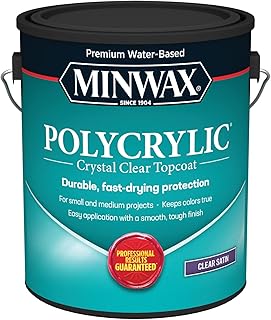
Minwax Clear Polycrylic Satin, 1 Gallon
Same trusted clear water-based formula in the size that makes sense for a full dining set or an oversized farmhouse table. Buying by the gallon also means your table, chairs, and bench all share one batch and one consistent sheen.
Frequently Asked Questions
How many coats does a dining table need?
Three coats minimum for water-based thin-film finishes, four if the table sees daily meals. Thick self-leveling products can reach equivalent protection in one or two. Scuff-sand lightly between coats with fine paper for adhesion.
Will polyurethane yellow my white or light table?
Oil-based will, gradually and permanently. Stick with a water-based product like Polycrylic or Varathane’s water-based line on white paint, maple, ash, or any pale finish you want to stay true.
Can I put hot dishes directly on the finished surface?
No. Cured polyurethane resists spills and moderate heat, but a hot pan or casserole dish can soften or cloud the film. Use trivets — the finish protects the wood, not the other way around.
How long before we can actually eat at the table?
Light use after two to three days, full use after roughly a week. The film continues hardening for up to 30 days, so avoid heavy centerpieces, tablecloths, and abrasive cleaners during that period.
Final Thoughts
For most dining tables, the Minwax Polycrylic Satin in quart size is the pick that rewards the widest range of woods and paint colors, with the gallon version making sense once chairs and a sideboard join the project. If you want warmth and maximum durability on a dark hardwood, Minwax Fast Drying Polyurethane in Warm Satin remains the classic answer, while Varathane Triple Thick is the shortcut to a glassy, high-depth top in a single weekend.