Key takeaways
- Match CFM to your tools, not PSI: Nearly every compressor advertises high PSI, but airflow measured in CFM determines whether a nailer keeps firing. Inflators need almost none; framing and roofing nailers want roughly 4 CFM at 90 PSI.
- Decide between tank and tankless: A tank stores air for sustained tool work. Cordless tankless inflators run a motor on demand, which is ideal for tires and inflatables but useless for pneumatic tools.
- Stay inside your battery platform: If you already own DEWALT 20V or Makita 18V packs, a bare-tool inflator costs a fraction of a kitted one and shares chargers you’ve already found a home for.
- Read the duty cycle, not the marketing: A 100% duty cycle means the unit can run continuously without a forced cooldown. Anything less will pause mid-job on a hot afternoon or a large SUV tire.
- Weigh noise and storage honestly: Oil-free pancake designs are loud but low-slung and stable on a closet floor. Handheld inflators disappear into a drawer. Think about where it lives the other 360 days a year.
What's inside
Every well-considered home eventually reveals its unglamorous truth: the sofa you spent months sourcing arrived flat-packed, the gallery wall needs anchors, and the bike tires in the entryway closet have been soft since last spring. Air is the quiet utility behind all of it. Yet most people either borrow a rattling shop unit from a neighbor or buy the cheapest 12-volt pump at the checkout aisle, then discover it overheats halfway through a single truck tire. The gap between those two extremes is where portable compressors have gotten genuinely good.
This guide looks at portable air compressors through a slightly unusual lens: as equipment that has to live in a real home, not a warehouse. That means weight you can carry up stairs, a footprint that tucks under a bench or beside a console, noise you can tolerate in a shared building, and enough output to actually run the tools you own. Below are the models worth your money in 2026, from battery-powered inflators to a pancake tank that will drive framing nailers through a full renovation.
As an Amazon Associate we earn from qualifying purchases.



How to Choose a Portable Air Compressor For Tools (2026)
- Match CFM to your tools, not PSI: Nearly every compressor advertises high PSI, but airflow measured in CFM determines whether a nailer keeps firing. Inflators need almost none; framing and roofing nailers want roughly 4 CFM at 90 PSI.
- Decide between tank and tankless: A tank stores air for sustained tool work. Cordless tankless inflators run a motor on demand, which is ideal for tires and inflatables but useless for pneumatic tools.
- Stay inside your battery platform: If you already own DEWALT 20V or Makita 18V packs, a bare-tool inflator costs a fraction of a kitted one and shares chargers you’ve already found a home for.
- Read the duty cycle, not the marketing: A 100% duty cycle means the unit can run continuously without a forced cooldown. Anything less will pause mid-job on a hot afternoon or a large SUV tire.
- Weigh noise and storage honestly: Oil-free pancake designs are loud but low-slung and stable on a closet floor. Handheld inflators disappear into a drawer. Think about where it lives the other 360 days a year.
The Best Portable Air Compressor For Tools (2026)s Reviewed
DEWALT 20V MAX Tire Inflator (DCC020IB)
The most refined cordless inflator on the market, with automatic shutoff that hits target pressure within a pound or two and a high-volume mode for air mattresses and pool floats. It runs on battery, AC, or 12V car power, which makes it the single most versatile pick if you already have DEWALT packs in the house.
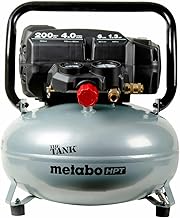
Metabo HPT 6-Gallon Pancake Compressor (EC914S)
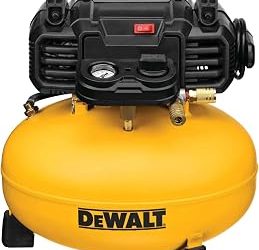
This is the one to buy if you’re actually building something. At 200 PSI and roughly 4 CFM, it feeds two nailers at once, and the oil-free pump means no maintenance ritual between projects. Heavy for a handheld task, but it’s the compressor that turns a weekend of trim work into a few hours.
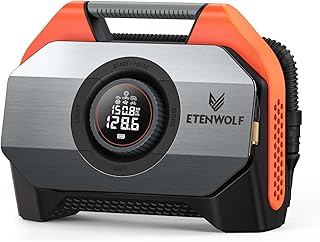
ETENWOLF VORTEX S6 Cordless Inflator
A dual-cylinder design with a 19,200mAh internal battery and a true 100% duty cycle, so it fills a full set of truck tires without stopping to cool. No battery platform required, and the orange housing is easy to spot in a dark garage or on a roadside shoulder.
Makita 18V Compatible Cordless Inflator
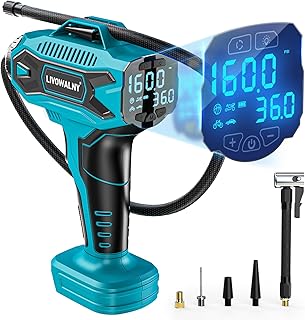
A well-built bare-tool option for Makita LXT owners, reaching 160 PSI with a clear digital gauge and preset shutoff. It’s the least expensive way to add serious inflation capability if your batteries are already Makita.
DIYtoolifz 150PSI DEWALT-Compatible Inflator
A budget alternative to DEWALT’s own unit that hits 150 PSI, includes an LED work light, and accepts the same 20V packs. Build quality is a step down from the first-party tool, but for occasional tire top-offs and sports balls it does the job for far less.
Frequently Asked Questions
Can a cordless inflator run a nail gun?
No. Tankless inflators produce high pressure but almost no sustained volume. Pneumatic nailers need a tank and adequate CFM, which means a pancake or hot-dog compressor.
How loud is a pancake compressor indoors?
Expect roughly 80 to 90 decibels while the pump cycles, comparable to a shop vac. It’s tolerable in a garage, disruptive in an apartment. Fill the tank before you start, then work off stored air.
What does “tool only” mean?
The listing includes no battery or charger. It’s the right choice when you already own compatible packs and a costly mistake if you don’t.
Do I need to drain the tank?
Yes. Open the drain valve after each use to release condensation. Skipping it corrodes the tank from the inside and shortens its life considerably.
Final Thoughts
For most homes, the DEWALT DCC020IB is the sensible default: compact, accurate, and endlessly useful for tires, furniture cushions, and inflatables. If you have no battery platform, the ETENWOLF VORTEX S6 delivers heavy-duty performance entirely self-contained. And when the project list moves from touch-ups to actual construction, the Metabo HPT EC914S is the compressor that keeps the nailers running.