Key takeaways
- Pressure range over peak PSI: Automotive work lives between roughly 1,200 and 1,900 PSI at the nozzle. A machine rated higher is fine as long as you can back off with a wider nozzle or adjustable wand, so prioritise units that give you a usable low end rather than a big headline figure.
- Flow rate for rinsing: Gallons per minute does the actual work of carrying dirt off the panel. Higher flow means fewer passes, less dwell time in one spot, and a lower chance of driving grit across the finish.
- Foam cannon compatibility: A pre-wash foam layer is the single biggest upgrade to a home detailing routine. Check that the unit accepts a standard quick-connect cannon and produces enough flow to generate clinging foam, not thin suds.
- Corded or cordless: Corded electric units deliver consistent pressure indefinitely and suit a garage with fixed outlets. Battery platforms free you from cords and outdoor spigots, which matters if you wash at the curb or share a driveway.
- Storage and hose management: Onboard reels, hook-and-loop cord wraps, and vertical form factors keep a washer from becoming garage clutter. Consider where it lives between washes as seriously as how it performs during one.
What's inside
Auto detailing has quietly become part of how people curate their homes. The driveway is the first surface a guest sees, and a clean car parked on clean pavement reads as intentional in the same way a well-dressed entry bench does. The problem is that most pressure washers are built for stripping decks and blasting siding, not for the controlled, low-abrasion work that clear coat demands. Buyers end up with a machine that either etches paint at close range or lacks the flow to lift road film without three passes.
This guide looks at pressure washers through a detailing lens: how much pressure is genuinely useful on automotive finishes, why water volume matters more than the number printed on the box, and which machines store neatly in a garage that doubles as usable space. Each pick below has been chosen for paint-safe control, foam quality, and a footprint that will not dominate a tidy garage wall.
As an Amazon Associate we earn from qualifying purchases.



How to Choose a Pressure Washer For Auto Detailing (2026)
- Pressure range over peak PSI: Automotive work lives between roughly 1,200 and 1,900 PSI at the nozzle. A machine rated higher is fine as long as you can back off with a wider nozzle or adjustable wand, so prioritise units that give you a usable low end rather than a big headline figure.
- Flow rate for rinsing: Gallons per minute does the actual work of carrying dirt off the panel. Higher flow means fewer passes, less dwell time in one spot, and a lower chance of driving grit across the finish.
- Foam cannon compatibility: A pre-wash foam layer is the single biggest upgrade to a home detailing routine. Check that the unit accepts a standard quick-connect cannon and produces enough flow to generate clinging foam, not thin suds.
- Corded or cordless: Corded electric units deliver consistent pressure indefinitely and suit a garage with fixed outlets. Battery platforms free you from cords and outdoor spigots, which matters if you wash at the curb or share a driveway.
- Storage and hose management: Onboard reels, hook-and-loop cord wraps, and vertical form factors keep a washer from becoming garage clutter. Consider where it lives between washes as seriously as how it performs during one.
The Best Pressure Washer For Auto Detailing (2026)s Reviewed
Sun Joe SPX3000 Electric Pressure Washer
A long-standing benchmark for good reason: 2030 PSI PWMA-rated output with five quick-connect tips gives you genuine control across wheels, arches, and painted panels. The upright chassis and onboard hose reel make it one of the easier units to tuck against a garage wall.
EGO Power+ HPW2100 Cordless Pressure Washer
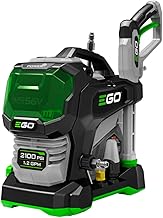
At 2100 PSI with no cord and no spigot required, the HPW2100 is the most flexible option here for anyone detailing away from an outlet. Note that the battery and charger are sold separately, which is a fair trade if you already own EGO tools.
Power Washer with 4 Nozzles and Foam Cannon
This bright green kit arrives detailing-ready, bundling four quick-connect nozzles with a foam cannon so you can run a proper two-bucket-adjacent routine on day one. It is the sensible entry point for a first-time detailer who does not want to buy accessories piecemeal.
EGO POWER+ HPW3204-2 Pressure Washer Kit
The 3200 PSI cordless kit is more machine than paint requires, which is precisely the point: it holds steady pressure at lower nozzle settings and still handles driveways, fences, and patio stone without complaint. The best choice if one tool must cover both the car and the hardscape.
Sun Joe SPX3000 Twin-Tank Configuration
The SPX3000’s two removable 0.9-litre detergent tanks let you keep a wheel cleaner in one and a pH-neutral shampoo in the other, switching between them without decanting. For a structured wash sequence, that convenience adds up over a season.
Frequently Asked Questions
What PSI is safe for car paint?
Stay in the 1,200 to 1,900 PSI window and hold the wand roughly a foot from the panel using a 25 or 40 degree nozzle. Damage almost always comes from a narrow tip held too close, not from the machine’s rating.
Do I really need a foam cannon?
For paint longevity, yes. Foam loosens road film chemically so your mitt is not grinding grit into clear coat, which is where most home-wash swirl marks originate.
Are cordless pressure washers powerful enough for detailing?
Modern battery platforms comfortably clear the pressure threshold detailing needs. The real constraints are runtime per charge and water supply, so plan for a spare battery if you wash more than one vehicle.
Can I use the same washer on patios and siding?
Yes, provided you swap nozzles. Reserve narrow tips for concrete and keep a wide fan dedicated to vehicles so the two jobs never share the wrong hardware.
Final Thoughts
For most homes, the Sun Joe SPX3000 remains the most sensible balance of paint-safe control, dual detergent tanks, and tidy storage. Step up to the EGO POWER+ HPW3204-2 if you want one cordless machine for both the car and the hardscape, or choose the EGO HPW2100 when portability and a shared battery platform matter more than raw output.