Key takeaways
- Pressure, kept in check: Somewhere between 1,600 and 2,300 PSI is the productive range for automotive work. Anything higher belongs to concrete, and you’ll spend your time backing the wand away from the panel rather than using the power you paid for.
- Flow rate over headline numbers: GPM is what carries dirt off the surface and what feeds a foam cannon. Look for 1.6 GPM minimum; 2.0 and up gives you dense, clinging foam without fiddling with the mixture ratio.
- Motor type and duty cycle: Induction and brushless motors run quieter, cooler, and far longer than the universal motors in budget units. If you detail more than a couple of cars a month, this is where the money should go.
- Nozzle set and cannon fit: A 25-degree and 40-degree tip cover nearly all paint work. Confirm the outlet uses a standard 1/4-inch quick connect so aftermarket foam cannons and short whip hoses bolt straight on.
- Hose length and stability: Twenty-five feet gets you around a sedan without repositioning the unit. Anti-tip designs and a real hose reel matter more than they sound like they do once you’re crouched at a wheel arch.
What's inside
Detailing a car in your own driveway sits at an awkward intersection: you want the cutting power to strip road film off a rocker panel, but not so much that you haze clear coat or drive water past a door seal. Most buyers end up on one of two wrong ends of that spectrum. Either they inherit a hardware-store gas unit built for stripping deck stain, or they grab the cheapest electric on the marketplace and discover it can’t hold enough flow to keep a foam cannon producing anything thicker than skim milk.
This guide narrows the field to electric pressure washers that actually suit paint. We weigh pressure against flow rate, look at foam cannon compatibility, and factor in the parts nobody mentions in the listing photos: hose flexibility in cold weather, whether the unit tips over when you tug the line, and how gracefully it stores in a garage that already has too much in it. Below are the picks worth your driveway.
As an Amazon Associate we earn from qualifying purchases.


How to Choose a Pressure Washer For Automotive Detailing (2026)
- Pressure, kept in check: Somewhere between 1,600 and 2,300 PSI is the productive range for automotive work. Anything higher belongs to concrete, and you’ll spend your time backing the wand away from the panel rather than using the power you paid for.
- Flow rate over headline numbers: GPM is what carries dirt off the surface and what feeds a foam cannon. Look for 1.6 GPM minimum; 2.0 and up gives you dense, clinging foam without fiddling with the mixture ratio.
- Motor type and duty cycle: Induction and brushless motors run quieter, cooler, and far longer than the universal motors in budget units. If you detail more than a couple of cars a month, this is where the money should go.
- Nozzle set and cannon fit: A 25-degree and 40-degree tip cover nearly all paint work. Confirm the outlet uses a standard 1/4-inch quick connect so aftermarket foam cannons and short whip hoses bolt straight on.
- Hose length and stability: Twenty-five feet gets you around a sedan without repositioning the unit. Anti-tip designs and a real hose reel matter more than they sound like they do once you’re crouched at a wheel arch.
The Best Pressure Washers For Automotive Detailing (2026), Reviewed
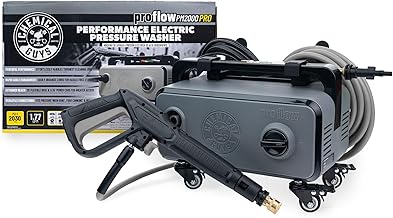
Chemical Guys PM2000 PRO
Built by a company that sells soap, not driveway sealer, and it shows in the calibration: 2030 PSI at 1.77 GPM is close to the ideal window for paint. The 25-foot hose and 14.5-amp motor make it the most purpose-fit option here for someone whose weekends revolve around a two-bucket wash.
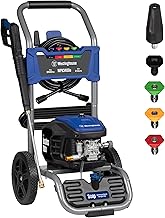
Westinghouse WPX3400e
The brushless motor is the headline, delivering 2.0 GPM of genuinely usable flow that turns a foam cannon into a proper snow-foam setup. At 3400 max PSI you’ll want to stay on the wider tips near paint, but the tradeoff buys you a machine that also handles the patio and fence without complaint.
Westinghouse ePX3500
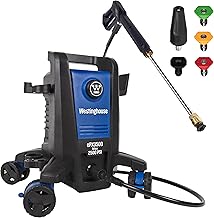
The more detailing-appropriate sibling: 2500 max PSI and 1.76 GPM in a compact, anti-tipping chassis that stays upright when you drag the hose around a bumper. The steel wand and onboard soap tank make it a tidy one-unit solution for a garage short on shelf space.
Foam Cannon Power Washer (Bright Green)
An honest entry-level pick that arrives with four quick-connect nozzles and a foam cannon in the box, so you’re not immediately shopping for accessories. Treat it as a maintenance-wash tool rather than a daily workhorse and it earns its keep.
5000 PSI Power Washer with Hose Reel
Read the pressure figure as marketing rather than measurement, and judge this one on its actual strengths: a 33-foot hose reel, 2.8 GPM claimed flow, and a full nozzle and soap-bottle kit. The reel alone spares you the coiled-hose wrestling match most units guarantee.
Frequently Asked Questions
Can a pressure washer damage car paint?
Yes, if you use a narrow tip up close or hit failing clear coat and chipped edges. Stay on a 40-degree nozzle, hold roughly a foot of distance, and keep the spray moving at a shallow angle to the panel.
Do I need a gas model?
For automotive work, no. Gas units are louder, heavier, and produce more pressure than paint wants. Electric is the correct tool here, and a good one will run for years on driveway duty.
What about the Ryobi automotive pressure washer?
Ryobi’s automotive-oriented units are a sensible choice if you already own their battery platform and want cordless freedom. Corded models generally hold flow more consistently through a long wash.
Will any foam cannon work?
Most use a standard 1/4-inch quick connect, but check your unit’s fitting and minimum pressure requirement. Cannons typically need at least 1,000 PSI and adequate GPM to produce thick foam.
Final Thoughts
For pure detailing, the Chemical Guys PM2000 PRO is tuned closest to what paint actually needs. If you want one machine for the car and the rest of the property, the Westinghouse WPX3400e brings the flow rate and brushless durability to do both, while the ePX3500 is the smarter buy for tight garages and gentler work.