Key takeaways
- Pressure range: Aim for 1300–2000 PSI at the nozzle for paint. Machines rated 2300–2500 max PSI are fine as long as you use a wide-angle tip and keep distance; treat 4000+ PSI units as concrete tools that occasionally wash cars.
- Flow over force: GPM does the rinsing. Around 1.7–1.8 GPM sheets water off panels quickly and shortens the whole job, which matters more for spot-free results than another few hundred PSI.
- Foam capability: A dedicated foam cannon produces the thick, clinging layer that lifts grit before your mitt touches it. Onboard soap tanks are tidier and better integrated, but they dispense thinner. Ideally you want access to both.
- Nozzle set: Look for a 40-degree white tip and a soap tip at minimum. Skip the red 0-degree tip entirely on vehicles. Quick-connect fittings are worth prioritizing over twist-select wands if you swap often.
- Storage footprint: Onboard hose reels, wand cradles, and anti-tip geometry decide whether the unit lives neatly in a garage bay or becomes a tangle in the corner. Cordless handhelds win outright if you have no accessible outdoor spigot.
What's inside
A driveway car wash sits at an awkward intersection of two worlds: it needs real cleaning power, but it happens a few feet from the front door, in full view of the street, with a hose that has to disappear again by Saturday afternoon. Most buyers overshoot. They chase the biggest PSI number on the box, then discover that pressure high enough to strip a deck is also pressure high enough to lift clear coat, blow water past a door seal, or peel the edge of a vinyl wrap. The right machine for paint is a more considered object than the spec sheet suggests.
This guide approaches pressure washers the way we’d approach any piece of equipment that lives near the entry: it has to perform, store cleanly, and not fight the house. Below are the electric and cordless models worth considering in 2026 for automotive work specifically, with notes on nozzle sets, foam cannons, hose management, and the pressure range that actually suits factory finishes.
As an Amazon Associate we earn from qualifying purchases.




How to Choose a/an Pressure Washer For Cleaning Cars (2026)
- Pressure range: Aim for 1300–2000 PSI at the nozzle for paint. Machines rated 2300–2500 max PSI are fine as long as you use a wide-angle tip and keep distance; treat 4000+ PSI units as concrete tools that occasionally wash cars.
- Flow over force: GPM does the rinsing. Around 1.7–1.8 GPM sheets water off panels quickly and shortens the whole job, which matters more for spot-free results than another few hundred PSI.
- Foam capability: A dedicated foam cannon produces the thick, clinging layer that lifts grit before your mitt touches it. Onboard soap tanks are tidier and better integrated, but they dispense thinner. Ideally you want access to both.
- Nozzle set: Look for a 40-degree white tip and a soap tip at minimum. Skip the red 0-degree tip entirely on vehicles. Quick-connect fittings are worth prioritizing over twist-select wands if you swap often.
- Storage footprint: Onboard hose reels, wand cradles, and anti-tip geometry decide whether the unit lives neatly in a garage bay or becomes a tangle in the corner. Cordless handhelds win outright if you have no accessible outdoor spigot.
The Best Pressure Washer For Cleaning Cars (2026)s Reviewed
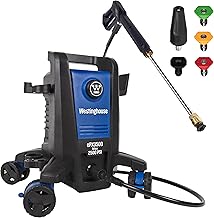
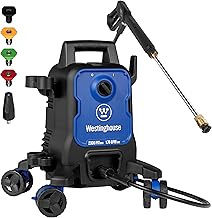
Westinghouse ePX3500
The most complete package here for car care: 2500 max PSI paired with 1.76 GPM, a pro-style steel wand that feels notably more solid than plastic equivalents, and a five-nozzle set that covers everything from soap application to wheel wells. Anti-tipping geometry is a small detail that pays off constantly when you’re dragging the hose around a vehicle.
Sun Joe SPX3000
The long-running benchmark, and still the safest recommendation for a first machine. Its 2030 PSI PWMA-rated output is honest and well suited to paint, and the dual detergent tanks let you keep wheel cleaner and body soap loaded simultaneously, which is a genuine workflow advantage over single-tank designs.
Westinghouse ePX3100
Essentially the ePX3500 dialed back to 2300 max PSI while keeping the same 1.76 GPM flow, steel wand, and nozzle set. For vehicles that difference is largely academic, making this the value pick of the Westinghouse pair if driveways and fences are secondary concerns.
Cordless 1450 PSI Handheld Power Washer
A different proposition entirely: battery powered, self-priming from a bucket, and genuinely portable. At 1450 PSI with a 6-in-1 nozzle it is the gentlest option on clear coat, ideal for apartment dwellers, detailers working away from a tap, and quick interim rinses between full washes.
4-Nozzle Power Washer with Foam Cannon (Bright Green)
Bundles the foam cannon most buyers end up purchasing separately, alongside four quick-connect tips. A sensible entry point if you want thick foam coverage out of the box and don’t mind a lighter-duty build in exchange.
Frequently Asked Questions
How much PSI is safe for car paint?
Between 1200 and 1900 PSI with a 40-degree tip held 12 inches or more from the panel. Higher-rated machines are usable, but keep the wand moving and never dwell on trim, badges, or wrap edges.
Do I need a foam cannon?
For contact-free prep, yes. Thick foam suspends road grit so it rinses away instead of grinding into paint during the wash stage, which is where most swirl marks originate.
Is a cordless model powerful enough?
For maintenance washes, wheels, and bike or interior work, comfortably. For heavily soiled winter grime, a corded electric will finish faster.
Gas or electric for cars?
Electric. Gas units deliver more pressure than automotive finishes need, run louder, and are harder to modulate close to paint.
Final Thoughts
For most homes, the Westinghouse ePX3500 is the best-balanced choice, offering strong flow, a durable wand, and a nozzle set that covers the whole property. The Sun Joe SPX3000 remains the dependable value benchmark with its twin detergent tanks, while the cordless 1450 PSI handheld is the right answer for anyone washing without a nearby spigot.