Key takeaways
- Dilution ratio: Read yield, not bottle size. A concentrate that makes 40 gallons of working solution costs less per wash than a larger jug of pre-diluted product, and it stores in a fraction of the shelf space.
- Surface compatibility: Match the formula to the substrate. Alkaline degreasers built for concrete and road film can etch clear coat or dull anodized aluminum, so keep a separate soap for vehicles and one for hardscape.
- Foam behavior: Thick clinging foam buys dwell time, which is where the cleaning actually happens. If you plan to use a cannon, choose a soap formulated to foam rather than a general-purpose liquid that sheets off in seconds.
- Injector compatibility: Confirm the soap works with your machine’s delivery method. Downstream injectors on gas units need low-viscosity formulas; onboard tanks on electric units are pickier about thick concentrates.
- Runoff and planting: Anything you spray on a patio ends up in the beds beside it. Look for biodegradable, phosphate-free formulas if you are washing near established plantings or a rainwater system.
What's inside
Exterior surfaces age faster than anything inside the house. A cedar fence silvers, a limestone patio picks up a green film, a poured-concrete drive collects tire marks and leaf tannins, and none of it happens quickly enough to notice until the season turns and the whole envelope of the property looks tired. Most people reach for a pressure washer at that point and blast away with plain water, which strips loose grit but leaves the bound organic layer behind. Two weeks later the shadow returns, and the assumption is that the machine wasn’t powerful enough.
The machine is usually fine. The chemistry is the missing variable. A proper detergent lifts and suspends soil so the water stream carries it off instead of grinding it deeper into porous stone or scarring softwood at close range. This guide covers the pressure washer soaps worth keeping in the garage in 2026, split between broad exterior work and dedicated vehicle foam, plus what actually matters on the label when you compare bottles.
As an Amazon Associate we earn from qualifying purchases.


How to Choose a Pressure Washer Soap (2026)
- Dilution ratio: Read yield, not bottle size. A concentrate that makes 40 gallons of working solution costs less per wash than a larger jug of pre-diluted product, and it stores in a fraction of the shelf space.
- Surface compatibility: Match the formula to the substrate. Alkaline degreasers built for concrete and road film can etch clear coat or dull anodized aluminum, so keep a separate soap for vehicles and one for hardscape.
- Foam behavior: Thick clinging foam buys dwell time, which is where the cleaning actually happens. If you plan to use a cannon, choose a soap formulated to foam rather than a general-purpose liquid that sheets off in seconds.
- Injector compatibility: Confirm the soap works with your machine’s delivery method. Downstream injectors on gas units need low-viscosity formulas; onboard tanks on electric units are pickier about thick concentrates.
- Runoff and planting: Anything you spray on a patio ends up in the beds beside it. Look for biodegradable, phosphate-free formulas if you are washing near established plantings or a rainwater system.
The Best Pressure Washer Soaps (2026) Reviewed
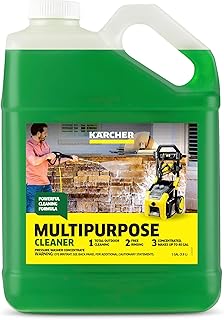
KÄRCHER Multi Purpose Pressure Washer Detergent
The most sensible default for whole-property work, this highly concentrated formula yields up to 40 gallons of cleaner and handles fences, siding, pavers, and concrete without needing a different bottle for each. It is gentle enough for painted siding yet effective on the grey film that settles into rough-cut stone.
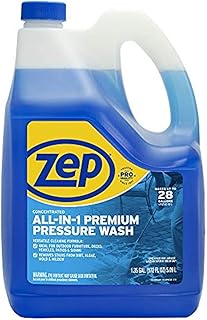
Zep All-in-1 Pressure Washing Concentrate
At 172 fluid ounces, this is the buy for anyone with a long driveway, a deck, and a walkway to get through in a single weekend. It cuts grease, oil, and mildew staining with real conviction, and the price per gallon of mixed solution is hard to argue with.
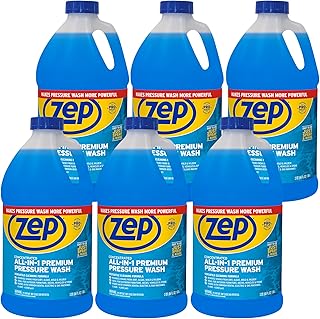
ZEP All-In-One Pressure Wash 64 oz (Case of 6)
The same proven formula in smaller bottles, sold six at a time, which suits anyone who prefers not to wrestle a five-litre jug over a mixing bucket. Practical for property managers or households that wash on a schedule rather than once a year.
Wash Chems Pro30 High Concentrated Foam Soap
A one-step touchless soap in a 2.5-gallon supply, built for cars, trucks, and heavy equipment where you want soil released without a contact wash. Concentration is high enough that a little goes a long way through a cannon or injector.
Wash Chems Pro50 Foam Cannon Car Wash
Commercial-grade foam density in a more manageable 1.06-gallon container, and the better pick if paint safety is your priority. It clings long enough to soften road film before you touch the surface, which is exactly how you avoid swirl marks.
Frequently Asked Questions
Can I use dish soap in a pressure washer?
No. Dish soap is not formulated for injector systems, foams unpredictably under pressure, and can leave a residue that attracts dirt. It also lacks the surfactant package that releases bound soil from porous surfaces.
Do I need a foam cannon?
Only for vehicle work, where dwell time protects the finish. A tool like the Tool Daily Foam Cannon with quick connector and nozzle tips turns a standard washer into a proper touchless setup for a modest outlay.
How long should soap sit before rinsing?
Typically three to five minutes, and never long enough to dry. On hot days work in small sections and keep the surface damp, or you will trade a dirt stain for a detergent stain.
Will these soaps damage plants or stone?
Pre-wet nearby plantings and rinse them afterward. On natural stone, test an inconspicuous area first, particularly with alkaline degreasers on honed limestone or marble.
Final Thoughts
For most homes, the KÄRCHER Multi Purpose Detergent is the one bottle to own: high yield, broad compatibility, and no guesswork. Step up to the Zep All-in-1 Concentrate if you have serious square footage to cover, and add Wash Chems Pro50 if vehicles are part of the routine and you want foam that actually protects the paint.