Key takeaways
- Blade size versus your real projects: A 10-inch saw handles trim, frames, table aprons, and most 2x stock comfortably. Step up to 12-inch only if you regularly cross-cut wide boards, tall baseboard on the flat, or crown molding — the larger blade adds capacity but also cost and mass.
- Single bevel or dual bevel: Single-bevel saws tilt one direction, so you flip the workpiece for opposing angles. Dual bevel tilts both ways, which saves time and reduces layout errors on long or awkward pieces. For repetitive crown and casing work, dual bevel pays for itself in frustration avoided.
- Sliding versus fixed head: A slide extends crosscut width dramatically, which matters for shelving, tabletops, and stair treads. Fixed-head compound saws are lighter, more compact, and often more rigid — a fair trade if your cuts stay under about seven inches wide.
- Cut-line indication: Laser guides are useful and common at this price. Shadow-line systems, which cast the blade’s own silhouette onto the workpiece, tend to stay accurate longer because there’s nothing to calibrate. Either beats squinting at the kerf.
- Detents, fences, and dust control: Positive stops at common angles speed up repeatable work, and a tall fence supports crown properly. Assume the included dust bag is a starting point; plan on a shop vac connection if you’re cutting indoors or near finished surfaces.
What's inside
Anyone who has tried to fit a run of baseboard around an out-of-square corner knows the truth about miter saws: the tool decides whether the room reads as considered or careless. A quarter-degree of drift shows up as a hairline gap at eye level, and no amount of caulk convinces the eye otherwise. The frustration for most buyers isn’t a shortage of options, it’s that budget saws and premium saws are described in nearly identical language. Amp ratings, bevel ranges, and blade counts get listed side by side, leaving you to guess which spec actually affects the cut quality of a floating shelf or a walnut console.
This guide approaches the category the way a furniture maker would rather than a contractor: what will hold a clean 45 on hardwood, what fits in a garage that doubles as a workshop, and what earns its keep across a few weekends of built-ins. We’ve focused on saws that deliver honest accuracy for the money in 2026, spanning compact single-bevel models for trim and frames up to dual-bevel sliders sized for wide panels and crown. Below, the current picks, followed by a buying framework and short reviews of the standouts.
As an Amazon Associate we earn from qualifying purchases.



How to Choose a Price Miter Saw (2026)
- Blade size versus your real projects: A 10-inch saw handles trim, frames, table aprons, and most 2x stock comfortably. Step up to 12-inch only if you regularly cross-cut wide boards, tall baseboard on the flat, or crown molding — the larger blade adds capacity but also cost and mass.
- Single bevel or dual bevel: Single-bevel saws tilt one direction, so you flip the workpiece for opposing angles. Dual bevel tilts both ways, which saves time and reduces layout errors on long or awkward pieces. For repetitive crown and casing work, dual bevel pays for itself in frustration avoided.
- Sliding versus fixed head: A slide extends crosscut width dramatically, which matters for shelving, tabletops, and stair treads. Fixed-head compound saws are lighter, more compact, and often more rigid — a fair trade if your cuts stay under about seven inches wide.
- Cut-line indication: Laser guides are useful and common at this price. Shadow-line systems, which cast the blade’s own silhouette onto the workpiece, tend to stay accurate longer because there’s nothing to calibrate. Either beats squinting at the kerf.
- Detents, fences, and dust control: Positive stops at common angles speed up repeatable work, and a tall fence supports crown properly. Assume the included dust bag is a starting point; plan on a shop vac connection if you’re cutting indoors or near finished surfaces.
The Best Price Miter Saw (2026)s Reviewed
DEWALT DWS780 12-Inch Double Bevel Sliding Compound Miter Saw
This is the reference point the rest of the category gets measured against — a 12-inch dual-bevel slider with the XPS LED shadow line, which projects the blade’s actual shadow onto your cut line instead of a laser that needs periodic truing. It arrives with blade wrench, material clamp, and dust bag, and the combination of capacity and repeatable accuracy makes it the pick if you’re building casework and trimming a whole house rather than tackling one project.
DOVAMAN 12-Inch Dual-Bevel Sliding Miter Saw
A 15-amp dual-bevel slider with a 4.2 x 13-inch cutting capacity covers nearly every furniture panel and baseboard run you’ll encounter, and the ambidextrous handle is a genuinely thoughtful touch for left-handed users and tight bench layouts. Nine positive stops plus a laser guide give you fast, repeatable setups at a price that undercuts the legacy brands considerably.
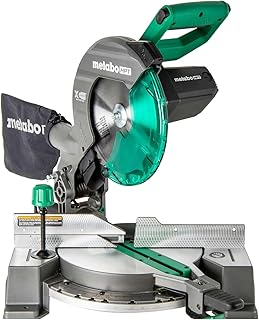
Metabo HPT C10FCG2 10-Inch Compound Miter Saw
The most sensible entry point in the whole roundup: a 15-amp single-bevel compound saw with Xact Cut shadow line indication and a 40-tooth carbide blade already in the box. Its lightweight build is the real selling point for anyone working out of a small garage or moving between rooms, and shadow-line accuracy at this tier is unusually generous.
SKIL MS6305-00 10-Inch Dual Bevel Sliding Compound Miter Saw
A well-balanced compromise for the home shop — dual bevel and a slide in a 10-inch footprint, so you get angled versatility and extended crosscut width without the bulk of a 12-inch machine. It’s the saw to choose when bench space is finite but you still want to avoid flipping stock for every opposing miter.
DOVAMAN Updated 10-Inch Sliding Miter Saw
The multi-material angle sets this one apart: three TCT blades and dual speeds (5000 and 3200 RPM) let you slow things down for aluminum, plastics, and laminates rather than forcing wood-speed cuts through everything. With a 3.5 x 13.4-inch capacity, nine positive stops, and ambidextrous operation, it’s a strong fit for mixed-material builds like metal-legged tables and acrylic inserts.
Frequently Asked Questions
Is a 12-inch miter saw worth the upgrade over a 10-inch?
Only if your cut list demands it. A 12-inch blade gives you more vertical and horizontal capacity, which matters for tall baseboard, crown, and thick stock. If you’re mostly building furniture from boards under six inches wide, a 10-inch saw is lighter, cheaper to re-blade, and just as accurate.
Do I need to replace the included blade?
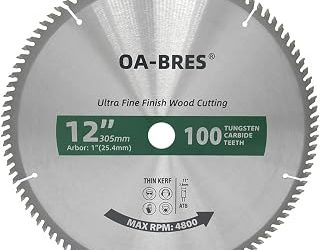
For construction-grade work, no. For visible furniture joinery, a higher-tooth-count finish blade (60 to 80 teeth on a 10-inch) noticeably reduces tearout on veneers, plywood, and hardwood end grain. Treat the stock blade as your rough-cut blade and keep a finish blade for final passes.
How accurate are budget miter saws out of the box?
Usually close, rarely perfect. Plan to check the 90-degree and 45-degree stops against a reliable machinist square and adjust the detents before your first real project. Ten minutes of calibration does more for your cut quality than a hundred dollars of extra spend.
Can these saws cut metal and plastic?
Some are designed for it. Models with variable speed and appropriate blades — like the multi-material DOVAMAN 10-inch — handle aluminum, PVC, and laminates safely at reduced RPM. Don’t cut metal on a single-speed wood saw with the factory blade; the feed rate and tooth geometry are wrong for it.
Final Thoughts
If accuracy over years of use is the priority, the DEWALT DWS780 remains the benchmark, and its shadow-line system genuinely reduces layout error on finish work. For most home furniture builders, though, the DOVAMAN 12-Inch Dual-Bevel Slider delivers the capacity and convenience that actually shorten a project, while the Metabo HPT C10FCG2 is the smartest small-shop buy — light, precise, and ready to work the moment you unbox it.