Key takeaways
- Leather: Durable and wipeable, and makers commonly supply conditioning guidance. It can feel cool in winter and sticky in summer.
- Performance or stain-resistant fabric: Useful for households with children or pets. Follow the manufacturer’s cleaning code printed on the tag (commonly W, S, WS or X).
- Linen and cotton blends: Breathable and relaxed in look, but wrinkle and may stain more easily.
- Velvet and chenille: Soft and warm, and tend to show pressure marks and pet hair.
- Frames: Kiln-dried hardwood frames are typically described as the most durable; ask whether joints are glued, screwed or doweled.
The best reading chair depends on how you read: a recliner with a footrest such as the Stressless range or a La-Z-Boy suits long evening sessions, a wing chair suits a quiet corner with head support, and a compact bentwood-frame armchair like the IKEA POÄNG suits small rooms and tighter budgets. Below, the main chair types are compared by posture support, size, materials and upkeep so you can match one to your room and reading habits.
Our top picks

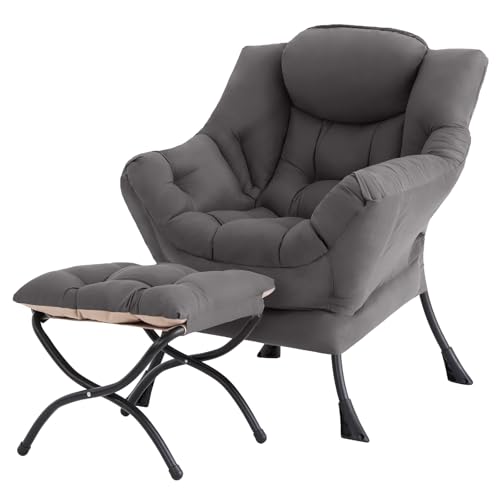
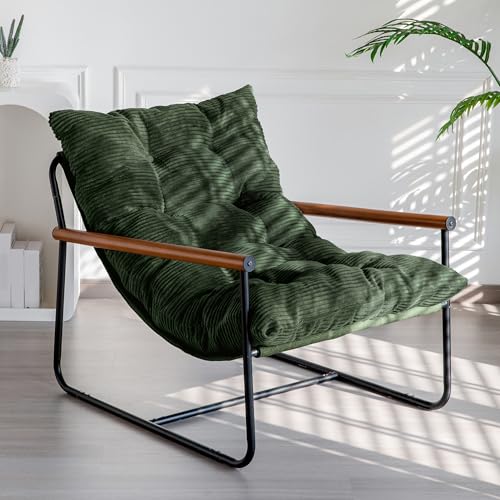
As an Amazon Associate we earn from qualifying purchases at no extra cost to you.
Reading Chairs at a Glance
| Type / example | Best for | Key features | Limits |
|---|---|---|---|
| Recliner (Stressless, La-Z-Boy) | Long sessions, leg support | Reclining back, footrest, padded arms; makers list leather and fabric options | Large footprint; needs clearance behind to recline |
| Wing chair (traditional or modern) | Quiet corners, head support | High back with side wings, upholstered arms | Upright posture; can feel formal |
| Bentwood armchair (IKEA POÄNG) | Small rooms, flexible budgets | Layered-wood frame with a gentle spring, removable cushion cover per the maker | Less cushioning; not for deep sink-in comfort |
| Chair-and-a-half / oversized armchair | Curling up with legs tucked | Wide seat, deep cushions | Needs floor space; harder to move |
| Swivel accent chair | Multi-use living rooms | Rotating base, compact arms | Less back support on slim designs |
| Rocker / glider | Gentle motion while reading | Rocking or gliding base | Needs open space around it |
What Makes a Chair Good for Reading
Reading is mostly a static activity, so the chair has to support the same posture for an hour or more. Three things matter most: seat depth, back height and arm height. A seat that is too deep forces you to slouch, a back that stops below the shoulder blades gives no support when you lean back to hold a book, and arms that are too low or too high make elbows and shoulders work harder than they need to.
A practical way to check is the sit test described by many furniture retailers. Sit with your back against the backrest, check that your feet can rest flat on the floor or on a footrest, and make sure there is a small gap between the seat edge and the back of your knees. If you plan to use an ottoman, measure the combined footprint with the ottoman in place, not only the chair.
Back height and head support
Wing chairs and high-back recliners give head and neck support, which is useful for reading a long novel or a tablet in a leaned-back position. Low-back accent chairs look lighter in a room but leave the upper back unsupported. If you often read with your head resting back, choose a chair with a high back or a built-in headrest.
Seat firmness
Firm foam keeps its shape and makes it easier to stand up. Softer down-blend or deep cushions feel cosier but flatten over time and may need regular fluffing. Reviewers frequently point out that a seat that feels plush in the first week can feel less supportive after months of daily use, so look for makers that state foam density or offer replacement cushions.
Chair Types in More Detail
Recliners
Recliners are the most complete reading chairs because they support the legs as well as the back. Ekornes, the maker of Stressless, describes its chairs as having a glide mechanism that adjusts the back and footrest together, and offers a range of sizes so that taller and shorter users can match the headrest position. La-Z-Boy offers manual and power reclining versions, with wall-hugger designs that need less space behind them. The trade-off is size and weight: recliners are among the largest chairs, and power versions need a nearby outlet.
Check the clearance listed by the maker for the fully reclined position. Wall-hugger or space-saver models are designed to recline with less distance to the wall, which matters in apartments.
Wing chairs
The side wings of a wing chair were originally designed to shield a sitter from draughts, and they still create a sense of enclosure. They suit a corner with a floor lamp and a small side table. Look at the arm and wing shape if you like to read with a laptop or tablet resting on an arm: very rounded arms are comfortable for leaning but poor for holding objects.
Compact bentwood and frame chairs
The IKEA POÄNG has been a long-running choice for budget-minded readers. The maker lists a layered-wood frame with a spring-like flex, and its cushion covers are removable and can be swapped for different colors or materials. Reviewers often note that it works best for moderate reading sessions, and that the thin seat cushion is the main place people add extra padding. It is also easy to move, which helps in rooms that serve several purposes.
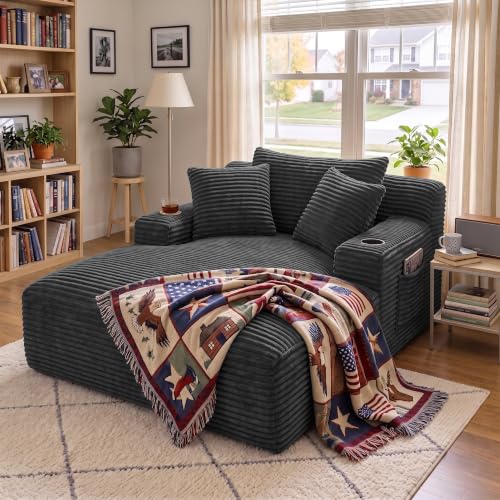
Oversized armchairs and chair-and-a-half designs
If you like reading with your legs pulled up, a wider seat is more useful than a recline function. These chairs are common from mainstream furniture brands. Measure doorways and stairwells before ordering, since large upholstered pieces may need to be brought in at an angle.
Materials and Upholstery
- Leather: Durable and wipeable, and makers commonly supply conditioning guidance. It can feel cool in winter and sticky in summer.
- Performance or stain-resistant fabric: Useful for households with children or pets. Follow the manufacturer’s cleaning code printed on the tag (commonly W, S, WS or X).
- Linen and cotton blends: Breathable and relaxed in look, but wrinkle and may stain more easily.
- Velvet and chenille: Soft and warm, and tend to show pressure marks and pet hair.
- Frames: Kiln-dried hardwood frames are typically described as the most durable; ask whether joints are glued, screwed or doweled.
Size and Placement Notes
Allow enough room for the chair to be used as designed. For a recliner, that means space behind it to recline, unless it is a wall-hugger. For a swivel chair, leave clearance for it to turn. Place the chair near a window for natural light during the day, with a floor or arc lamp positioned over the shoulder opposite your dominant hand so your arm does not cast a shadow on the page.
Check weight limits and seat height too. Makers list capacity for many chairs, and a seat height around the knee level generally makes it easier to sit down and stand up. If you have a back, hip or joint condition, speak to your doctor or physiotherapist before choosing a chair for long daily sessions; furniture comfort claims are not medical advice.
Budget Tiers
| Tier | What to expect | Trade-off |
|---|---|---|
| Budget | Compact frame chairs, simple accent chairs, basic fabric or bonded materials | Thinner padding, shorter warranty; may need a cushion added |
| Mid-range | Hardwood frames, higher-density foam, upgraded fabrics, manual recliners and gliders | Larger and heavier; more choice in sizes |
| Premium | Ergonomic recliners (Stressless style), genuine leather, replaceable parts and longer warranty terms | High upfront cost; check the warranty terms in the maker’s documents |
Pick X If…
| If you… | Pick |
|---|---|
| Read for hours and want leg support | A recliner with footrest |
| Want head support and a quiet corner | A wing chair |
| Live in a small apartment | A compact bentwood armchair or wall-hugger recliner |
| Prefer to curl up with legs tucked | An oversized chair or chair-and-a-half |
| Share the room with pets or children | Performance fabric or wipeable leather |
| Want a flexible, movable piece | A swivel accent chair or lightweight frame chair |
Alternatives
- Chaise lounge: Gives full leg extension and suits a bedroom or sunroom, but offers less upright back support.
- Floor or lounge chair with back support: Low-profile and portable; better for short reading sessions or children than for adults who read for hours.
- Sofa corner with a reading pillow and lamp: A low-cost option if you already have a sofa and only need better back positioning and light.
Care Notes
Vacuum upholstery regularly with a soft attachment, and rotate or flip loose cushions if the design allows. Spot-clean following the code on the tag, testing on a hidden area first. Condition leather as the maker advises and keep it away from direct heat. Tighten bolts on frames and glide mechanisms from time to time, as loose hardware is a common source of squeaks.
Frequently Asked Questions
What is the most comfortable type of chair for reading?
For most people, a recliner with a footrest or a high-back chair with a deep seat is the most comfortable for long sessions, because both support the back and the legs. Comfort is personal, so the seat depth and back height matter more than the style name. If you can, sit in the chair for several minutes before buying.
How big should a reading chair be?
Your feet should be able to rest on the floor or a footrest, and the seat should leave a small gap behind your knees. Measure the room for the chair’s full footprint, including the reclined or swiveled positions. Maker listings usually show width, depth and height, so compare those with your space.
Is a recliner bad for reading posture?
A recliner is not a problem in itself, but staying in any one position for hours can be tiring. Use the headrest and lumbar area to keep your neck and back supported, and get up to move periodically. If you have pain or a medical condition, ask your doctor or physiotherapist for advice on seating.
What fabric is best for a reading chair?
Performance fabrics and leather are the easiest to maintain, and linen blends are more breathable. Choose based on your household: pets and children favor stain-resistant fabrics. Always follow the cleaning code on the tag.
Do I need an ottoman?
Not always. An ottoman helps if the chair has no built-in footrest and you like to elevate your legs, but it takes up extra floor space. Some chairs are sold with a matching ottoman, while others offer one as an add-on.
Where should I put a reading chair?
Near a window for daylight and with a lamp placed beside or behind your shoulder. Keep it away from direct radiator heat if the chair is leather or has wooden joints. Leave enough walking space around it so the chair does not block traffic.
More from Amazon
Programs that pair well with the guide above. Offers and eligibility are set by Amazon and may change.
Collect the home and kitchen items you want in one registry that guests can shop from.
Create a wedding registrySet up recurring deliveries of everyday items on eligible products. Terms and savings are set by Amazon.
Explore Subscribe & SaveFree shipping on eligible items, Prime Video and more. Eligible new members can start with a free trial.
Start a Prime free trialAudiobooks and podcasts to listen to on the go. Eligible new members can start with a free trial.
Try Audible freeAs an Amazon Associate we earn from qualifying purchases.