Key takeaways
- Match the tool to the pitch: Under roughly 6/12, a ridge hook on an extension ladder is usually enough. Above that, or on metal and wet composite, a steep-assist ladder with a rope anchor gives you positive footing instead of friction and hope.
- Read the load rating honestly: Add your body weight, tools, and whatever you are carrying up. A 330 lb ANSI Type IA ladder or a 500 lb steel hook leaves real margin; a rating that barely clears your own weight does not.
- Protect the surfaces you are standing on: Rubber-clad wheels, coated ridge contact points, and T-bar grips exist because bare steel dents ridge caps and scars standing-seam panels. On a roof you plan to keep for twenty years, this is not a minor detail.
- Check rung compatibility before you buy: Hooks are sized for specific rung profiles and rail widths. Measure your ladder’s rung diameter and spacing, and confirm the U-bolts or clamps actually fit rather than assuming universal means universal.
- Think about storage and transport: Telescoping ladders and compact steep-assist units collapse into a closet or a hatchback. Full-length roof ladders need wall space and a plan for getting them to the house.
What's inside
Anyone who has stood at the top of an extension ladder, one hand on the gutter, trying to decide whether to commit to the shingles, knows the real problem with roof access: the ladder was never designed to meet the roof. It was designed to lean against a wall. That gap between “on the ladder” and “on the roof” is where gutters get crushed, aluminum rails skate sideways on wet fascia, and otherwise careful homeowners make a bad call. For those of us who care about how a house is maintained as much as how it looks, that transition deserves proper hardware.
This guide covers the two categories that solve it: ridge hooks and standoff stabilizers that anchor a conventional ladder over the peak or hold it clear of the gutter line, and steep-assist roof ladders that give you a footed, rope-secured path up the pitch itself. Below you will find current picks for both, a buying framework built around pitch, load rating, and surface protection, and answers to the questions that come up most often before the first climb.
As an Amazon Associate we earn from qualifying purchases.


How to Choose a/an Roof Ladder (2026)
- Match the tool to the pitch: Under roughly 6/12, a ridge hook on an extension ladder is usually enough. Above that, or on metal and wet composite, a steep-assist ladder with a rope anchor gives you positive footing instead of friction and hope.
- Read the load rating honestly: Add your body weight, tools, and whatever you are carrying up. A 330 lb ANSI Type IA ladder or a 500 lb steel hook leaves real margin; a rating that barely clears your own weight does not.
- Protect the surfaces you are standing on: Rubber-clad wheels, coated ridge contact points, and T-bar grips exist because bare steel dents ridge caps and scars standing-seam panels. On a roof you plan to keep for twenty years, this is not a minor detail.
- Check rung compatibility before you buy: Hooks are sized for specific rung profiles and rail widths. Measure your ladder’s rung diameter and spacing, and confirm the U-bolts or clamps actually fit rather than assuming universal means universal.
- Think about storage and transport: Telescoping ladders and compact steep-assist units collapse into a closet or a hatchback. Full-length roof ladders need wall space and a plan for getting them to the house.
The Best Roof Ladder (2026)s Reviewed
Echo Ridge 18 Foot Steep Assist Roof Ladder
An 18-foot reach that folds down small enough to store on a garage wall, bundled with 10 meters of rope and a carry bag so you are not improvising an anchor on the day. The wedge-style design bites into pitch where a leaning ladder would slide, making it the most complete out-of-box solution here for steeper roofs.
The Goat Compact Steep Assist Roof Ladder
The Goat has earned its reputation among roofers for a reason: the geometry keeps your weight distributed and your body close to the deck instead of pitched backward. The Compact version trades some length for genuine portability, which makes it the sensible pick for repeat inspections, chimney work, and solar panel checks.
SINMEIRUN 12.5 FT Pro Telescoping Ladder
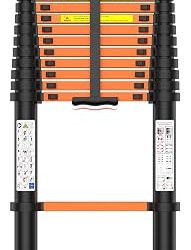
ANSI certification, a 330 lb capacity, and detachable roof hooks in one collapsible package, which is a rare combination at this length. If you are outfitting a garage rather than a work truck, this handles gutter runs, RV roofs, and single-story access without dominating the space.
Roof Ladder Hook 2 Pack, 500 lb Steel
Heavy-gauge steel with a wheeled nose so you can roll the ladder up the plane and let the hook drop over the ridge, sold in the pair you actually need for stability. The 500 lb rating is the standout: it turns an ordinary extension ladder into a legitimate roof ladder for a fraction of the cost of a dedicated unit.
Ladder Roof Hook 2 Pack with Rubber T-Bar Grip
Functionally similar to the pick above, but with rubber on both the wheel and the T-bar contact surface, which is what you want on architectural shingles or a metal roof. Choose this one when the finish you are protecting matters as much as the grip.
Frequently Asked Questions
Do I need two roof hooks or is one enough?
Two. A single hook lets the ladder pivot and twist under load. A matched pair mounted to both rails distributes weight across the ridge and keeps the ladder square while you move on it.
Will a ridge hook damage my roof?
Bare steel can dent ridge caps and mar metal panels. Look for rubber-covered wheels and coated contact bars, and on very soft or aged shingles place a folded towel or foam pad under the hook as cheap insurance.
What pitch is too steep for a hooked extension ladder?
As a working rule, once you pass about a 6/12 pitch, or on any wet or metal surface, move to a steep-assist ladder. The hook still holds, but your footing on the way up stops being reliable.
Can I use a telescoping ladder with roof hooks?
Only if the manufacturer supports it, as the SINMEIRUN Pro does with detachable hooks. Retrofitting aftermarket hooks onto a telescoping ladder not rated for it puts load on collapsible sections that were never designed to carry it.
Final Thoughts
For steep or slick roofs where footing is the real risk, the Echo Ridge 18 Foot and The Goat Compact are the two worth your money, with the Echo Ridge edging ahead on value thanks to the included rope and bag. If you already own a solid extension ladder and simply need a safe way over the ridge, the 500 lb Roof Ladder Hook 2 Pack is the most cost-effective upgrade you can make, and no roof job should start without gloves, a helper on the ground, and a clear look at the weather.