Key takeaways
- Tooth count and its trade-off: Low counts around 24 to 40 teeth clear waste fast and rip solid stock without bogging down. High counts of 60 to 100 leave a far cleaner edge but cut slower and build heat, so reserve them for crosscuts, sheet goods, and finish work.
- Arbor size, checked before you click: Most 8-1/4 and 10-inch blades use a 5/8-inch arbor, while many 12-inch blades run a 1-inch arbor. Some blades include a diamond knockout for saws that need it. Confirm your saw’s spindle rather than assuming.
- Tooth grind for your material: An ATB (alternate top bevel) grind slices wood fibers cleanly and is the right default for hardwood, melamine, and veneered plywood. Flatter grinds excel at ripping and dado work but leave a rougher face.
- Plate quality and kerf: A tensioned, laser-cut plate with expansion slots stays flat under heat, which matters more to cut quality than tooth count alone. Thin-kerf blades reduce strain on underpowered saws; full kerf resists deflection on cabinet saws.
- One blade or a set: Swapping blades takes two minutes and transforms results. Multi-packs that pair a ripping blade with a finish blade cost little more than a single premium blade and cover far more of your workflow.
What's inside
The blade that shipped with your table saw was chosen to hit a price point, not to leave a glass-smooth edge on walnut. That is why so many first furniture projects end the same way: burn marks along a rip cut, splintered veneer on a plywood carcass, and an hour of sanding to rescue a joint that should have needed none. The saw is rarely the problem. The 24 or 32 carbide teeth spinning on its arbor almost always are.
This guide looks at table saw blades the way a furniture maker does, judging them by the surface they leave behind rather than the specs printed on the sticker. Below you will find the picks worth putting on your saw in 2026, a short framework for matching tooth count and geometry to the work you actually do, and answers to the questions that come up once you start buying blades by task instead of buying one and hoping.
As an Amazon Associate we earn from qualifying purchases.



How to Choose a Saw Blade For Table Saw (2026)
- Tooth count and its trade-off: Low counts around 24 to 40 teeth clear waste fast and rip solid stock without bogging down. High counts of 60 to 100 leave a far cleaner edge but cut slower and build heat, so reserve them for crosscuts, sheet goods, and finish work.
- Arbor size, checked before you click: Most 8-1/4 and 10-inch blades use a 5/8-inch arbor, while many 12-inch blades run a 1-inch arbor. Some blades include a diamond knockout for saws that need it. Confirm your saw’s spindle rather than assuming.
- Tooth grind for your material: An ATB (alternate top bevel) grind slices wood fibers cleanly and is the right default for hardwood, melamine, and veneered plywood. Flatter grinds excel at ripping and dado work but leave a rougher face.
- Plate quality and kerf: A tensioned, laser-cut plate with expansion slots stays flat under heat, which matters more to cut quality than tooth count alone. Thin-kerf blades reduce strain on underpowered saws; full kerf resists deflection on cabinet saws.
- One blade or a set: Swapping blades takes two minutes and transforms results. Multi-packs that pair a ripping blade with a finish blade cost little more than a single premium blade and cover far more of your workflow.
The Best Saw Blade For Table Saw (2026)s Reviewed
FOXBC 10-Inch 80-Tooth Ultra Finish Blade
This is the blade to reach for when the cut will be visible in the finished piece, whether that is a mitered picture frame or the exposed edge of a plywood shelf. The 80-tooth ATB grind leaves a surface clean enough to go straight to finish sanding, though you will want to feed slowly to avoid heat buildup in dense hardwoods.
10-Inch 3-Pack: 32T, 60T and 80T
The most sensible purchase for anyone building furniture rather than framing walls, this set covers ripping, general crosscutting, and finish work without compromise at any stage. Treating blades as task-specific tools is the single biggest upgrade most home shops can make, and this pack makes that habit affordable.
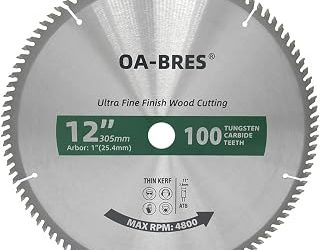
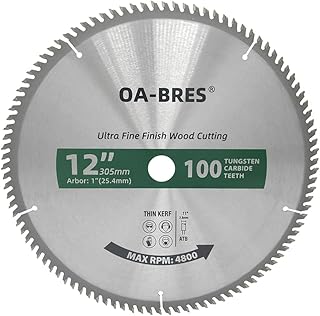
12-Inch 100-Tooth ATB TCT Blade, 1-Inch Arbor
Built for larger miter and table saws, the 100-tooth count produces the closest thing to a polished edge you will get off a saw, which is exactly what you want for trim, casework, and long miters that must close without a gap. Verify your saw takes a 1-inch arbor and has the power to swing a 12-inch blade at speed.
FOXBC 8-1/4 Inch 60-Tooth Fine Finish Blade
Compact jobsite saws deserve better than their factory blade, and this 60-tooth option transforms them into credible furniture tools for small parts and sheet goods. The diamond knockout adds compatibility with saws that use that arbor style, a detail that saves a return.
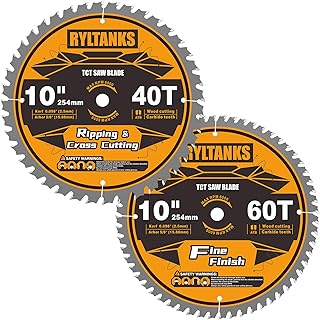
10-Inch 2-Pack: 40T Ripping and 60T Finish
A leaner alternative to the three-blade set, this pairing handles the two jobs that dominate most builds: breaking down solid stock and cutting joinery-ready crosscuts. The 40-tooth blade is versatile enough to leave mounted for general work, with the 60-tooth reserved for show surfaces.
Frequently Asked Questions
How many teeth do I need for plywood?
Sixty teeth is the practical sweet spot on a 10-inch saw, and 80 is better still if tear-out on veneered faces is your main concern. Pair a high tooth count with a zero-clearance insert for the cleanest possible bottom edge.
Can one blade do everything?
A 40-tooth combination blade comes closest and is a reasonable single-blade choice, but it compromises on both ends. If you rip thick hardwood and also cut finish miters, two blades will serve you far better than one.
Why is my blade burning the wood?
Burning usually points to a dull blade, resin buildup on the teeth, a fence that is out of parallel, or feeding too slowly. Clean the blade with a dedicated resin remover before assuming it needs replacing.
Is thin kerf worth it?
On saws under about 1.75 horsepower, yes. A thinner plate removes less material and reduces bogging, at the cost of slightly more deflection in deep cuts.
Final Thoughts
For most home furniture builders, the 10-inch 3-pack in 32T, 60T and 80T is the smartest starting point because it teaches you to match the blade to the cut. If you would rather buy one excellent blade, the FOXBC 10-Inch 80-Tooth delivers the finish quality that makes hand-sanding almost optional, while owners of compact saws should go straight to the FOXBC 8-1/4 Inch 60-Tooth.