Key takeaways
- Tooth count matched to the cut: Roughly 24 to 32 teeth for ripping solid lumber, 40 teeth as a general-purpose combination, and 60 to 80 teeth for crosscuts, veneered plywood, and melamine where chip-out shows.
- Diameter and arbor: Confirm your saw takes a 10-inch or 8-1/4-inch blade and check the arbor. Most stationary saws use a 5/8-inch arbor; many cordless compact saws use a diamond arbor, so look for a diamond knockout.
- Kerf and motor power: Thin-kerf blades remove less material and strain small motors less, which matters on contractor and jobsite saws under two horsepower. Full-kerf plates run steadier on cabinet saws.
- Carbide quality and grind: Larger, well-brazed carbide teeth hold an edge through more board feet. An alternate top bevel grind slices cleanly across grain; a flat-top raker clears waste fast on rips.
- Plate flatness and coating: A tensioned, laser-cut plate with expansion slots resists warping and vibration. Anti-friction coatings cut pitch buildup and keep resinous woods like pine from scorching.
What's inside
Anyone who has pulled a fresh sheet of walnut ply off the table saw only to find a fuzzy, splintered edge knows the problem: the blade that shipped in the box was never meant for finish work. Stock blades are compromise tools, ground to move material at a reasonable price, and they quietly cap the quality of everything you build. In a workshop where the end goal is a floating shelf, a cabinet door, or a dining table that reads as intentional rather than improvised, the blade is the difference between a joint you sand and a joint you fill.
This guide looks at the table saw blades worth buying in 2026, chosen for the kind of work that actually happens in a home shop: sheet goods, hardwood face frames, mitered trim, and the occasional rough rip. We cover what tooth count and grind geometry really do, where multi-blade sets earn their shelf space, and which single blade to reach for if you only want to own one. Every pick below is available on Amazon and matched to a specific job rather than sold as a do-everything solution.
As an Amazon Associate we earn from qualifying purchases.



How to Choose Saw Blades For Table Saw (2026)
- Tooth count matched to the cut: Roughly 24 to 32 teeth for ripping solid lumber, 40 teeth as a general-purpose combination, and 60 to 80 teeth for crosscuts, veneered plywood, and melamine where chip-out shows.
- Diameter and arbor: Confirm your saw takes a 10-inch or 8-1/4-inch blade and check the arbor. Most stationary saws use a 5/8-inch arbor; many cordless compact saws use a diamond arbor, so look for a diamond knockout.
- Kerf and motor power: Thin-kerf blades remove less material and strain small motors less, which matters on contractor and jobsite saws under two horsepower. Full-kerf plates run steadier on cabinet saws.
- Carbide quality and grind: Larger, well-brazed carbide teeth hold an edge through more board feet. An alternate top bevel grind slices cleanly across grain; a flat-top raker clears waste fast on rips.
- Plate flatness and coating: A tensioned, laser-cut plate with expansion slots resists warping and vibration. Anti-friction coatings cut pitch buildup and keep resinous woods like pine from scorching.
The Best Table Saw Blades of 2026, Reviewed
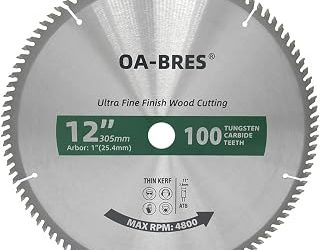
FOXBC 10-Inch 80-Tooth Ultra Finish Blade
This is the blade to install when the cut face becomes the visible edge, and it leaves veneered plywood and pre-finished panels nearly free of tear-out. Feed slowly and keep it for crosscuts and sheet goods only, since 80 teeth will scorch a thick hardwood rip.
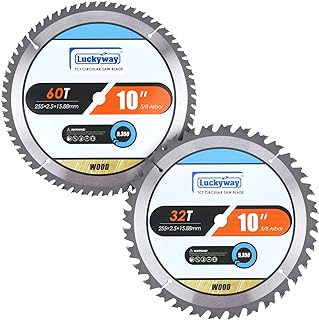
Luckyway 10-Inch 60T and 32T Two-Pack
A smart entry point for a shop that needs both speed and polish without buying two premium blades. The 32-tooth handles framing lumber and rough dimensioning, while the 60-tooth steps in for cabinet parts and trim.
DEWALT 10-Inch 40-Tooth Fine Finish (DWA11040)
If you want one blade that stays on the arbor most of the year, this is it. The 40-tooth carbide layout is genuinely balanced, ripping hardwood without bogging a mid-size motor while still producing crosscuts clean enough for glue-up.
FOXBC 8-1/4-Inch 60-Tooth Fine Finish
Built for compact and cordless jobsite saws, where a 60-tooth fine-finish grind is a real upgrade over the 24-tooth blade most of them ship with. The diamond knockout means it fits both 5/8-inch and diamond arbors, so it moves between saws easily.
10-Inch 32T, 60T and 80T Three-Pack
The most complete kit here, covering framing, finish, and ultra-fine work in one purchase at a lower per-blade cost than buying individually. Best suited to shops willing to swap blades between operations rather than chase one compromise setup.
Frequently Asked Questions
How many teeth do I need for plywood?
Sixty teeth is the practical minimum for clean plywood, and 80 is better for veneered or pre-finished panels. Pair a high tooth count with a zero-clearance insert to support the fibers right at the cut line.
Can I use a miter saw blade on a table saw?
Often yes, provided the diameter, arbor, and kerf match and the blade is rated for the saw’s rpm. Check the maximum speed stamped on the plate, and never use a blade with a negative hook angle designed for a sliding miter saw on a table saw feed.
Why is my cut burning the wood?
Burning usually points to a dull or pitch-coated blade, a fence out of parallel with the blade, or too many teeth for the thickness being ripped. Clean the blade with a resin remover before assuming it needs replacing.
Is a multi-blade set better than one good blade?
A set makes sense if you regularly switch between rough framing and finish work, since no single blade excels at both. If most of your work is furniture-scale hardwood and sheet goods, one quality 40-tooth blade plus a dedicated 80-tooth finish blade is the cleaner setup.
Final Thoughts
For most home shops building furniture, the DEWALT 40-tooth fine finish blade is the one to buy first because it handles the widest range of cuts without a noticeable drop in edge quality. Add the FOXBC 80-tooth when veneered plywood and visible edges enter the picture, and consider the 32T/60T/80T three-pack if you are starting from scratch and want the full range covered in a single order.