Key takeaways
- Tooth count by task: Stay in the 24-40T range for ripping thick hardwood, where you need gullet space to clear heavy chip loads without bogging the motor. Move to 60T for clean crosscuts and sheet goods, and reserve 80T for ultra-fine finish cuts on visible edges, trim, and mitered casework.
- Grind geometry: ATB (alternate top bevel) is the default for hardwood because the beveled teeth slice fibers before they can lift, which is what keeps crosscut shoulders crisp. Flat-top grinds rip faster but leave a rougher wall, and combination grinds split the difference if you only want one blade on the arbor.
- Arbor and diameter fit: Most benchtop and contractor saws take a 5/8-inch arbor with a 10-inch plate. Cabinet saws and larger 12-inch machines often use a 1-inch arbor, so confirm both numbers before buying. Never shim a blade to fit an arbor it wasn’t made for.
- Plate quality and carbide: Look for a tensioned, laser-cut plate with expansion slots and a thin anti-friction coating. Carbide tips should be generously brazed with enough material to survive several sharpenings, since that is where long-term value lives.
- Kerf and saw power: Thin-kerf blades remove less material and ask less of underpowered motors, which matters on jobsite saws working through 4/4 and thicker hardwood. Full-kerf plates track straighter and resist deflection if you have the horsepower to drive them.
What's inside
Hardwood punishes the wrong blade. Feed a slab of white oak or hard maple into a dull, under-toothed plate and the material tells on you immediately: scorch lines along the rip, tearout at the shoulder, a wandering cut that refuses to sit flush when you go to glue up. Most of the frustration people blame on their saw is really a blade problem, and it shows up worst on the species we actually want in a finished room, dense, figured, expensive stock where a single ruined pass costs real money.
This guide looks at table saw blades through the lens of furniture that has to live in a home and be looked at up close. We cover the tooth counts and geometries worth owning, how arbor size and blade diameter narrow your options, and which specific blades earn their keep for ripping thick hardwood versus cutting joinery-ready crosscuts. Selections below span 8-1/4-inch through 12-inch plates, single blades and multi-packs, so you can match your saw rather than the other way around.
As an Amazon Associate we earn from qualifying purchases.


How to Choose a Table Saw Blades For Hardwood (2026)
- Tooth count by task: Stay in the 24-40T range for ripping thick hardwood, where you need gullet space to clear heavy chip loads without bogging the motor. Move to 60T for clean crosscuts and sheet goods, and reserve 80T for ultra-fine finish cuts on visible edges, trim, and mitered casework.
- Grind geometry: ATB (alternate top bevel) is the default for hardwood because the beveled teeth slice fibers before they can lift, which is what keeps crosscut shoulders crisp. Flat-top grinds rip faster but leave a rougher wall, and combination grinds split the difference if you only want one blade on the arbor.
- Arbor and diameter fit: Most benchtop and contractor saws take a 5/8-inch arbor with a 10-inch plate. Cabinet saws and larger 12-inch machines often use a 1-inch arbor, so confirm both numbers before buying. Never shim a blade to fit an arbor it wasn’t made for.
- Plate quality and carbide: Look for a tensioned, laser-cut plate with expansion slots and a thin anti-friction coating. Carbide tips should be generously brazed with enough material to survive several sharpenings, since that is where long-term value lives.
- Kerf and saw power: Thin-kerf blades remove less material and ask less of underpowered motors, which matters on jobsite saws working through 4/4 and thicker hardwood. Full-kerf plates track straighter and resist deflection if you have the horsepower to drive them.
The Best Table Saw Blades For Hardwood (2026)s Reviewed
KENDO 10-Inch Circular Saw Blade Set, 2-Pack 40T/60T
The most sensible starting point for anyone building furniture on a 10-inch saw: a 40T ATB for ripping hardwood and a 60T for plywood, MDF, and finish crosscuts, so you stop compromising with one blade. Pairing them means you can rough out a project fast and switch to the finer plate only for the cuts that will be seen.
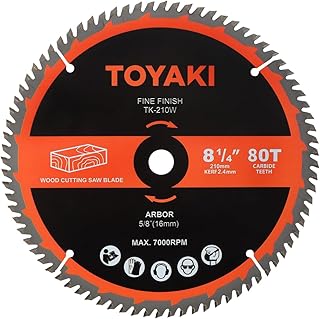
FOXBC 10-Inch Table Saw Blade, 80-Tooth
An 80T ultra-fine plate on a 5/8-inch arbor, built for the last pass rather than the first. Use it on face frames, mitered returns, and anything getting a clear finish, and feed slowly to let the tooth count do its job instead of overheating the tip.
3-Pack 10-Inch Table Saw Blades, 32T/60T/80T
The widest coverage per dollar here, with a 32T for framing and rough stock, 60T for general finish work, and 80T for the cleanest edges. Good for a shop that is still figuring out which blade it reaches for most, and a fair way to keep a dedicated plate for dirty reclaimed lumber.
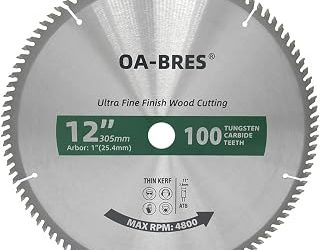
SawWorks 12″ 60T ATB Carbide Blade, 1″ Arbor
Built for cabinet-shop machines with a 1-inch arbor, this 60T ATB has the diameter to handle taller hardwood stock in a single pass. If you are cutting thick maple or walnut on a serious saw, the larger plate stays notably more composed than a 10-inch blade pushed to its limit.
WEN BL1080 10-Inch 80-Tooth Carbide-Tipped Blade
A dependable, affordable 80T finish blade that punches above its price on miter and table saws alike. Best treated as a dedicated finish plate you swap in for final cuts, keeping it away from glue lines, plywood, and anything with hidden fasteners.
Frequently Asked Questions
What tooth count is best for hardwood?
It depends on the cut. Use 24-40T for ripping along the grain, 60T for crosscuts and sheet goods, and 80T when the edge will be visible in a finished piece. A single 40T combination blade is a workable compromise if you only own one.
Why does my hardwood burn even with a new blade?
Burning usually means the wood is spending too long against the teeth. Check your fence for parallel alignment, keep feed rate steady rather than hesitant, and confirm the blade is clean, since pitch buildup causes friction that mimics dullness.
Can I use a miter saw blade on a table saw?
Often yes, provided the diameter, arbor, and kerf match your saw and the blade is rated for the higher sustained load. High-tooth-count miter blades work well for finish cuts on a table saw but are a poor choice for ripping thick stock.
Thin-kerf or full-kerf for hardwood?
Thin-kerf is the right call for saws under about 2 HP because it reduces the load and saves material. If you have a cabinet saw with power to spare, a full-kerf plate resists deflection and holds a straighter line through dense hardwood.
Final Thoughts
For most home woodworkers building furniture on a 10-inch saw, the KENDO 40T/60T set covers the widest range of real work with the fewest compromises, and the FOXBC 80T is the plate to add when edge quality matters more than speed. If you are working on a cabinet saw with a 1-inch arbor, the SawWorks 12″ 60T is the one that will feel like an upgrade rather than a replacement.