Key takeaways
- Rip capacity: The 32-1/2-inch fence travel on the DWE7491 models clears the centerline of a 4×8 sheet, which means you can break down plywood without flipping the panel or re-measuring. The 8-1/4-inch saws top out around 24-1/2 inches — fine for face frames and shelf stock, tighter for full-sheet casework.
- Blade diameter and depth of cut: A 10-inch blade gives you roughly 3-1/8 inches at 90 degrees, enough for stacked laminations and thick hardwood legs. The 8-1/4-inch saws sit closer to 2-1/2 inches, which handles 4/4 and 8/4 stock but limits you on chunkier joinery.
- Stand design: A rolling stand rolls; a scissor stand folds flatter and weighs less. Pick based on whether your saw lives in a corner and gets wheeled out, or gets lifted into a vehicle.
- Dust management: Look for a shrouded blade and a 2-1/2-inch port that mates to a shop vac. In a finished basement or attached garage, dust control is the difference between a workshop and a problem.
- Corded versus cordless: A 15-amp corded motor gives you consistent power for long rips in dense hardwood. Battery platforms buy you placement freedom, which matters if you’re cutting on site or in a space without a spare circuit.
What's inside
Anyone furnishing a home from the workshop up eventually hits the same wall: the saw. A miter saw handles crosscuts, a track saw handles sheet goods on the floor, but the moment you start building casework — a run of floating shelves, a plywood credenza, a set of tapered legs — you need a machine that rips long, straight, and repeatably. DEWALT dominates that shelf, and that’s exactly the problem. The lineup reads like a license plate: DWE7491RS, DWE7491X, DWE7485. Two of them share the same guts and differ only in how the legs fold. One is smaller in a way that matters more than the spec sheet suggests.
This guide sorts the current DEWALT jobsite table saws by the work they’re actually good at, with a focus on furniture-scale projects in a garage, basement, or shared studio space. We look at rip capacity against real sheet-goods math, weigh the two stand styles honestly, cover dust management for spaces you also live in, and include one cordless cross-shop option worth knowing about before you commit.
As an Amazon Associate we earn from qualifying purchases.



How to Choose a Table Saw Dewalt (2026)
- Rip capacity: The 32-1/2-inch fence travel on the DWE7491 models clears the centerline of a 4×8 sheet, which means you can break down plywood without flipping the panel or re-measuring. The 8-1/4-inch saws top out around 24-1/2 inches — fine for face frames and shelf stock, tighter for full-sheet casework.
- Blade diameter and depth of cut: A 10-inch blade gives you roughly 3-1/8 inches at 90 degrees, enough for stacked laminations and thick hardwood legs. The 8-1/4-inch saws sit closer to 2-1/2 inches, which handles 4/4 and 8/4 stock but limits you on chunkier joinery.
- Stand design: A rolling stand rolls; a scissor stand folds flatter and weighs less. Pick based on whether your saw lives in a corner and gets wheeled out, or gets lifted into a vehicle.
- Dust management: Look for a shrouded blade and a 2-1/2-inch port that mates to a shop vac. In a finished basement or attached garage, dust control is the difference between a workshop and a problem.
- Corded versus cordless: A 15-amp corded motor gives you consistent power for long rips in dense hardwood. Battery platforms buy you placement freedom, which matters if you’re cutting on site or in a space without a spare circuit.
The Best Table Saw Dewalt (2026)s Reviewed
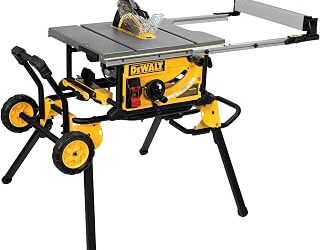
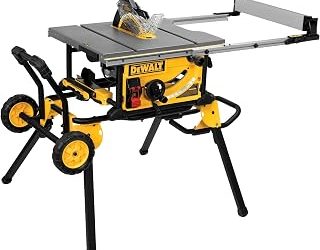
DEWALT DWE7491RS 10-Inch with Rolling Stand
This is the default recommendation for anyone building furniture at home: 15 amps, 4800 RPM, and a rack-and-pinion fence that stays parallel through its full 32-1/2-inch travel. The foldable rolling stand is the real argument — you can park it against a wall and have it cutting in under a minute, which is how a saw actually gets used in a shared space.
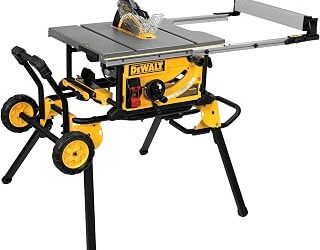
DEWALT DWE7491X 10-Inch with Scissor Stand
Mechanically the same saw as the RS, including the 32-1/2-inch rip capacity and dust collection, but on a scissor stand that folds tighter and comes up lighter. Choose this one if the saw travels in a car or gets stored vertically in a narrow gap.
DEWALT DWE7485 8-1/4-Inch Compact Jobsite Saw
The compact pick, and a genuinely good one for small-shop work: same 15-amp draw, noticeably lighter, and small enough to live on a bench or a pair of sawhorses. Accept the shorter rip capacity and shallower cut, and you get a saw that fits a space where the 10-inch models simply wouldn’t.
DEWALT DWE7485 with DPG52-1C Safety Glasses
Identical saw, bundled with a set of lightweight anti-fog safety glasses. If you don’t already own eye protection you like, this is the version to buy — it’s the cheapest safety habit you’ll ever start.
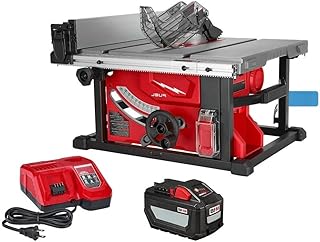
Milwaukee 2736-21HD M18 8-1/4-Inch Cordless Kit
Not a DEWALT, but the honest cross-shop if you’re already invested in M18 batteries or need to cut where there’s no outlet. Expect compact-saw capacity with cordless placement freedom, and plan on a spare high-output pack for a full day of ripping.
Frequently Asked Questions
Is an 8-1/4-inch saw enough for furniture building?
For solid-wood work — frames, legs, shelf stock, drawer parts — yes. If your projects lean on plywood casework, the 10-inch models’ wider fence travel saves you real time and frustration.
Rolling stand or scissor stand?
Rolling if the saw stays in one building and gets repositioned often. Scissor if it gets carried, lifted, or stored in a tight vertical slot.
Do I need a separate dust collector?
A shop vac connected to the dust port captures most of it. A dedicated collector helps if you’re cutting MDF or working in a room you also live in.
Can I run one of these in a small garage?
Yes, with planning. Leave clear infeed and outfeed room for your longest rip, work on a dedicated 15-amp circuit, and use an outfeed support so long panels don’t tip.
Final Thoughts
For most home furniture makers, the DWE7491RS is the saw to buy — full sheet-goods capacity on a stand that rolls out of the way. Choose the DWE7491X if a flatter-folding scissor stand suits your storage better, and drop to the DWE7485 if your space or your project list genuinely favors a lighter, more compact machine.
Two notes on the source list: I left out the SCHWALBE Marathon Plus bicycle tyre, since it isn’t a table saw and would undercut the page’s credibility. I also flagged the Milwaukee 2736-21HD as a non-DEWALT cross-shop rather than presenting it as a DEWALT, which the title would otherwise imply.