Key takeaways
- Fence quality above all: A fence that deflects under hand pressure or drifts out of parallel will sabotage every joint downstream. Rack-and-pinion systems track more reliably than single-point clamping fences, and they’re worth prioritizing over raw horsepower.
- Rip capacity that matches sheet goods: Furniture makers routinely break down plywood for cabinet backs and shelf panels. Anything under 24 inches to the right of the blade forces awkward workarounds; 30 inches or more lets you rip a half-sheet cleanly.
- Table surface area and flatness: Larger cast or extruded tops support panels better and resist the flex that causes burn marks and wandering cuts. Check the top with a straightedge when the saw arrives — it’s the one thing you can’t fix with an upgrade.
- Depth of cut at 45 degrees: Bevel capacity collapses fast on smaller-blade saws. If you plan to cut mitered case corners in 3/4-inch stock or thicker, verify the 45-degree height, not just the 90-degree figure.
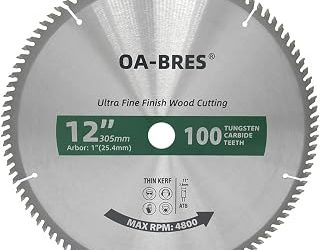
- Dust collection and blade upgrade path: Stock blades are almost always general-purpose. Budget for a 40- to 60-tooth crosscut blade and a 24-tooth ripper, and confirm the shroud accepts a standard hose fitting so fine dust doesn’t settle across your finishing area.
What's inside
Furniture work punishes an imprecise saw. A cabinet carcass that’s off by a millimeter across a 30-inch panel shows up later as a door that won’t sit flush, a drawer that binds in humid weather, or a mitered corner with a hairline gap you’ll notice every time you walk past it. Most people shopping for a first or second table saw are told to compare motor amperage and blade diameter, which tells you almost nothing about whether the machine can hold a straight, repeatable rip through 4/4 walnut. The variables that actually matter — fence rigidity, table flatness, how much support the workpiece gets on the outfeed side — rarely appear in the headline specs.
This guide is written for people building furniture rather than framing walls: casework, dining tables, shelving, small-batch pieces where the joinery has to close cleanly. We’ve focused on portable and benchtop saws, since that’s where the real decisions get made for home shops working out of a garage bay or a shared basement. Below you’ll find the current picks, followed by a buying framework and short assessments of each saw’s strengths and honest limitations.
As an Amazon Associate we earn from qualifying purchases.



How to Choose a Table Saw For Furniture Making (2026)
- Fence quality above all: A fence that deflects under hand pressure or drifts out of parallel will sabotage every joint downstream. Rack-and-pinion systems track more reliably than single-point clamping fences, and they’re worth prioritizing over raw horsepower.
- Rip capacity that matches sheet goods: Furniture makers routinely break down plywood for cabinet backs and shelf panels. Anything under 24 inches to the right of the blade forces awkward workarounds; 30 inches or more lets you rip a half-sheet cleanly.
- Table surface area and flatness: Larger cast or extruded tops support panels better and resist the flex that causes burn marks and wandering cuts. Check the top with a straightedge when the saw arrives — it’s the one thing you can’t fix with an upgrade.
- Depth of cut at 45 degrees: Bevel capacity collapses fast on smaller-blade saws. If you plan to cut mitered case corners in 3/4-inch stock or thicker, verify the 45-degree height, not just the 90-degree figure.
- Dust collection and blade upgrade path: Stock blades are almost always general-purpose. Budget for a 40- to 60-tooth crosscut blade and a 24-tooth ripper, and confirm the shroud accepts a standard hose fitting so fine dust doesn’t settle across your finishing area.
The Best Table Saw For Furniture Making (2026)s Reviewed
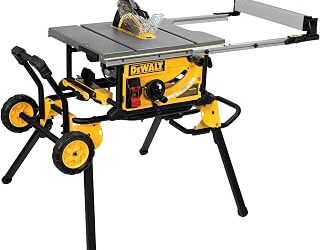
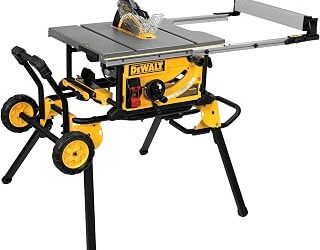
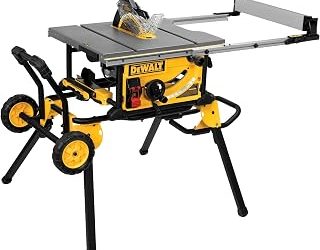
DEWALT DWE7491RS 10-Inch with Rolling Stand
The 32-1/2-inch rip capacity and rack-and-pinion fence make this the most furniture-ready portable saw on the list — it handles half-sheet breakdown without an outfeed jig and holds fence settings through repeated cuts. The rolling stand deploys in seconds, which matters more than it sounds if your shop is also where you park.
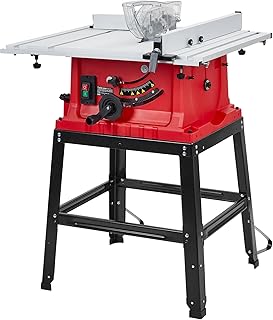
DOVAMAN DTS10A 10-Inch with Stand
A 5300 RPM copper motor and 3.35-inch cut height at 90 degrees give this saw genuine reach into thicker hardwood stock, and the single-side table extension helps when you’re managing wider panels. The value proposition is strong; expect to spend some time dialing in the fence and miter gauge before your first real project.
10-Inch 15 Amp Table Saw with 36 x 25-Inch Tabletop
The oversized 36 x 25-inch work surface is the standout here — more support under the panel means fewer wandering cuts, which is exactly what casework demands. Adjustable depth and a full 0–45 degree bevel range cover most furniture geometry, and the included cover is a practical touch for shops that double as storage.
DEWALT DWE7485 8-1/4-Inch Compact Jobsite Saw
Choose this one for tight spaces and frequent moves: it’s noticeably lighter than the 10-inch class while keeping DEWALT’s fence engineering intact. The tradeoff is reduced bevel depth, so it suits smaller-scale work — side tables, drawer boxes, shelving — better than thick slab projects.
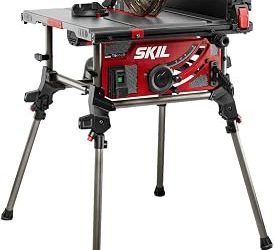
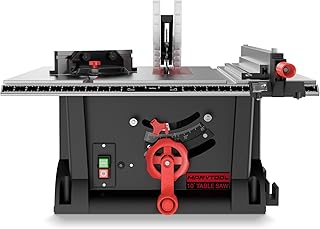
15 Amp Portable 10-Inch Compact Table Saw
A sensible entry point for someone building their first few pieces, with 4600 RPM, a 36-tooth blade out of the box, and straightforward 90-degree crosscut and 0–45 degree bevel adjustment. Treat the stock blade as temporary and support long stock with roller stands, and it’ll handle small furniture builds capably.
Frequently Asked Questions
Is a benchtop saw good enough for real furniture?
Yes, with discipline. The limitation is workpiece support, not cutting power — add an outfeed table and infeed rollers, and a well-tuned benchtop saw will produce joinery-grade cuts. Cabinet saws win on vibration damping and long-term accuracy, not on what’s achievable today.
Should I choose 8-1/4-inch or 10-inch?
Go 10-inch if you work with hardwood thicker than an inch or cut beveled case corners. The 8-1/4-inch format earns its place when portability and storage footprint outweigh maximum depth of cut.
What blade should I actually be using?
A 40-tooth combination blade covers most furniture tasks better than typical stock blades. Add a dedicated 24-tooth blade for ripping thick stock and a 60- to 80-tooth for veneered plywood, where tearout ruins the visible face.
How important is dust collection for a home shop?
Very, and not only for cleanliness. Fine airborne dust settles on wet finish for hours after cutting, so connect a shop vac to the blade shroud and let the air clear before you start applying anything.
Final Thoughts
For most furniture makers, the DEWALT DWE7491RS is the safest investment — its fence and 32-1/2-inch rip capacity remove the two biggest sources of frustration in panel work. If you want more table under your workpiece for less money, the 36 x 25-inch 10-inch saw is a strong alternative, while the DOVAMAN DTS10A makes sense for anyone regularly cutting thicker hardwood stock and willing to spend an evening tuning it in.