Key takeaways
- Slot geometry: Measure your miter slot before ordering. Most cabinet and contractor saws use a 3/4″ x 3/8″ slot, but T-shaped slots and plain U-slots need different bars. A kit rated for both gives you room to move between saws.
- Runner material: UHMW glides with almost no friction and shrugs off humidity, while machined aluminum offers more rigidity and often includes set screws to dial out side-to-side play. Neither swells the way hardwood runners do in a damp shop.
- Adjustability: Look for expansion screws or nylon-tipped grub screws along the bar. That single feature is the difference between a sled that tracks dead straight and one you shim with tape for years.
- Track and hardware included: Aluminum T-track lets you add stop blocks, hold-downs, and flip stops later. Kits bundling track, knobs, bolts, and predrilled bars save a separate trip to the hardware aisle and keep everything dimensionally matched.
- Capacity versus footprint: A wide sled handles panel work but eats bench space and can overhang the table on smaller saws. If most of your cuts are short rails, stiles, and off-cuts, a compact small-parts sled will earn more use.
What's inside
Anyone who has built a case, a picture frame, or a set of drawer boxes knows the moment: you clamp the pieces together and one shoulder sits a hair proud of the other. The miter gauge that shipped with the saw wobbles in its slot, the workpiece creeps under hand pressure, and the tear-out on the show face has to be sanded away. A crosscut sled fixes all three problems at once by turning a spinning blade and a loose fence into a single, repeatable system that rides the table on tight-fitting runners.
This guide covers the sleds and sled components worth building around in 2026, from complete hardware kits that pair T-track with UHMW miter bars, to a shop-ready sled dedicated to small parts, to standalone runners for anyone rebuilding a jig they already trust. Each pick is judged on fit in the miter slot, adjustability, material stability across seasons, and how cleanly it integrates with a plywood or MDF base.
As an Amazon Associate we earn from qualifying purchases.


How to Choose a Table Saw Sleds (2026)
- Slot geometry: Measure your miter slot before ordering. Most cabinet and contractor saws use a 3/4″ x 3/8″ slot, but T-shaped slots and plain U-slots need different bars. A kit rated for both gives you room to move between saws.
- Runner material: UHMW glides with almost no friction and shrugs off humidity, while machined aluminum offers more rigidity and often includes set screws to dial out side-to-side play. Neither swells the way hardwood runners do in a damp shop.
- Adjustability: Look for expansion screws or nylon-tipped grub screws along the bar. That single feature is the difference between a sled that tracks dead straight and one you shim with tape for years.
- Track and hardware included: Aluminum T-track lets you add stop blocks, hold-downs, and flip stops later. Kits bundling track, knobs, bolts, and predrilled bars save a separate trip to the hardware aisle and keep everything dimensionally matched.
- Capacity versus footprint: A wide sled handles panel work but eats bench space and can overhang the table on smaller saws. If most of your cuts are short rails, stiles, and off-cuts, a compact small-parts sled will earn more use.
The Best Table Saw Sleds (2026)s Reviewed
21P Table Saw Sled Kit
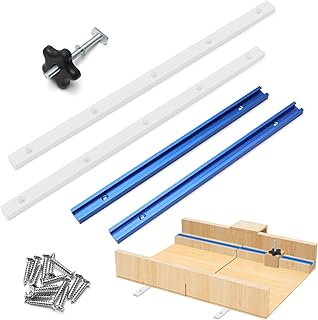
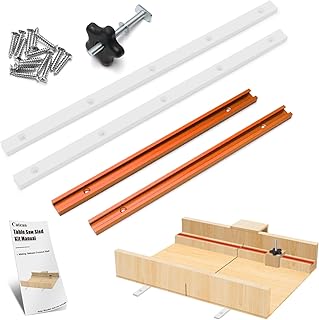
The most complete starting point here: two aluminum T-tracks, two predrilled UHMW miter bars, and the knobs and screws to assemble a full sled in an afternoon. The predrilled holes keep your fastener spacing honest, which matters more than most builders expect when squaring the fence.
Rockler Small Parts Crosscut Sled
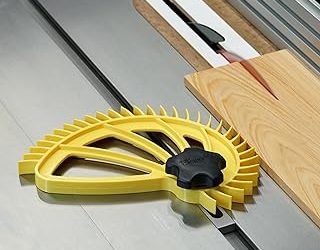
A finished sled rather than a kit, and the one to reach for when your fingers would otherwise be uncomfortably close to the blade. The zero-clearance support behind the cut line produces crisp shoulders on thin stock and keeps small off-cuts from diving into the throat plate.
Catcan Crosscut Sled Kit (12″ T-Track)
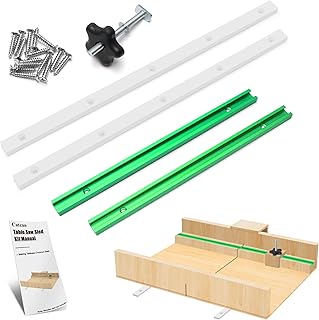
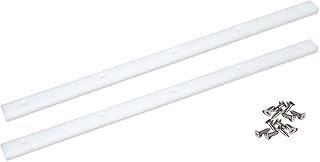
Well-proportioned for a mid-size sled, with 12″ aluminum tracks and 17″ UHMW bars that suit a typical 27″ deep table without hanging off the front edge. The included bolt and knob hardware is generous enough to mount a stop block right away.
Catcan Crosscut Sled Kit for Table Saw Runners
Essentially the same recipe with different track and bar lengths, making it the better match if you are scaling a sled up or replacing runners on an existing base. Fit in the slot is snug out of the box, with just enough clearance to slide without lift.
O’SKOOL Aluminum Miter Bars, 430mm
Choose these when precision is the whole point. The adjustable design lets you eliminate lateral play in the slot, and at 430mm they provide enough bearing length to keep a heavy sled from racking mid-cut across both T-shaped and U-slots.
Frequently Asked Questions
Do I need a sled if I already have a miter gauge?
A sled supports the workpiece on both sides of the blade and moves with it, so nothing shifts during the cut. A miter gauge cannot match that, especially on wide panels or short pieces.
What should I use for the sled base?
Void-free plywood or MDF between 1/2″ and 3/4″ is the standard choice. Let the sheet acclimate in your shop for a few days before cutting so the base stays flat after assembly.
Will UHMW bars work in a bandsaw or router table?
Yes. UHMW options such as the 3/4″ x 3/8″ x 17″ bars with predrilled holes fit standard miter slots on bandsaws and router tables as well, which makes them useful across several jigs.
How do I get the fence perfectly square?
Use the five-cut method: make four successive cuts around a test panel, measure the taper on the final off-cut, and shift the fence by one-quarter of the error. Repeat until the deviation disappears.
Final Thoughts
For most shops, the 21P Table Saw Sled Kit is the cleanest path to a sled you will keep for years, while the Rockler Small Parts Crosscut Sled solves the narrow-stock problem that no full-size sled handles gracefully. If you are rebuilding rather than starting fresh, the O’SKOOL Aluminum Miter Bars are the upgrade that quietly removes the last bit of play from an otherwise good jig.