Key takeaways
- Match the fabric to your actual life: Performance weaves and coated PU shrug off liquid, while linen and faux linen reward rooms where meals are calmer. Be honest about which household you have, not the one in the catalog photo.
- Check the seat shape before the color: Rear-covered slipcovers suit chairs with an open back rail; full stretch covers need a seat pad they can grip. Measure seat width, depth, and pad thickness, then compare against the listing range.
- Prioritize washability over stain treatments: A cover you can pull off and run through a machine beats any coating that eventually wears thin. Removable and washable is the single feature that keeps dining upholstery looking intentional.
- Buy yardage with a cutting plan: Two yards handles four standard drop-in seats; go to three-plus if your chairs have wrapped backs, skirts, or a pattern you need to align. Order one extra yard for mistakes — you will make one.
- Look at the frame under the fabric: Solid wood legs, reinforced joinery, and a stated weight capacity tell you whether the upholstery is worth investing in at all. Nailhead trim and tailoring details are what make a mid-priced chair read as considered.
What's inside
The dining chair is the hardest-working seat in the house, and its upholstery takes the brunt of it: elbows, spilled cabernet, a toddler’s yogurt spoon, the cat who has decided the head of the table belongs to her. Most people don’t shop for dining chair upholstery until something has gone visibly wrong. By then the choice feels like damage control rather than design, and the temptation is to grab whatever ships fastest in a color close enough to the room.
This guide takes the opposite approach. We looked at three routes to a better-dressed dining room in 2026 — protective slipcovers that buy your existing chairs another decade, yardage for a proper reupholstery project, and finished chairs that arrive already wearing the right fabric. Below you’ll find the standouts in each category, plus the material logic that separates upholstery you’ll still like in five years from upholstery you’ll be apologizing for by spring.
As an Amazon Associate we earn from qualifying purchases.




🛒 Best Price Today on Amazon
Prime members get fast, free shipping on everything above, plus member-only deals. New members get a 30-day free trial — cancel anytime.
How to Choose a Upholstery For Dining Room Chairs (2026)
- Match the fabric to your actual life: Performance weaves and coated PU shrug off liquid, while linen and faux linen reward rooms where meals are calmer. Be honest about which household you have, not the one in the catalog photo.
- Check the seat shape before the color: Rear-covered slipcovers suit chairs with an open back rail; full stretch covers need a seat pad they can grip. Measure seat width, depth, and pad thickness, then compare against the listing range.
- Prioritize washability over stain treatments: A cover you can pull off and run through a machine beats any coating that eventually wears thin. Removable and washable is the single feature that keeps dining upholstery looking intentional.
- Buy yardage with a cutting plan: Two yards handles four standard drop-in seats; go to three-plus if your chairs have wrapped backs, skirts, or a pattern you need to align. Order one extra yard for mistakes — you will make one.
- Look at the frame under the fabric: Solid wood legs, reinforced joinery, and a stated weight capacity tell you whether the upholstery is worth investing in at all. Nailhead trim and tailoring details are what make a mid-priced chair read as considered.
The Best Upholstery For Dining Room Chairs (2026)s Reviewed
SearchI Waterproof PU Seat Covers, Set of 6
The most pragmatic pick here: a soft PU surface that wipes clean in one pass, cut in a rear-covered design that hugs the seat without bagging at the corners. The brown reads warmer than expected in daylight, making this the rare protective cover that doesn’t announce itself as a protective cover.
Stretch Washable Dining Chair Seat Slipcovers, Set of 6
A breathable knit that stretches over slightly irregular seat pads and holds its line through repeated washing, which is where cheaper stretch covers surrender. Genuinely good at shedding pet hair, and the smoothest way to unify six mismatched chairs before hosting.
TinaKim Thick Faux Linen Upholstery Fabric
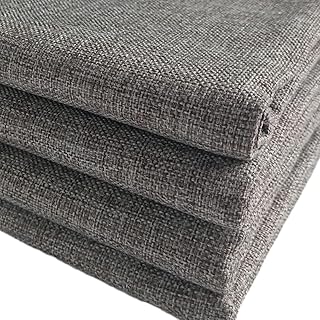
Substantial enough for seat pads and sofa work, with the slubby texture of real linen and none of its wrinkling drama; the flaxen shade sits neatly between oat and camel. Two yards covers a standard set of four, though the 3.3-yard faux linen needlework fabric in grey blue is the better call for larger or wrapped-back projects.
chairus Slipcovered Parsons Dining Chairs, Set of 4
These solve the problem in one purchase: high-back parsons frames in wood, wearing removable linen covers you can strip and launder. The khaki stripe leans modern farmhouse without tipping into costume, and replaceable covers mean one bad night doesn’t end the chair.
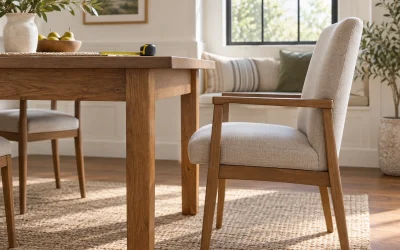
Beige Upholstered Dining Chairs with Nailhead Trim, Set of 2
The dressiest option, with hand-set nailhead detail, solid wood legs, and a 400-pound capacity that explains the reassuring lack of wobble. Breathable neutral fabric and quick assembly make this an easy pair to add at the ends of an existing table.
Frequently Asked Questions
What upholstery fabric holds up best in a dining room?
Tightly woven performance fabrics and coated PU lead on cleanability. Faux linen is the best-looking durable compromise — dense enough to resist abrasion, forgiving about minor marks.
Are slipcovers a real solution or just a patch?
A real solution, provided they fit. A well-cut washable cover protects the original upholstery underneath and can be swapped seasonally, which is more flexibility than reupholstery offers.
How much fabric do I need to reupholster dining chairs?
Roughly half a yard per drop-in seat, so two yards for four chairs. Wrapped backs, thick foam, or patterns requiring alignment push that toward three to four yards.
Should I choose light or dark upholstery?
Light shades keep a small dining room open but demand washable covers. Darker or textured neutrals disguise wear better and age more gracefully in high-traffic homes.
Final Thoughts
For most households, the SearchI waterproof PU covers deliver the highest return for the least effort, with the stretch washable slipcover set close behind for anyone chasing a softer, more textile look. If you’re replacing rather than rescuing, the chairus slipcovered parsons set is the smartest long-game buy — a proper chair with upholstery you can take off and wash, which is really all anyone wants from a dining room seat.