Key takeaways
- Blade speed range: Mild steel wants roughly 100–250 FPM; aluminum and brass tolerate faster. Variable-speed models in the 130–470 FPM band cover steel, non-ferrous metal, and the occasional PVC or hardwood cut, which is why they suit mixed-material furniture work better than single-speed saws.
- Vertical versus convertible: True vertical saws excel at freehand curves, notching, and coping tube. Horizontal/vertical hybrids clamp stock in a vise and drop the head through it for repeatable square cuts, then flip up for vertical work — the more versatile choice if you only own one saw.
- Throat and cut capacity: Check both the widest cut and the deepest. A 5-inch capacity handles most 2-inch tube and angle. Larger throat depths matter when you’re cutting shapes out of plate rather than chopping stock to length.
- Rigidity and vibration: Cast iron and heavy steel frames absorb the chatter that ruins finish quality and snaps blades. Lightweight stamped bases flex under feed pressure, so budget benchtop saws benefit from bolting down to a solid bench.
- Power and voltage: A 1/2 to 3/4 HP motor on 115V is fine for occasional furniture work. Industrial 220V single-phase machines cut faster and longer without heat soak, but confirm you have the circuit before you order.
What's inside
Metal cutting sits at an awkward intersection for anyone building furniture at home. You want clean, square cuts in square tube, angle iron, and flat bar so a table base actually sits flat, but most of the saws marketed to hobbyists are wood machines with a metal-cutting badge stuck on the side. Blade speed is the tell: steel wants a slow, patient feed rate, and a saw locked at woodworking speeds will cook a blade in minutes and leave burred, blued edges you then have to grind out.
This guide looks at vertical band saws through a maker’s lens — the kind of machine that lives in a garage studio next to a welding table and gets used for hairpin legs, blackened steel shelf brackets, and mitered frames. We cover what actually matters when you’re shopping (speed range, throat depth, whether the saw converts between horizontal and vertical, and how honest the manufacturer is about capacity), then walk through the strongest options across the price spectrum, from a portable unit you can carry to the work to a floor-standing industrial machine with its own blade welder.
As an Amazon Associate we earn from qualifying purchases.


How to Choose a Vertical Band Saw For Metal Cutting (2026)
- Blade speed range: Mild steel wants roughly 100–250 FPM; aluminum and brass tolerate faster. Variable-speed models in the 130–470 FPM band cover steel, non-ferrous metal, and the occasional PVC or hardwood cut, which is why they suit mixed-material furniture work better than single-speed saws.
- Vertical versus convertible: True vertical saws excel at freehand curves, notching, and coping tube. Horizontal/vertical hybrids clamp stock in a vise and drop the head through it for repeatable square cuts, then flip up for vertical work — the more versatile choice if you only own one saw.
- Throat and cut capacity: Check both the widest cut and the deepest. A 5-inch capacity handles most 2-inch tube and angle. Larger throat depths matter when you’re cutting shapes out of plate rather than chopping stock to length.
- Rigidity and vibration: Cast iron and heavy steel frames absorb the chatter that ruins finish quality and snaps blades. Lightweight stamped bases flex under feed pressure, so budget benchtop saws benefit from bolting down to a solid bench.
- Power and voltage: A 1/2 to 3/4 HP motor on 115V is fine for occasional furniture work. Industrial 220V single-phase machines cut faster and longer without heat soak, but confirm you have the circuit before you order.
The Best Vertical Band Saws For Metal Cutting (2026) Reviewed
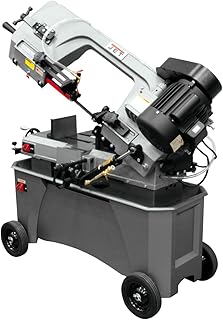
JET 7″ x 12″ Deluxe Horizontal/Vertical Band Saw (HVBS-712D)
The most complete package here for a serious home shop: 3/4 HP, multiple blade speeds, a swiveling head for miters, and the ability to run vertically when you need freehand control. It handles structural steel for table bases with genuine authority and holds square better than anything else in its class.
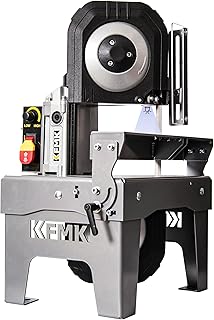
KAKA Industrial VS-2313 Vertical Band Saw
A 23-inch throat, tilting table, carbide guides, and an integrated blade welder put this in professional territory — you can cut internal shapes by threading the blade through a drilled hole and welding it closed. Overkill for occasional projects, ideal if metalwork is central to what you build.
WEN Metal Band Saw with Stand (BA4664)
WEN’s stand-mounted saw is the sensible middle ground: enough mass to cut steel calmly, a footprint that fits a one-car garage, and pricing that doesn’t demand you justify it. The stock blade is worth replacing early, but the machine underneath is honest.
JET 5″ x 6″ Horizontal/Vertical Band Saw (HVBS-56)
The compact sibling to the 712D, with the same convertible design in a 1/2 HP package. If your work runs to 1-inch tube, flat bar, and small brackets rather than heavy structural stock, this saves both money and bench space without giving up JET’s build quality.
VEVOR Portable Band Saw, 5″ Capacity
Handheld with a removable alloy steel base, so it works as a deep-cut portable saw or a small benchtop unit. Variable speed from roughly 138 to 472 FPM and a 0–45° adjustment make it a useful second saw for cutting installed material in place.
Frequently Asked Questions
Can I cut metal on a woodworking band saw?
Not safely or effectively. Wood band saws run far too fast for steel, which destroys blades and throws hot chips. Metal-cutting saws use gear reduction to reach the low speeds ferrous material requires.
What blade should I use for steel tube?
A bi-metal blade with 14–18 TPI for thin wall tube — you want at least three teeth engaged in the material at all times. Coarser 10–14 TPI blades suit thicker solid stock.
Do I need coolant?
For occasional cuts, no. For repeated cuts in thicker steel, cutting fluid or a wax stick extends blade life considerably and improves edge finish. Many horizontal/vertical saws include a coolant system.
Is a benchtop saw enough for furniture work?
Usually yes, provided it’s bolted to something solid. Hairpin legs, shelf brackets, and frame stock rarely exceed the capacity of a good 5-inch saw. Move up to a floor-standing machine when you’re regularly cutting 2-inch-plus solid bar.
Final Thoughts
For most home furniture makers, the JET HVBS-712D is the machine to buy once and keep — convertible, accurate, and powerful enough for real structural steel. The WEN BA4664 delivers the best value if you want capability without the JET premium, and the VEVOR portable earns its place as a flexible second saw for cuts you can’t bring to the bench.