Key takeaways
- Active chemistry: Hydrogen-peroxide and oxygenated formulas break down organic staining without bleaching nearby fabrics or scorching foliage. Sodium hypochlorite blends kill growth faster but demand careful masking and heavy pre-wetting of beds.
- Dilution and true coverage: Compare cost per finished gallon, not bottle size. A highly concentrated 1-quart bottle that yields 40 gallons will outlast a ready-to-use gallon by a wide margin on a two-story elevation.
- Applicator compatibility: Confirm the formula is rated for downstream soap injection. Some thicker concentrates clog low-pressure siphon tubes, and a few are designed strictly for hose-end or pump sprayers.
- Dwell behavior: The best products stay wet for five to ten minutes on a vertical surface. Fast-drying solutions leave tiger stripes on lap siding, particularly in direct afternoon sun.
- Landscape and finish safety: Look for EPA Safer Choice certification or explicit clearance for aluminum, stucco, brick, and painted wood if your elevation mixes materials, which most 2026 exteriors do.
What's inside
Exterior siding is the largest single surface on most homes, and it quietly undoes all the styling work happening elsewhere. You can invest in a considered entry, layered planting, and a warm porch light, but a north-facing wall streaked with green algae and chalky gray film reads as neglect from thirty feet away. The frustrating part is that vinyl rarely fails: it just collects biological growth in the shaded, damp zones where airflow is poor, and a garden hose alone will never reach the roots of it.
A dedicated siding detergent solves what pressure alone cannot. Surfactants lift oxidation and pollen film, while oxygenated or biocidal actives break down mildew and moss so they release instead of smearing. This guide covers six formulas that work through a pressure washer’s soap injector or a hose-end applicator, with notes on dwell time, coverage math, and which ones behave around plantings and painted trim.
As an Amazon Associate we earn from qualifying purchases.



How to Choose a Vinyl Siding Cleaner Pressure Washer (2026)
- Active chemistry: Hydrogen-peroxide and oxygenated formulas break down organic staining without bleaching nearby fabrics or scorching foliage. Sodium hypochlorite blends kill growth faster but demand careful masking and heavy pre-wetting of beds.
- Dilution and true coverage: Compare cost per finished gallon, not bottle size. A highly concentrated 1-quart bottle that yields 40 gallons will outlast a ready-to-use gallon by a wide margin on a two-story elevation.
- Applicator compatibility: Confirm the formula is rated for downstream soap injection. Some thicker concentrates clog low-pressure siphon tubes, and a few are designed strictly for hose-end or pump sprayers.
- Dwell behavior: The best products stay wet for five to ten minutes on a vertical surface. Fast-drying solutions leave tiger stripes on lap siding, particularly in direct afternoon sun.
- Landscape and finish safety: Look for EPA Safer Choice certification or explicit clearance for aluminum, stucco, brick, and painted wood if your elevation mixes materials, which most 2026 exteriors do.
The Best Vinyl Siding Cleaners Reviewed
Oxy Solve House and Siding Cleaner, 1 Gallon Concentrate
A peroxide-driven concentrate that handles mold and mildew across vinyl, aluminum, wood, brick, and stucco without the chlorine smell or plant risk. This is the most versatile pick here for mixed-material facades, and the gallon size makes sense for anyone cleaning a full perimeter in one weekend.
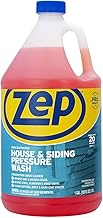
Zep House and Siding Wash, 128 oz
Zep’s gallon wash is the workhorse choice: it cuts through road film, chalking, and general grime with a short dwell and rinses clean without residue. Ideal for annual maintenance washing rather than heavy biological remediation.
Simple Green Oxy Solve Total Outdoor Cleaner
EPA Safer Choice certified and rated for both pressure washer and manual application, which makes it the most flexible option for homes with dense foundation plantings. Expect to let it sit a full ten minutes on entrenched moss, but the finish is remarkably even.
Kärcher House & Siding Cleaner
Kärcher’s highly concentrated formula yields up to 40 gallons of working solution, so the cost per elevation is genuinely low. It’s engineered for pressure washer detergent tanks and pairs best with the brand’s own machines, though it siphons fine on most standard units.
Zep Concentrated Outdoor Glass and Surface Cleaner Bundle
This pairing of a 32 oz glass concentrate with a gallon of siding wash covers the two surfaces that give away a dirty exterior fastest. A smart bundle for anyone tackling windows and cladding in the same pass.
Frequently Asked Questions
Do I need a pressure washer at all?
Not always. Products like 30 Seconds Outdoor Cleaner include a hose-end attachment and work through chemistry plus dwell time, which is the safer approach on older or brittle vinyl where high pressure can force water behind the panels.
What pressure setting is safe for vinyl siding?
Stay between 1,300 and 1,600 PSI with a 25- or 40-degree tip, held at least a foot from the wall. Always spray downward or straight on, never upward into the seams.
Will these cleaners damage my landscaping?
Peroxide-based formulas are the gentlest. Thoroughly wet all beds before you start, rinse them again after, and cover anything delicate with a drop cloth regardless of which product you choose.
How often should siding be cleaned?
Once a year for most homes, twice for shaded elevations or humid coastal climates where moss returns quickly.
Final Thoughts
For most homes, the Oxy Solve House and Siding Cleaner is the balanced choice: strong on mildew, safe across mixed materials, and forgiving around plantings. Choose the Kärcher concentrate if coverage economy matters most on a large elevation, or 30 Seconds Outdoor Cleaner if you would rather skip the pressure washer and let the chemistry do the work.