Key takeaways
- Choose a finish suited to the wood and the room: oil for natural feel, polyurethane for harder surfaces, paint for pine and rubberwood.
- Dust with a dry or slightly damp soft cloth; avoid soaking wood.
- Keep wood away from radiators, direct sun and damp walls to limit warping and fading.
- Allow new finishes to cure and ventilate well, following the finish maker’s guidance.
- Look for timber certified by FSC or PEFC if sustainability matters to you.
For a solid-wood wardrobe, teak, sheesham (Indian rosewood) and oak suit buyers who want long life and a refinishable surface, pine and rubberwood suit tighter budgets, and cedar or camphor lined interiors suit people who like a natural scent in storage. If durability, stability and price matter more than appearance, a plywood carcass with a solid-wood front often outperforms an all-solid build in a humid or changing climate.
Our top picks


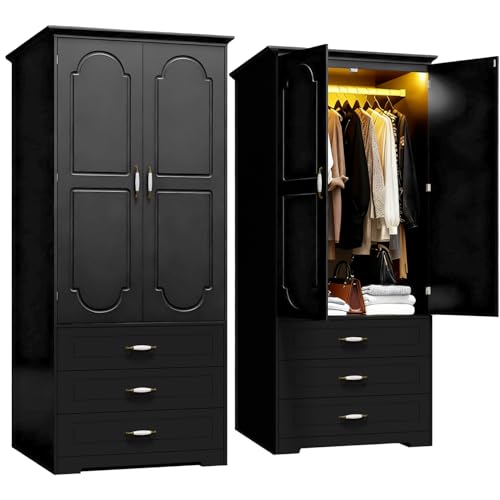

As an Amazon Associate we earn from qualifying purchases at no extra cost to you.
At a Glance: Woods for Wardrobes
| Wood | Best for | Commonly stated traits | Limits |
|---|---|---|---|
| Teak | Long-term premium builds, humid regions | Natural oils, good dimensional stability, resistant to many pests | High cost; sourcing and certification matter |
| Sheesham (Indian rosewood) | Traditional, strong furniture | Dense hardwood with pronounced grain | Heavy; supplies and legal sourcing vary |
| Oak | Classic and shaker styles | Hard, durable, takes stain well | Heavy; tannins can react with iron fixings |
| Walnut | Contemporary premium look | Rich dark tone, fine grain | Premium cost |
| Maple | Light, clean interiors | Hard, fine grain, paints and stains evenly | Can show blotching with some stains |
| Mango wood | Mid-range, sustainable-leaning solid builds | Often from plantation trees after fruit production, attractive grain variation | Needs good drying; can vary by supplier |
| Rubberwood | Budget-friendly solid builds | Plantation-grown, light colour, takes paint well | Less naturally pest-resistant unless treated |
| Pine | Budget and painted pieces | Softwood, easy to work, light weight | Dents easily; knots and resin |
| Cedar (interior lining) | Drawers and closet lining | Aromatic wood used in closet products | Scent fades; not structurally ideal as a main carcass |
How Wood Behaves in a Wardrobe
Wardrobes face two challenges: weight and humidity. Shelves and rods carry clothing, and doors swing on hinges for years. Solid wood expands and contracts across its width as humidity changes; the Forest Products Laboratory of the US Forest Service documents this behaviour in its Wood Handbook. Quartersawn boards and well-dried timber move less. Furniture makers handle this by using frame-and-panel doors, where a floating panel sits in a frame, instead of wide solid slabs.
This is why many solid-wood wardrobes use hardwood frames with plywood or engineered panels, and why designers sometimes combine solid-wood doors with a plywood carcass. The result looks like solid wood but is more stable.
Hardwoods Compared
Teak
Teak is widely described as a stable, durable wood with natural oils. It is a premium choice for wardrobes in humid or coastal homes. Buy from suppliers who document legal sourcing, since teak from unmanaged forests raises ethical concerns, and consider plantation teak for lower environmental impact.
Sheesham
Sheesham is popular in South Asia and widely sold in imported furniture. It is dense, shows rich grain and polishes well. Because trade in some rosewood species is regulated, ask the seller for species information and documentation.
Oak
Oak is a long-standing favourite in Western furniture, valued for hardness and its open grain. White oak and red oak differ in colour and moisture behaviour; white oak is generally described as more resistant to moisture. Use brass or stainless fixings to avoid staining from tannin reactions with iron.
Walnut and maple
Walnut offers a dark, refined look; maple a pale, even one. Both are used in contemporary wardrobes, often as veneer over a stable core to control cost and movement.
Budget-Friendly Woods
Rubberwood and mango wood
These plantation woods have become common in mid-priced solid-wood furniture. Makers present them as a way to use trees at the end of their latex or fruit-bearing life. Quality depends on kiln-drying and finishing; reputable makers state their finishing process.
Pine
Pine is light and economical, and easy to paint. It dents and scratches more easily than hardwoods, which can be part of its rustic charm. Choose kiln-dried, knot-sealed boards for painted wardrobes.
Aromatic Woods and Moth Concerns
Cedar and camphorwood are often used for liners, hanging rails or chests. Makers and extension services describe their aromas as a traditional way to make storage smell pleasant, but evidence that they reliably protect clothing from moths is limited, and the effect fades as the scent dissipates. Rely on clean storage, sealed containers and regular airing for fabric care. Strong aromas can bother some people; if anyone in the household has respiratory sensitivities, see a clinician before choosing heavily scented wood.
Finish and Care
- Choose a finish suited to the wood and the room: oil for natural feel, polyurethane for harder surfaces, paint for pine and rubberwood.
- Dust with a dry or slightly damp soft cloth; avoid soaking wood.
- Keep wood away from radiators, direct sun and damp walls to limit warping and fading.
- Allow new finishes to cure and ventilate well, following the finish maker’s guidance.
- Look for timber certified by FSC or PEFC if sustainability matters to you.
Budget Tiers
Budget
Pine, rubberwood and engineered boards with wood-look finishes are typical. Rubberwood and pine suit painted or lightly stained wardrobes in dry rooms.
Mid-range
Mango wood, sheesham, oak veneers and quality solid-wood frames with plywood panels dominate this tier. They balance beauty with practicality.
Premium
Teak, walnut, solid oak and custom-built wardrobes with traditional joinery sit at the top. These suit buyers who plan to keep and refinish the furniture over decades.
Pick X If… Decision Table
| Pick this if… | Choose |
|---|---|
| You live in a humid or coastal area | Teak or high-quality plywood with solid-wood trim |
| You want a traditional, heavy, long-life wardrobe | Sheesham or oak, with frame-and-panel doors |
| You like a modern dark tone | Walnut veneer on a stable core |
| You want to paint the wardrobe | Rubberwood, maple or pine |
| Budget is tight but you want solid wood | Rubberwood or pine, kiln-dried |
| You want a pleasant-smelling lining | Cedar or camphor drawers or liners |
| You want the least warping risk | Plywood carcass with solid-wood frames |
Alternatives to All-Solid Wood
- Plywood with veneer: stable, lighter, and kinder to budgets.
- HPL laminate on plywood: easiest to maintain, widest colour choice.
- Bamboo boards: a fast-growing material sold in panel form by some makers, with a distinct look.
Joinery and Build Quality Matter as Much as Species
A wardrobe made from a modest wood with sound joinery will outlast a poorly built piece in a prestigious species. Traditional joints such as mortise and tenon, dowels and dovetails resist the racking forces that come from opening heavy doors thousands of times. Frame-and-panel doors let the panel move inside its frame as humidity changes, which reduces cracking. Look at how drawer boxes are joined, how the back panel is fixed, and whether the shelves are supported by more than a few pins.
Ask about drying. Timber that has been kiln-dried to a moisture level suited to indoor use is less likely to warp, split or open at the joints after delivery. Reputable makers state how their wood is dried and finished, and the Wood Handbook published by the US Forest Service explains why moisture content matters for furniture. If you are buying a ready-made piece, open the doors, run your hand along the edges and inner faces, and look for rough machining, large knots in load-bearing parts and doors that do not sit flush.
Hardware deserves the same scrutiny. Solid hinges, ball-bearing runners and stainless or brass fixings last longer than thin, plated parts. For tall wardrobes, ask whether anti-tip fixings are included and fix the unit to the wall according to the maker’s instructions, especially in homes with children. Whatever wood you choose, confirm the warranty terms in writing and ask how repairs and refinishing are handled if the surface is scratched in the future.
Sizing and Layout Considerations
Solid wood is heavy, so plan the delivery route and the floor before ordering. Measure doorways, stairwells and the ceiling height, and leave a small gap at the top and sides so the wardrobe can be levelled and so doors can swing open without catching on skirting boards. Hanging space is usually planned at about 24 inches deep for standard hangers, with a rail height that suits the longest garment you own. Drawers and shelves are more useful for folded items when they are not too deep, because stacks at the back are hard to reach. Interior lighting, a mirror on the door and a plinth that hides uneven floors are practical additions that many buyers add late and regret omitting.
Frequently Asked Questions
Which is the best wood for a wardrobe overall?
Teak is often regarded as the best for longevity and stability, while sheesham and oak offer excellent strength at lower cost. The best fit depends on climate, budget and the style you want.
Is solid wood better than plywood for wardrobes?
Not necessarily. Solid wood offers authenticity and refinishing, but it moves with humidity. Plywood carcasses with solid-wood fronts often combine both strengths.
Will cedar keep moths away?
Cedar is traditionally used for that purpose, but the protection is limited and fades as the aroma weakens. Clean clothes, airtight storage and regular airing remain the reliable approach.
How do I stop a wooden wardrobe from warping?
Use kiln-dried timber, frame-and-panel doors, balanced finishes on all sides, and avoid placing it against damp walls or heat sources.
Is rubberwood a good option?
It is a common plantation wood in mid-priced furniture. It paints well and is affordable, but it needs proper drying and finishing, and is less naturally pest-resistant than teak.
How can I make sure the wood is responsibly sourced?
Ask for species names, origin and certifications such as FSC or PEFC, and avoid sellers who cannot provide basic documentation.
More from Amazon
Programs that pair well with the guide above. Offers and eligibility are set by Amazon and may change.
Collect the home and kitchen items you want in one registry that guests can shop from.
Create a wedding registrySet up recurring deliveries of everyday items on eligible products. Terms and savings are set by Amazon.
Explore Subscribe & SaveFree shipping on eligible items, Prime Video and more. Eligible new members can start with a free trial.
Start a Prime free trialAudiobooks and podcasts to listen to on the go. Eligible new members can start with a free trial.
Try Audible freeAs an Amazon Associate we earn from qualifying purchases.