Key takeaways
- Counter height (kitchen island at 36 inches): Need a counter stool with a 24–26 inch seat height. Leaves 10–12 inches of leg clearance between seat and counter underside.
- Bar height (bar table at 42 inches): Need a bar stool with a 29–31 inch seat height. Same 10–12 inch clearance rule.
- Spacing: Allow 26–30 inches center-to-center per stool, and at least 6 inches between stool edges. For a 72-inch island, that is 2 stools comfortably, 3 only if they are narrow (17-inch wide) backless designs.
- Traffic clearance: Leave 36 inches minimum from the back of the stool to the wall or appliance behind it when someone is seated. In a 10×12 ft kitchen with an island, this often means you can only fit 2 stools on the long side without blocking the fridge or dishwasher.
- Backless vs. low-back vs. high-back: Backless stools tuck fully under a 15-inch overhang, saving 18–20 inches of floor space. Low-back (6–10 inch backrest) adds lumbar support without dominating the room. High-back (16+ inch) is most comfortable but needs 30+ inches of depth and blocks sightlines.
The most durable black bar stools in 2026 are powder-coated metal or solid hardwood with a matte or satin black finish — gloss black looks sharper at first but shows fingerprints, scratches, and chips faster, while matte powder-coat resists wear and is easiest to maintain long-term.
Our top picks
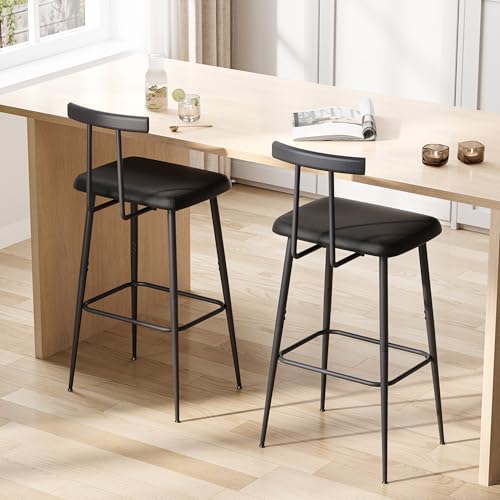

As an Amazon Associate we earn from qualifying purchases at no extra cost to you. Ratings are shown as listed on Amazon.
Matte vs. Satin vs. Gloss Black: Which Finish Actually Lasts
The finish matters more than the base material for how a black stool ages. All three blacks will look identical online, but they behave very differently after six months of daily use.
Matte Black
Matte is the most forgiving. It diffuses light, so it hides fine scratches, dust, and fingerprints. Most matte black stools today use powder-coating on metal or a catalyzed matte lacquer on wood. Powder-coating is baked on, so it resists chipping and yellowing better than spray paint. The downside is that cheap matte paint can feel chalky and will burnish to a shiny spot where your legs rub if it lacks a clear topcoat.
Choose matte if you want low maintenance, have kids, or your kitchen gets direct sunlight. Look for the phrase “matte powder-coat” or “matte lacquer with clear topcoat” in the specs.
Satin Black
Satin is the middle ground with a soft 30-50% sheen. It wipes cleaner than flat matte and still hides most fingerprints. On wood, satin is the standard for factory finishes because it balances durability and touch-up ease. On metal, satin powder-coat is slightly harder than matte and less likely to show rub marks.
Choose satin if you want a bit of depth without the high maintenance of gloss.
Gloss Black
High-gloss black (70%+ sheen) is striking in photos but is the least forgiving in real life. Every fingerprint, water spot, and micro-scratch is visible. On metal, gloss is often a wet paint or epoxy rather than powder-coat, which chips more easily on footrests and stretchers. On wood, gloss requires multiple clear coats to avoid cracking, and any chip reveals light wood underneath, which is very obvious.
Choose gloss only for a low-use bar area or a formal setting where you can wipe stools down daily. Avoid it for the daily breakfast counter.
To make any black finish last longer, prioritize UV-resistant and moisture-resistant topcoats. Black pigment fades fastest near sunny windows and over radiators. If your stools will sit within 3 feet of a south-facing window, ask for a UV-stable powder-coat or a lacquer with UV inhibitors.
Metal vs. Wood vs. Upholstered Black Bar Stools
Your base material determines weight, comfort, noise, and what fails first.
| Material | Typical Weight Limit | Weight Per Stool | What Wears First | General Market Range (per stool) | Best For |
|---|---|---|---|---|---|
| Solid Steel / Powder-Coated Metal | 300–400 lbs | 15–25 lbs | Footrest paint rub, felt glides wearing thin | usually $120–$300 | Heavy daily use, rentals, modern kitchens |
| Solid Wood (oak, ash, beech) | 250–350 lbs | 18–28 lbs | Joint loosening, lacquer chipping on edges | usually $180–$450 | Warm look, homes that keep furniture long-term |
| Engineered Wood (MDF / plywood with veneer) | 220–280 lbs | 14–20 lbs | Edge veneer peeling from moisture, swivel mechanism | usually $90–$200 | Tight budgets, light use |
| Metal Frame + Upholstered Seat (fabric/leather) | 280–350 lbs | 20–30 lbs | Fabric pilling, foam compression, seams | usually $150–$400 | Comfort for sitting 60+ minutes |
| All Wood + Upholstered Seat | 250–325 lbs | 22–32 lbs | Same as wood + upholstery stains | usually $200–$500 | Traditional kitchens, longer seated meals |
Metal: The workhorse. Fully welded steel frames do not wobble over time, and powder-coat resists chipping better than any wood finish. They are loud on tile and can scratch floors without good glides, and bare metal seats get cold and hard. Look for a 1.2mm+ steel thickness and welded joints rather than bolted assembly if you want a stool that stays rigid after two years.
Solid Wood: More comfortable to the touch and quieter, but black paint on wood will eventually chip on the foot stretcher where shoes hit. Solid wood can be re-sanded and repainted, which metal cannot. Avoid softwoods like pine for black-painted stools — they dent easily and dents show as white spots through black paint.
Engineered Wood: Cheaper and lighter to move, but moisture from mopping or spills swells MDF at the base. Once the black foil edge lifts, it cannot be repaired invisibly. Only consider it if the stool will stay in a dry area and you need to keep costs down.
Upholstered: The comfort upgrade. A black upholstered seat softens a hard metal or wood frame and prevents the cold-seat problem. The trade-off is maintenance. For black stools, choose performance fabrics (polyester velvet, woven olefin) or faux leather with at least 50,000 double rubs, or genuine leather with a pigmented coating. Avoid light linen or cotton blends in black — they show lint and fade unevenly. Foam density matters: 1.8 lb/cu ft or higher for seat foam will not sag within a year; 1.2–1.5 density will compress quickly under daily use.
Sizing and Spacing: The Numbers That Prevent a Crowded Counter
Black stools visually recede, so people often buy too many. Use these measurements before you order:
- Counter height (kitchen island at 36 inches): Need a counter stool with a 24–26 inch seat height. Leaves 10–12 inches of leg clearance between seat and counter underside.
- Bar height (bar table at 42 inches): Need a bar stool with a 29–31 inch seat height. Same 10–12 inch clearance rule.
- Spacing: Allow 26–30 inches center-to-center per stool, and at least 6 inches between stool edges. For a 72-inch island, that is 2 stools comfortably, 3 only if they are narrow (17-inch wide) backless designs.
- Traffic clearance: Leave 36 inches minimum from the back of the stool to the wall or appliance behind it when someone is seated. In a 10×12 ft kitchen with an island, this often means you can only fit 2 stools on the long side without blocking the fridge or dishwasher.
- Backless vs. low-back vs. high-back: Backless stools tuck fully under a 15-inch overhang, saving 18–20 inches of floor space. Low-back (6–10 inch backrest) adds lumbar support without dominating the room. High-back (16+ inch) is most comfortable but needs 30+ inches of depth and blocks sightlines.
Test doorway and delivery fit: Most assembled black bar stools are 18–21 inches wide. Boxed flat-pack stools ship in cartons 34x20x16 inches and weigh 25–45 lbs for a set of two. If your doorway is 28–30 inches or you have a tight galley kitchen, flat-pack is easier to maneuver than a fully welded stool.
Decision Matrix: Which Black Bar Stool to Pick for Your Situation
Match your household to the right combination instead of shopping by photo alone.
| Your Situation | Best Finish + Material | Why It Works | Feature to Prioritize |
|---|---|---|---|
| Small apartment / need to tuck stools away | Matte powder-coated metal, backless, stackable | Lightest, stacks 4 high, matte hides scuffs in tight storage | Stackable frame, 17–18″ seat width, built-in floor glides |
| Kids and pets, daily heavy use | Matte or satin powder-coated metal + vinyl/faux leather seat | Wipes clean, resists scratches and pet hair, no fabric staining | Stain-resistant seat, welded footrest, 300+ lb rating |
| Renters who move often | Satin metal with wood seat or MDF with metal legs | Lighter to carry, bolted assembly disassembles easily, touch-up paint available | Flat-pack with included hardware, replaceable glides |
| Long seated meals / work-from-island / back pain | Solid wood or metal frame + upholstered seat with low back and footrest | Proper back support and 2″ thick high-density foam prevents pressure points | Footrest at 11–13″ from seat, foam density 1.8+, lumbar curve |
| Sunny kitchen / near window or patio door | Powder-coated metal, matte black, UV-stable topcoat | Wood lacquer can yellow and fade in direct sun; powder-coat resists UV | UV-resistant powder-coat, avoid engineered wood veneer |
Assembly, Moving, and What Actually Breaks First
Product listings rarely mention the weak points that show up after a year.
Assembly reality: Most black bar stools under $300 ship flat-pack with 8–16 bolts. Budget 20–35 minutes per stool and use your own Allen key driver — the included L-key strips bolts and leads to wobble. Check that leg levelers are included; without them, black metal legs will rock on tile and chip faster. For swivel stools, the swivel plate adds 7–10 lbs and is the first part to squeak; look for a sealed ball-bearing swivel rated for 300 lbs.
Moving and floor protection: Black stools show floor scratches more than any other color because the contrast highlights dust. Always add felt pads under metal legs, and replace them every 6–8 months. For wood floors, nylon glides are quieter than bare metal but need felt on top.
Durability timeline: On metal stools, the powder-coat on the footrest thins first from shoes — choose a stool with a brushed stainless or wood-capped footrest if you want zero touch-ups. On wood stools, the joint between legs and seat loosens first; look for corner blocks or metal brackets under the seat, not just dowels and glue. On upholstered stools, the front edge of the seat foam compresses first; a waterfall edge (rounded front) lasts longer than a sharp 90-degree edge.
How to avoid chipping and fingerprints long-term: Wipe matte and satin stools with a damp microfiber and mild soap only — avoid ammonia or abrasive cleaners that dull powder-coat. For gloss, a quick dry buff with microfiber after wiping prevents water spots. Keep a small bottle of matte black touch-up paint (enamel for metal, acrylic for wood) — a 5-second dab on a footrest chip prevents rust or wood swelling that would spread the damage.
How to Choose in 5 Steps
If you are comparing options right now, filter in this order:
- Measure your counter height and overhang depth, then lock in 24–26 inch vs. 29–31 inch seat height. Eliminate anything with the wrong height first.
- Decide on upkeep: matte/satin powder-coat for lowest maintenance, gloss only if you will clean daily.
- Pick the base material by use time. Sitting less than 30 minutes at a time: non-upholstered metal or wood is fine. Sitting 45+ minutes: upholstered seat with 1.8+ density foam and a footrest is worth the premium.
- Check construction specs: welded steel or solid wood with corner blocks, weight rating at least 50 lbs above the heaviest user, and replaceable glides.
- Confirm footprint: measure your island length and subtract 6 inches from each end, then divide by 27 inches per stool to get the correct quantity that avoids crowding.
FAQ
Do black bar stools fade in sunlight?
Yes, if the finish is not UV-stable. Powder-coated metal holds black far longer than painted wood or MDF foil. If the stool sits in direct sun for 4+ hours daily, choose powder-coat and expect to rotate or add a window film if you choose wood.
Are backless black stools comfortable?
For short use under 30 minutes they are fine, especially with a footrest 11–13 inches below the seat. For longer meals or working at the counter, a low-back reduces back fatigue significantly and is worth the extra 5–7 inches of depth.
How do I prevent black stools from chipping on the footrest?
Look for a footrest with a separate metal sleeve or wood cap, tighten all bolts after the first two weeks of use, and add clear adhesive protectors on high-contact edges. Touch up any chip immediately so moisture does not get under the finish.