Key takeaways
- Pros: Highest stain resistance, no vacuuming, pet hair does not embed, good for daily wiping.
- Cons: Can feel cold in winter and sticky in summer without climate control; lower-quality PU will peel along the seat edge and back where friction is highest. Avoid placing within 3 feet of a radiator or in direct sun, which accelerates cracking.
- Best for: Families with young kids, pet owners, and anyone who wants to clean a chair in under two minutes.
What's inside
- Which Black Finish Hides Daily Mess Best?
- Black Dining Chairs by Material: Cleaning and Wear Compared
- Fit and Clearance: Measurements That Prevent a Crowded Room
- Decision Matrix: Which Black Dining Chair to Pick for Your Situation
- Assembly, Weight, and What Wears Out First
- How to Keep Black Dining Chairs Clean Every Week
- FAQ
For black dining chairs that stay clean with the least effort, choose faux leather or powder-coated metal if you have kids and pets, black wood if you want durability without fabric maintenance, and only choose black fabric if you prioritize comfort and are willing to vacuum weekly and treat spills immediately.
- Which Black Finish Hides Daily Mess Best?
- Black Dining Chairs by Material: Cleaning and Wear Compared
- Fit and Clearance: Measurements That Prevent a Crowded Room
- Decision Matrix: Which Black Dining Chair to Pick for Your Situation
- Assembly, Weight, and What Wears Out First
- How to Keep Black Dining Chairs Clean Every Week
- FAQ
As an Amazon Associate we earn from qualifying purchases at no extra cost to you.


Which Black Finish Hides Daily Mess Best?
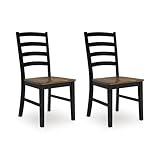
Not all black finishes hide dirt equally. The texture and sheen determine what shows. Matte black fabric hides dust and fingerprints but shows lint, pet hair, and light-colored crumbs. Matte black wood or metal hides crumbs but shows dust and water spots. Glossy black surfaces – lacquered wood or polished metal – show fingerprints and scratches immediately. Textured faux leather and powder-coated metal in a satin or matte black are the most forgiving for everyday use because they do not trap hair and wipe clean without leaving marks.
For stain visibility, solid black is more forgiving than black-and-gray patterns or charcoal. However, pure jet black will show flour, salt, and dried milk more than a slightly faded or distressed black. If your kitchen gets strong natural light, expect any glossy black chair to highlight micro-scratches over time.
Black Dining Chairs by Material: Cleaning and Wear Compared
| Material in Black Finish | Stain Resistance (1-5) | Typical Cleaning | Average Chair Weight | Long-Term Wear Issue | General Market Price Per Chair |
|---|---|---|---|---|---|
| Faux Leather (PU / Vegan Leather) | 5 | Wipe with damp cloth + mild soap, 1-2 minutes | 15-20 lbs | Peeling / cracking at seams after 3-5 years in heat/sun | usually $120–$280 |
| Genuine Leather | 4 | Wipe spills quickly, condition every 6 months | 18-25 lbs | Scratches and fading, but no peeling | usually $300–$700 |
| Fabric (Polyester Blend) | 3 | Vacuum weekly, blot spills, steam clean | 12-18 lbs | Pilling and absorption of odors/oils | usually $100–$250 |
| Fabric (Velvet / Boucle) | 2 | Vacuum with brush, professional cleaning for stains | 14-20 lbs | Crushing of pile, shows pressure marks | usually $150–$350 |
| Solid Wood (Painted Black) | 4 | Dust and wipe, touch-up paint for chips | 18-28 lbs | Chipping at edges and legs | usually $180–$450 |
| Metal (Powder-Coated Steel) | 5 | Wipe with damp cloth, no special products | 10-16 lbs | Chipping if coating is thin, can rust if scratched | usually $90–$220 |
1. Faux Leather Black Dining Chairs
Faux leather is the lowest-maintenance option for black dining chairs in a busy household. The non-porous surface resists red wine, ketchup, and oily foods if wiped within a few minutes. Most spills sit on the surface rather than soaking in.
- Pros: Highest stain resistance, no vacuuming, pet hair does not embed, good for daily wiping.
- Cons: Can feel cold in winter and sticky in summer without climate control; lower-quality PU will peel along the seat edge and back where friction is highest. Avoid placing within 3 feet of a radiator or in direct sun, which accelerates cracking.
- Best for: Families with young kids, pet owners, and anyone who wants to clean a chair in under two minutes.
2. Fabric Black Dining Chairs
Fabric is the most comfortable for long dinners but requires the most maintenance to stay clean. A black polyester or microfiber will outperform cotton, linen, or velvet for stain resistance.
- Pros: Breathable and soft, no temperature stickiness, wide range of textures. High-density foam (1.8 lbs/cu ft or higher) keeps shape longer.
- Cons: Even black fabric absorbs oils from skin and hair over time, leading to shiny, darker patches on the headrest and seat front. Light-colored pet hair and lint are highly visible. Liquid stains will wick into the weave unless the fabric has a performance finish.
- What to look for: Look for labels like “performance fabric,” “stain-repellent finish,” or a rub count above 30,000 double rubs for dining use. Removable, machine-washable covers make black fabric viable for households with kids.
3. Wood Black Dining Chairs
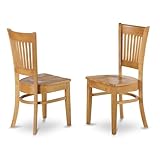
Solid wood chairs painted or stained black offer durability without upholstery care. Engineered wood (MDF with veneer) is lighter and cheaper but chips more easily at corners.
- Pros: No fabric to stain, easy to dust and wipe, sturdy for daily use. Solid wood frames typically support 250-300 lbs per chair, compared to 200-250 lbs for many metal or engineered wood models.
- Cons: Painted black shows chips as light wood or white primer underneath, especially on the front legs and backrest edges where chairs bump the table. Wood seats without a cushion are hard for meals longer than 45 minutes.
- Construction trade-off: Solid wood vs. engineered wood vs. metal frame matters more than color. Solid wood can be sanded and repainted; MDF cannot. Check that the chair uses corner blocks and wood screws, not just staples and glue.
4. Metal Black Dining Chairs
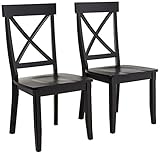
Powder-coated steel or iron in matte black is the most durable and lightest option. It is common in industrial, Tolix-style, and modern cross-back designs.
- Pros: Lightweight for moving and stacking, impervious to stains, usually the cheapest to replace. Powder coating resists chipping far better than spray paint.
- Cons: Hard, cold seat without a cushion; can scratch hardwood floors if felt pads are missing; thin metal seats can flex under heavier weight.
- Best for: Small apartments, renters who move often, and homes that need chairs to be tucked away or stacked.
Fit and Clearance: Measurements That Prevent a Crowded Room
Black chairs visually shrink a space less than bulky light-colored ones, but physical clearance is the same regardless of color. Use these numbers before you buy:
- Seat height: Standard dining chairs are 17-19 inches from floor to seat. Match to a standard dining table height of 28-30 inches. You need 10-12 inches between the seat top and the underside of the table for thigh clearance.
- Space per chair: Allow 24-26 inches of table length per chair and 18-20 inches of chair width. For chairs with arms, allow 26-28 inches width.
- Pull-out clearance: Leave 36 inches from the table edge to the wall or furniture behind the chair for someone to push back and stand up. 24-30 inches is the absolute minimum and will feel tight.
- Room-size fit: A 10×12 ft dining room typically fits a 60×36 inch rectangular table with 4 chairs comfortably, or 6 chairs with only 24 inches of pull-out space. For 6 black dining chairs with arms, you need at least a 72-inch table and an 11×13 ft room to maintain 36 inches of clearance.
- Doorway and delivery: Most dining chairs ship in boxes 22-26 inches wide. Measure any doorway or apartment hallway under 30 inches wide. Fully assembled wood chairs often do not fit through narrow apartment doors without tilting.
Decision Matrix: Which Black Dining Chair to Pick for Your Situation
| Your Situation | Best Material Choice | Why It Stays Cleaner | Finish to Choose |
|---|---|---|---|
| Small apartment or renter who moves yearly | Metal with removable cushion | Light (10-16 lbs), stackable, no upholstery to damage in transit | Matte powder-coated black |
| Kids under 7 and daily family meals | Faux leather or vinyl | Wipes clean in seconds, resists juice, sauce, and markers | Satin faux leather, avoid high gloss |
| Pets that shed (cats, dogs) | Faux leather, wood, or metal | Hair sits on surface and can be lint-rolled; does not embed like in fabric | Smooth, non-woven surface |
| Long dinner parties, work-from-table use | Fabric with performance finish + high-density foam | Comfort prevents fidgeting and wear from sliding; look for washable covers | Tightly woven polyester in black, rub count 30,000+ |
| Back pain or need for support | Wood frame with upholstered seat and lumbar curve | Solid support with cushion only where needed, easier to keep backrest clean | Ergonomic wood back, matte black paint |
| Want the lowest long-term maintenance | Powder-coated metal or solid wood | No fabric to shampoo, no leather to condition | Matte or satin powder coat / catalyzed lacquer |
Assembly, Weight, and What Wears Out First
Assembly and durability affect how clean your chairs look after a year, not just how they look out of the box.
- Box weight and assembly time: Metal chairs often arrive fully assembled or need only 4-8 bolts (10-15 minutes). Wood chairs may require 20-40 minutes to assemble the legs and stretchers. Fabric and faux leather chairs with solid wood frames are heaviest to move, often 18-22 lbs per chair, and bulky boxes may weigh 45-60 lbs for a set of two.
- What wears first by material: On faux leather, the front seat edge and horizontal stitching. On fabric, the seat center and arm tops where oils collect. On black wood, the front leg feet and chair back top where hands grab. On metal, the foot pads and the seat edge where coating thins.
- How to extend clean appearance: Add felt pads to all legs to prevent chipping and floor scratches. Tighten all bolts after 30 days of use – loose joints cause wobble that chips paint faster. For any black chair, keep a touch-up marker in matte black for wood and metal, and a leather conditioner for genuine leather. For fabric, apply a fabric protector spray every 6-12 months if not already factory-treated.
- Foam density matters: Chairs with seat foam under 1.5 lbs/cu ft will sag within a year and create creases that trap crumbs. For daily use, choose 1.8-2.2 lbs/cu ft foam. It costs slightly more but keeps the seat taut and easier to wipe or vacuum.
How to Keep Black Dining Chairs Clean Every Week
Use a different routine by material rather than one all-purpose cleaner:
- Faux leather and metal: Dust with a dry microfiber cloth, then wipe with a damp cloth and a drop of dish soap. Dry immediately to prevent water spots on matte black.
- Genuine leather: Dust, wipe with a lightly damp cloth, and condition every 6 months to prevent drying and cracking that traps dirt.
- Fabric: Vacuum with an upholstery attachment weekly, including under the seat. Blot spills immediately – never rub. For black polyester, a 50/50 mix of water and white vinegar on a cloth handles most food spots.
- Wood: Dust with a slightly damp cloth, avoid silicone sprays that build up and attract dust on black paint. Touch up chips promptly so moisture does not swell the wood underneath.
FAQ
Do black dining chairs make a room look smaller?
Black chairs can make a small room feel more closed if the table and chairs are bulky and solid. Choose open-frame designs – such as cross-back wood, metal mesh, or chairs with slender legs – to keep sightlines open. A glass or light wood table top also balances black chairs in a compact dining area.
Is black velvet practical for everyday dining?
Black velvet looks luxurious but is the highest-maintenance fabric for dining. It shows pressure marks, collects lint, and absorbs spills quickly. Reserve velvet for formal dining rooms used a few times per month, not for daily family meals.
What is the most durable black finish for kids and pets?
Matte powder-coated metal and high-quality faux leather with a woven backing are the most forgiving. Both resist stains, do not trap hair, and can be wiped clean without special cleaners. Genuine leather is more durable long-term than faux leather but requires conditioning and shows scratches from pets.