Key takeaways
- Fence geometry: T-square fences reference a single front rail and stay square when locked, while rack-and-pinion systems move both ends together for repeatable micro-adjustment. Either works; loose extrusions and single-point clamps do not.
- Deflection under load: Push a hand against the far end of the fence with it locked. Any visible flex will show up as a tapered rip in 3/4-inch hardwood, which is exactly where cabinet doors go wrong.
- Rip capacity you’ll actually use: 24 to 26 inches handles most solid-wood furniture work. Break down full sheets for built-ins or plywood casework and 30 inches or more stops being a luxury.
- Table flatness and throat plate: A flat cast or reinforced top keeps the workpiece registered against the fence. Zero-clearance plates protect thin rails and veneered ply from tear-out on the underside.
- Mobility versus mass: Rolling stands earn their keep in a shared garage. If the saw lives in one spot permanently, cast iron and a 230V motor buy you smoother cuts and far less vibration.
What's inside
Anyone who has tried to build a floating shelf, a slab-style cabinet door, or a simple oak side table has run into the same wall: the cut is only as honest as the fence guiding it. A saw can have plenty of motor and a beautiful blade and still hand you a tapered rip, a panel that racks the whole carcass, or a mitered edge that leaves a hairline gap no amount of clamping will close. Fence deflection, a heel of a degree or two, a lock lever that nudges the rail as it seats — these are the small failures that quietly decide whether furniture looks made or looks assembled.
This guide approaches table saws from the fence outward, which is how furniture actually gets built. Below you’ll find saws whose rip fences hold a line across a full 30-plus inches of capacity, plus one standalone fence system worth bolting onto a cabinet saw you already own and trust. We look at rack-and-pinion versus T-square geometry, how much rip capacity a real furniture project demands, and which machines make sense for a shared garage versus a dedicated shop.
As an Amazon Associate we earn from qualifying purchases.



How to Choose a Table Saw With Best Fence (2026)
- Fence geometry: T-square fences reference a single front rail and stay square when locked, while rack-and-pinion systems move both ends together for repeatable micro-adjustment. Either works; loose extrusions and single-point clamps do not.
- Deflection under load: Push a hand against the far end of the fence with it locked. Any visible flex will show up as a tapered rip in 3/4-inch hardwood, which is exactly where cabinet doors go wrong.
- Rip capacity you’ll actually use: 24 to 26 inches handles most solid-wood furniture work. Break down full sheets for built-ins or plywood casework and 30 inches or more stops being a luxury.
- Table flatness and throat plate: A flat cast or reinforced top keeps the workpiece registered against the fence. Zero-clearance plates protect thin rails and veneered ply from tear-out on the underside.
- Mobility versus mass: Rolling stands earn their keep in a shared garage. If the saw lives in one spot permanently, cast iron and a 230V motor buy you smoother cuts and far less vibration.
The Best Table Saws With the Best Fence (2026), Reviewed
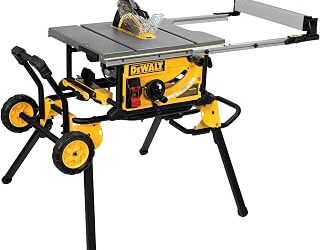
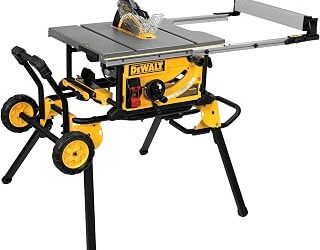
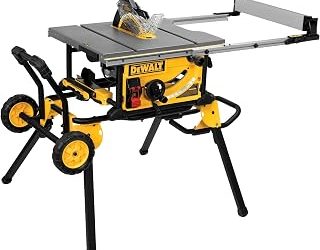
DEWALT DWE7491RS 10-Inch with Rolling Stand
The rack-and-pinion fence here is the benchmark for portable saws — it tracks parallel across the full 32-1/2-inch capacity and lands close enough to your mark that fine-tuning is a nudge rather than a negotiation. Paired with the 15-amp motor and foldable rolling stand, it’s the most sensible single purchase for someone building furniture in a garage that also parks a car.
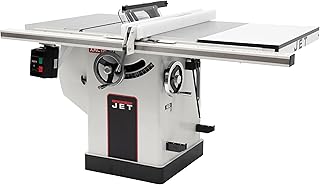
JET JTAS-10XL30-DX Deluxe XACTA
This is a cabinet saw in the traditional sense: 3 HP, 230V, cast iron, and a XACTA fence that locks with almost no perceptible shift. If you’re producing case goods, doors, and tenon shoulders week after week, the mass alone improves your cut quality in ways no portable saw can replicate.
Delta T3 30-Inch Fence System
The smartest upgrade path when the saw is fine but the fence isn’t. The T-square design and 30-inch rail give an older contractor or cabinet saw genuinely repeatable rips, often for a fraction of the cost of replacing the machine.
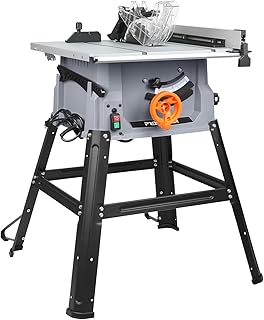
Evolution R10TBLX Jobsite Saw
A well-specified portable with a precision fence, zero-clearance throat plate, and an included dado plate — that last detail matters if you cut grooves for cabinet backs or drawer bottoms. The 26-inch rip is enough for most furniture work short of full sheet breakdown.
DEWALT DWE7485 8-1/4-Inch Compact
The compact choice for tight shops and apartment balconies, and its rack-and-pinion fence borrows the good behavior of its larger sibling. Accept the reduced depth of cut and it’s an accurate little machine for trim, small casework, and one-off projects.
Frequently Asked Questions
Does a better fence really improve furniture quality?
More than a better blade, in most cases. Square, parallel rips are what let joinery close cleanly and panels sit flat in their frames.
Should I upgrade my fence or buy a new saw?
If your saw’s top is flat and the arbor runs true, a fence system is the better value. If the top flexes or the motor bogs in hardwood, replace the machine.
Is 30 inches of rip capacity necessary?
Only if you break down full sheets of plywood on the saw. For solid-wood tables, chairs, and small casework, 24 to 26 inches is comfortable.
How often should I check fence alignment?
Check it against the blade whenever the saw has been moved, and every few projects otherwise. It takes two minutes and saves entire workpieces.
Final Thoughts
For most people building furniture at home, the DEWALT DWE7491RS delivers the best fence accuracy per dollar and folds out of the way when the project is done. If your shop is permanent and the work is steady, the JET XACTA is the machine to grow into, while the Delta T3 fence system is the quiet fix for an otherwise good saw held back by a bad rip fence.