Key takeaways
- Interlocking tiles — Best long-term surface. They bridge minor cracks, tolerate slab moisture, and any damaged tile pops out for replacement. The Swisstrax Ribtrax PRO in 15.75″ Pearl Grey covers ground faster with fewer seams and reads more like a designed floor than a utility mat; the smaller 12″ tiles suit awkward layouts and tight cuts.
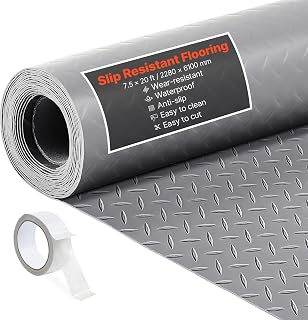
- PVC roll mats — Fastest transformation and the lowest cost per square foot. The VEVOR 7.5 x 20 ft roll at 2.2 mm and the 8×20 ft roll at 2.8 mm both use a diamond-plate texture and ship with double-sided tape. Thicker is meaningfully better here; 2.8 mm resists tire scuffing and curling better than thinner stock.
- Absorbent parking pads — Purpose-built containment. The oversize 8.8 x 22 ft absorbent parking mat traps snowmelt, brine, and drips in a waterproof-backed fabric so it never reaches the concrete. Ideal for one bay in a winter climate, less useful as a full-garage finish.
What's inside
The garage is the last room in the house to get design attention, and the first one to show its age. Concrete slabs powder, stain, and telegraph every oil drip and road-salt bloom, and once that surface starts breaking down it drags the whole space down with it — including any storage, workbench, or gym setup you have invested in. Treating the floor as a finished surface rather than a structural afterthought changes how the room reads and how it functions.
This guide walks through the four flooring systems worth considering in 2026 — interlocking tiles, PVC roll-out mats, absorbent parking pads, and coatings — and how to match one to your slab, your climate, and your tolerance for installation work. You will learn how to read load ratings honestly, why drainage matters more in some regions than others, how to prep concrete so a floor actually lasts, and where it makes sense to spend versus save.
As an Amazon Associate we earn from qualifying purchases.




Start With How Your Garage Actually Gets Used
A garage that stores a daily driver through slushy winters has different demands than one that doubles as a woodshop or home gym. Wet, salty, or snowy conditions favor open-grid or ribbed tiles that let water drain and evaporate underneath rather than pooling under the tread. Dry-climate garages used mostly for parking and light projects do fine with solid-top tiles or a rolled vinyl surface. If you jack up vehicles, roll toolboxes, or drop heavy stock, prioritize rigid tile over flexible sheet goods — hard casters and jack stands will dimple thin material. Be honest about the primary use before you shop; nearly every disappointing garage floor is a mismatch, not a defect.
Understand Load Ratings Before You Compare Them
Load numbers get quoted loosely, so read the unit. A static load rating describes weight sitting still on the tile; a rolling load rating describes weight moving across it, which is the harder test. The SnapLock RaceDeck Free-Flow tiles publish an 80,000-lb rolling load figure, while the 12″x12″ modular plastic tile pack lists 40,000 lbs. Both far exceed what a passenger vehicle puts through four contact patches — a 4,000-lb car distributes roughly 1,000 lbs per tire across several square inches. The rating matters less for the car and more for point loads: floor jacks, engine hoists, motorcycle stands. If those are part of your life, buy the higher number.
Tiles Versus Rolls Versus Pads
- Interlocking tiles — Best long-term surface. They bridge minor cracks, tolerate slab moisture, and any damaged tile pops out for replacement. The Swisstrax Ribtrax PRO in 15.75″ Pearl Grey covers ground faster with fewer seams and reads more like a designed floor than a utility mat; the smaller 12″ tiles suit awkward layouts and tight cuts.
- PVC roll mats — Fastest transformation and the lowest cost per square foot. The VEVOR 7.5 x 20 ft roll at 2.2 mm and the 8×20 ft roll at 2.8 mm both use a diamond-plate texture and ship with double-sided tape. Thicker is meaningfully better here; 2.8 mm resists tire scuffing and curling better than thinner stock.
- Absorbent parking pads — Purpose-built containment. The oversize 8.8 x 22 ft absorbent parking mat traps snowmelt, brine, and drips in a waterproof-backed fabric so it never reaches the concrete. Ideal for one bay in a winter climate, less useful as a full-garage finish.
Prep the Slab, Even for Floating Systems
Tiles and roll mats float rather than bond, which forgives a lot — but not everything. Sweep and degrease thoroughly, because trapped grit grinds at the underside of vinyl and works its way into tile seams. Grind down high spots and fill deep pits or trench cracks with a patching compound so tiles seat flat and rolls do not telegraph the void. Test slab moisture by taping a plastic sheet down overnight; if condensation forms, choose an open-grid tile over a solid roll so vapor can escape. Skipping this step is the single most common reason a floor looks great for a season and tired by the next.
Design Choices That Age Well
Mid-tone greys hide dust and tire marks better than either black or light finishes, which is why Pearl Grey and silver-grey remain the safest picks. If you want visual structure, run a border in a contrasting tile or lay a defined parking pad inside a lighter field — it organizes the room without dating quickly. Avoid loud checkerboard patterns unless the garage is genuinely a showroom; they draw the eye to every misaligned seam.
Tips
- Order 8–10% extra tiles for cuts, future repairs, and dye-lot consistency.
- Let roll mats relax flat in the space for 24 to 48 hours before taping so they lose their curl.
- Never park on a freshly installed floor with hot tires; give it a full day to acclimate to reduce staining risk.
- Leave a small expansion gap at walls — slabs and tiles both move with temperature.
Frequently Asked Questions
Will hot tires damage garage flooring?
Plasticizer migration from hot tires can discolor low-grade vinyl. Polypropylene tiles like Ribtrax PRO and RaceDeck are effectively immune; with PVC rolls, look for hot-tire-resistant labeling and avoid parking immediately after long drives.
Do I need to remove the flooring to clean underneath?
Not routinely. Open-grid tiles let you hose through them and squeegee out. Solid tiles and rolls benefit from a lift-and-sweep once or twice a year, which is straightforward with snap-together systems.
Are tiles or epoxy the better investment?
Epoxy looks seamless but demands near-perfect prep and fails visibly if moisture is present. Tiles cost more upfront, install in an afternoon, and are repairable — usually the better value for a home garage.
How much coverage do I need for a standard bay?
A single bay runs roughly 200 to 240 sq ft, a two-car garage 400 to 500. A 48-tile pack of 12″ tiles covers 48 sq ft, so plan four to five packs per bay.
Conclusion
The right garage floor is the one that matches your climate, your loads, and how much installation effort you want to spend: rigid interlocking tiles for hard use and wet winters, a thicker diamond-plate roll for a fast and affordable refresh, and an absorbent pad when containment is the real goal. Prep the slab properly, choose a forgiving mid-grey, and the floor will hold its look for years rather than seasons.