Key takeaways
- Hand wash only: Never put a Japanese knife in the dishwasher; the harsh detergent and knocking around dull and chip the fine edge.
- Use the right cutting board: Wood or soft plastic protects the edge; glass, stone, or ceramic boards destroy it quickly.
- Hone regularly, sharpen occasionally: A few passes on a honing rod or whetstone keeps the edge true; learn to use a whetstone for hard Japanese steel rather than a pull-through sharpener.
- Store it protected: Keep the blade in a knife block, on a magnetic strip, or in an edge guard, never loose in a drawer where it will bang against other tools.
The santoku is Japan’s answer to the Western chef’s knife, and for many home cooks it is the better tool. Its name translates roughly to “three virtues,” a nod to its mastery of slicing, dicing, and mincing. Shorter and flatter than a chef’s knife, with a tall blade and a tip that curves down to meet the edge, the santoku excels at the up-and-down chopping motion most people use naturally. Add Japan’s tradition of hard, thin, razor-sharp steel and you have a knife that makes prep faster, cleaner, and genuinely more enjoyable.
But “Japanese santoku” covers everything from a $14 starter blade to a $140 hand-forged VG10 showpiece, and the differences matter. Steel type, blade length, handle style, and edge geometry all shape how the knife feels and performs. This guide breaks down what to look for so you can select a santoku that matches your skill level, your budget, and the way you cook in 2026.
Our top picks



As an Amazon Associate we earn from qualifying purchases at no extra cost to you. Ratings are shown as listed on Amazon.
⚡ Save on Your Next PC — Amazon Prime
Prime members get fast free shipping on the systems above, plus early access to Prime Day & Black Friday PC deals. New members get a 30-day free trial.
Watch: The Ultimate Guide to Selecting a Japanese Santoku Knife — Video Review
Understand the Steel
Steel is the soul of a Japanese knife. High-carbon stainless steels like the VG10 in the KAWAHIRO Hand Forged Chef Knife or the 9Cr18MoV San-Mai in the MITSUMOTO SAKARI take an exceptionally sharp edge and hold it far longer than softer Western steel. Harder steel (measured on the Rockwell scale) stays sharp but can be more brittle, so it rewards careful use. Budget santokus like the fomidao use good high-carbon stainless that performs well for the price; premium blades justify their cost with edge retention and refinement.
Pick the Right Blade Length and Profile
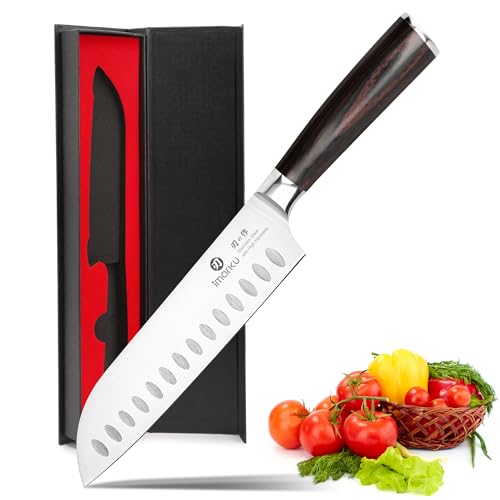
Most santokus, including the imarku 7-Inch and HOSHANHO 7-Inch, land around 7 inches, a versatile size for the majority of home kitchens. The flatter profile, compared to a curved chef’s knife, favors a straight push-cut and chop rather than the rocking motion. If you are used to rocking a Western knife, expect a brief adjustment, but the flat edge makes clean, full contact with the board, which many cooks come to prefer for precise slicing.
Look for a Granton (Dimpled) Edge
Many santokus feature scalloped hollows, called a Granton edge, along the blade. These dimples create tiny air pockets that reduce suction, so thin slices of potato, cucumber, or fish release from the blade instead of sticking. If you frequently slice starchy or moist ingredients, a Granton edge is a genuinely useful feature rather than mere decoration.
Consider the Handle and Balance
Japanese knives come with either a traditional Japanese (wa) handle, often lighter and octagonal, or a Western-style handle that is heavier and contoured. Neither is better; it comes down to comfort in your hand. Pick up the knife if you can, and notice the balance point. A well-balanced santoku feels like an extension of your hand, reducing fatigue during long prep sessions, while a poorly balanced one feels tip-heavy and tiring.
Match the Knife to Your Budget and Care Habits
A hand-forged VG10 knife like the KAWAHIRO ($139.99) is a lifetime investment that rewards proper care, but it demands hand washing, careful storage, and regular honing. If you are hard on your knives or new to Japanese steel, a more forgiving mid-range option like the imarku ($39.99) or SHAN ZU 10Cr15Mov ($27.99) delivers excellent performance without the anxiety. Be honest about how much care you will give the blade before you buy.
Tips
- Hand wash only: Never put a Japanese knife in the dishwasher; the harsh detergent and knocking around dull and chip the fine edge.
- Use the right cutting board: Wood or soft plastic protects the edge; glass, stone, or ceramic boards destroy it quickly.
- Hone regularly, sharpen occasionally: A few passes on a honing rod or whetstone keeps the edge true; learn to use a whetstone for hard Japanese steel rather than a pull-through sharpener.
- Store it protected: Keep the blade in a knife block, on a magnetic strip, or in an edge guard, never loose in a drawer where it will bang against other tools.
Frequently Asked Questions
What is the difference between a santoku and a chef’s knife?
A santoku is shorter, flatter, and typically thinner than a Western chef’s knife, favoring a straight chopping motion over the rocking cut. Chef’s knives have a curved belly ideal for rocking and a pointed tip. Many cooks find the santoku more intuitive for everyday slicing, dicing, and mincing.
Is harder Japanese steel worth the higher price?
For those who value a razor edge and long edge retention, yes. Harder steels like VG10 stay sharp far longer and cut more cleanly. The trade-off is that they can chip if abused and require careful sharpening. If you cook often and care for your tools, the upgrade is worthwhile.
Do I need a Granton (dimpled) edge?
It helps if you slice a lot of starchy or moist foods like potatoes, cucumbers, or fish, since the dimples reduce sticking. For general prep it is a nice bonus rather than a necessity. Do not choose a knife on the dimples alone; steel quality and balance matter more.
How do I keep a santoku sharp?
Hone the edge regularly with a rod or a few light passes on a whetstone, and sharpen on a whetstone when it dulls. Avoid pull-through sharpeners on hard Japanese steel, as they can damage the fine edge. With good technique and the right board, a santoku holds its edge impressively well.
Conclusion
Choosing a Japanese santoku comes down to matching steel, size, and care requirements to how you cook. A premium hand-forged blade like the KAWAHIRO VG10 rewards a dedicated cook with a lifetime edge, while forgiving mid-range options like the imarku or MITSUMOTO SAKARI deliver most of the magic for far less. Whatever you choose, hand wash it, use a wood or plastic board, and keep it honed, treat a good santoku well and it will make every meal you prep faster and more satisfying.