Key takeaways
- Instantaneous Temperature Adjustments: Because there is no burner element or grate to heat up first, turning down the dial from high to low drops the temperature of the pan instantly. It mimics the responsiveness of gas but with even greater speed.
- Ultra-Low Simmering: Standard gas burners often struggle to hold a low flame without blowing out or creating hot spots. Induction can maintain incredibly low, stable temperatures (such as 110°F to 120°F) indefinitely. This makes it easy to melt chocolate or hold delicate sauces without scorching.
- Exceptional Heat Efficiency: Induction cooktops boast roughly 85% to 90% efficiency. Virtually all the generated energy goes directly into the food. A gas cooktop, by comparison, is only about 40% efficient, with the rest of the heat escaping into your kitchen air.
What's inside
For decades, the benchmark of a serious home kitchen was a heavy-duty gas range. The satisfying click-click-ignite of a burner and the immediate visual feedback of a blue flame have long symbolized culinary control. However, a quiet revolution has taken over modern kitchens. The debate over an induction cooktop vs gas cooktop for heat control is no longer just about energy efficiency or sleek aesthetics; it is about absolute precision at the stove.
When you are trying to melt delicate chocolate without a double boiler, sear a ribeye steak at 500 degrees Fahrenheit, or keep a pot of marinara sauce at a bare simmer for six hours, heat control is everything. Gas responds instantly to a turn of the dial, but it suffers from ambient heat loss and uneven distribution. Induction uses electromagnetism to turn the pan itself into the heat source, offering pinpoint digital accuracy but requiring a shift in how you visually monitor your cooking. Deciding between these two technologies requires looking past the marketing jargon to understand how they manipulate thermal energy in real-world kitchens.
As an Amazon Associate we earn from qualifying purchases at no extra cost to you. Product prices and availability are accurate as of the date shown and are subject to change.


Quick Verdict
If your priority is surgical precision, rapid boiling, and a cool-to-the-touch cooking surface, the induction cooktop is the clear winner. It transfers up to 90% of its energy directly to the cookware, allowing you to control temperatures down to the exact degree. However, if your cooking style relies on visual cues, frequent pan-tossing, or using specialized cookware like round-bottomed woks and clay pots, a gas cooktop remains the superior choice for tactile, open-flame cooking.
Side by Side
To help you weigh the practical differences, this comparison table breaks down how these two cooktop styles perform across key ownership metrics.
| Feature | Induction Cooktop | Gas Cooktop |
|---|---|---|
| Comfort & User Experience | Extremely comfortable; minimal ambient heat escape keeps the kitchen cool. No open flames. | Can make the kitchen hot; open flame creates ambient warmth and requires robust ventilation. |
| Durability | Ceramic-glass surface is scratch-resistant but can crack if heavy cast iron is dropped. | Highly durable cast-iron grates and metal burners; virtually indestructible under normal use. |
| Price Range | $800 to $3,500 for built-in models; portable units range from $70 to $100. | $500 to $2,500 for standard residential built-in models. |
| Maintenance | Effortless; flat glass surface wipes clean instantly. Spills do not bake onto the cool glass. | High maintenance; requires removing heavy grates and scrubbing burner caps and valleys. |
| Space Needed | Sleek, low-profile depth (usually 2 to 3 inches below the counter); maximizes cabinet space. | Requires more vertical clearance underneath (usually 4 to 6 inches) and gas line clearance. |
| Look & Aesthetics | Minimalist, modern, and flush with the countertop; visually expands small kitchens. | Industrial, professional, and rugged; serves as a traditional kitchen centerpiece. |
| Resale Value | Growing rapidly in demand; highly appealing to eco-conscious and modern buyers. | Traditionally strong, though facing some regional regulatory headwinds and shifting preferences. |
| Best For | Busy families, precise pastry chefs, small spaces, and low-maintenance households. | Traditionalists, wok cooking enthusiasts, and those who cook with copper or aluminum. |
Where Induction Cooktop Wins
The core magic of induction lies in magnetic induction. Underneath the ceramic-glass surface sits an electromagnetic coil. When you place a magnetic pan (such as cast iron or tri-ply stainless steel) on top and turn on the power, the coil generates a magnetic field that directly excites the iron molecules in the pan. The pan becomes the burner. This direct transfer of energy provides several major advantages for heat control:
- Instantaneous Temperature Adjustments: Because there is no burner element or grate to heat up first, turning down the dial from high to low drops the temperature of the pan instantly. It mimics the responsiveness of gas but with even greater speed.
- Ultra-Low Simmering: Standard gas burners often struggle to hold a low flame without blowing out or creating hot spots. Induction can maintain incredibly low, stable temperatures (such as 110°F to 120°F) indefinitely. This makes it easy to melt chocolate or hold delicate sauces without scorching.
- Exceptional Heat Efficiency: Induction cooktops boast roughly 85% to 90% efficiency. Virtually all the generated energy goes directly into the food. A gas cooktop, by comparison, is only about 40% efficient, with the rest of the heat escaping into your kitchen air.
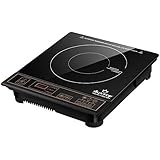
For those who want to experience this precise control without remodeling their entire kitchen, portable countertops are an excellent entry point. The Duxtop 1800W Portable Induction Cooktop Countertop Burner, Gold 8100MC ($70.99) offers a compact way to test electromagnetic cooking with its digital control panel. If you need a more heavy-duty, commercial-grade option with low operating noise, the ChangBERT Portable Induction Cooktop Enhanced Version, One-Click Max Power 1800W Large Heating Coil Burner, Precise Temperature Control, NSF Certified Commercial Grade Low Noise Hot Plate ($99.99) provides an expansive heating surface and precise temperature increments that make holding delicate simmers incredibly simple.
Where Gas Cooktop for Heat Control Wins
Despite the high-tech precision of induction, gas remains a favorite among professional chefs and serious home cooks for several distinct reasons related to tactile feedback and physical heat control:
- Visual Intuition: With gas, you do not need to look at a digital LED screen to know how much heat you are applying. The height and color of the blue flame provide an instant, analog read on your heat level.
- Continuous Heat During Pan Movement: When you lift a pan off an induction cooktop to toss vegetables or flip an omelet, the electromagnetic connection breaks, and the unit immediately stops heating (and often starts beeping in protest). A gas flame continues to radiate heat even when the pan is lifted, allowing for continuous cooking during active pan tossing.
- Compatibility with All Cookware: Gas does not care if your pan is made of copper, aluminum, ceramic, or hand-hammered carbon steel. It heats any vessel regardless of its magnetic properties or if the bottom is slightly warped.
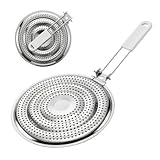
The primary weakness of gas heat control is its tendency to create localized hot spots, especially on cheaper or thinner pans. To fix this, cooks often turn to accessories. Placing a HIC Kitchen Heat Diffuser Reducer Flame Guard With Removable Handle, Stainless Steel, Distributes Heat Evenly And Reduces Scorching, For Gas Electric Glass Stovetops, 8.25-Inch ($6.99) over your gas burner distributes the flame’s energy evenly, eliminating the hot spots that lead to scorched rice or burnt sauces. For heavier pots, a rugged accessory like the Heat Equalizer 9.25″ Cast Iron Heat Diffuser/Simmer Plate, Gas & Induction ($29.95) acts as a thermal buffer, absorbing the erratic energy of a gas flame and releasing it slowly and uniformly to mimic the gentle simmer control of an induction burner.
Cost Over 5 Years
When calculating the true cost of ownership between an induction cooktop vs gas cooktop for heat control, you must look beyond the initial retail price. Both systems carry distinct installation and operational expenses over a five-year lifecycle.
Induction Cooktop (Built-in 30-inch model):
- Initial Purchase: $1,000 to $2,200
- Electrical Installation: If your kitchen does not already have a dedicated 240-volt, 40-amp or 50-amp circuit, hiring an electrician to run a new line can cost between $400 and $1,200 depending on the distance to your electrical panel.
- Cookware Upgrades: If your current pans are not magnetic, a new set of fully clad stainless steel or cast-iron cookware will run $150 to $500.
- Operating Costs (5 Years): At average national electricity rates, cooking on a highly efficient induction cooktop costs roughly $35 to $50 per year ($175 to $250 over 5 years).
- Total 5-Year Cost: $1,725 to $4,150
Gas Cooktop (Built-in 30-inch model):
- Initial Purchase: $600 to $1,800
- Gas Line Installation: If a gas line is already present, hookup is simple ($150 to $300). If you need to run a new natural gas line or install a propane tank, expect to pay $500 to $1,500.
- Ventilation: Gas combustion produces byproducts like nitrogen dioxide and carbon monoxide. A high-CFM range hood is highly recommended, costing $300 to $800.
- Operating Costs (5 Years): Natural gas is historically cheaper than electricity in many regions, but because gas cooktops waste 60% of their heat to the air, they use more raw energy. Expect to spend $40 to $70 per year ($200 to $350 over 5 years).
- Total 5-Year Cost: $1,250 to $4,450
Which One for Your Home
Small Apartment
In a small apartment or condo, space and ventilation are your biggest challenges. Gas cooktops release combustion byproducts and massive amounts of ambient heat, which can quickly turn a small living space into a sauna. An induction cooktop is the ideal choice here. Because it only heats the pan, your kitchen stays cool, and you do not need a massive commercial-grade range hood to keep the air clean. If you are extremely tight on space, you can skip a built-in range entirely and rely on high-quality portable burners that can be tucked away in a drawer when not in use.
Family with Kids and Pets
Safety is the defining factor for busy households. With a gas cooktop, open flames, hot metal grates, and the risk of accidentally leaving a gas valve slightly open are constant safety worries. Induction is incredibly safe for families. Since the heat is generated directly inside the pan, the glass surface surrounding the zone stays relatively cool to the touch. Even directly under the pan, the glass only warms up from the residual heat of the cookware itself. Most induction models also feature auto-shutdown sensors that turn off the element the moment a pan is removed, preventing accidental burns from curious hands or paws.
Rental Property
For landlords or renters, durability and ease of maintenance are paramount. Clean-up is where gas cooktops fail; boiled-over pasta water or grease spills bake onto hot metal grates and burner caps, requiring heavy scrubbing. An induction cooktop features a completely flat glass surface that can be wiped down with a microfiber cloth in seconds. Renters can also easily bypass kitchen renovation restrictions by purchasing high-quality portable induction burners to enjoy precise heat control without modifying the property’s utilities.
Long-Term Home
If you are building your forever home or planning a major kitchen remodel to carry you into 2026 and beyond, look closely at future-proofing and local building trends. Many municipalities are actively banning new residential gas hookups to reduce carbon emissions and improve indoor air quality. Installing a high-end induction cooktop not only ensures compliance with future building codes but also adds modern, high-tech appeal that boosts your home’s long-term resale value.
FAQ
Can you use cast iron on an induction cooktop?
Yes, cast iron is highly magnetic and works beautifully on induction cooktops. However, because cast iron is heavy and rough, you must be careful not to drag or drop it on the ceramic-glass surface to prevent scratches or cracks.
Why does water boil so much faster on induction than gas?
Induction transfers roughly 90% of its electromagnetic energy directly to the pot, whereas gas transfers only about 40%, with the rest escaping into the surrounding room. This direct energy transfer allows induction to boil water in about half the time of a traditional gas burner.
Will my copper and aluminum pans work on induction?
Standard copper, aluminum, and ceramic cookware will not work on induction because they lack the magnetic iron properties required to interact with the electromagnetic coil. If you want to use these materials, you must use an interface disk or a specialized heat diffuser plate designed to bridge the gap.
Does induction cooking make a buzzing noise?
At high power settings, you may hear a slight buzzing or humming sound. This is normal and is caused by the high-frequency vibration of the metal layers inside the cookware as they react to the magnetic field. Using heavy, high-quality, single-piece cookware minimizes this sound.