Key takeaways
- Too much oil. The single most common failure. Thick coats never fully polymerize and stay tacky. Wipe until the pan looks dry.
- Oven too cool. Below 400 degrees, oil does not cure properly. Use 450 to 500, above the oil’s smoke point.
- Soaking or the dishwasher. Both strip seasoning and start rust within hours.
- Air drying. Always dry on a burner; towel drying leaves moisture at the rivets.
- Stripping for cosmetic reasons. Mottled color is normal. Only strip for rust, stickiness, or persistent sticking.
- Using olive oil or butter to season. Low smoke points leave soft, smelly seasoning.
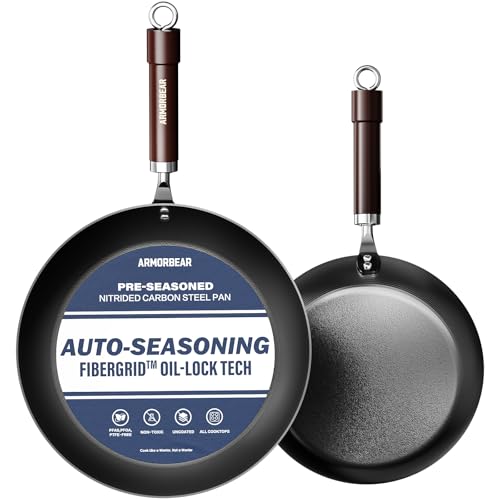
Carbon steel rewards good habits and punishes bad ones fast. Leave a pan wet overnight and orange rust blooms by morning. Scrub it with steel wool because it looked dirty, and weeks of seasoning come off in gray flakes. Reseason with too much oil in a cool oven and you get a sticky film that food clings to. None of this is hard to avoid. A 10 or 12 inch skillet, whether a $25 to $30 value pan or a $90 to $100 Swedish-made one, needs two minutes of care after each use and a proper reseasoning once or twice a year.
What You Need
| Item | Why | Optional? |
|---|---|---|
| Chain mail scrubber or stiff nylon brush | Removes stuck food without stripping seasoning | No |
| Coarse kosher salt | Abrasive that dissolves as it works, for stubborn spots | Yes |
| Paper towels or a dedicated lint-free cloth | Drying and applying oil in a thin film | No |
| High smoke point oil (grapeseed, canola, refined avocado, or flaxseed) | Polymerizes into hard seasoning at 400 to 500 degrees Fahrenheit | No |
| Oven safe to 500 degrees, or a gas burner | Bakes oil into a hard layer | No |
| Aluminum foil or a sheet pan | Catches drips on the lower rack | Yes |
| Steel wool or a stainless scouring pad | Only for stripping rust or a failed seasoning down to bare metal | Yes |
| White vinegar | Loosens heavy rust before scrubbing | Yes |
| Oven mitts and a range hood or open window | Seasoning produces smoke for 30 to 60 minutes | No |
Step-by-Step
Step 1: Clean while the pan is still warm (2 minutes)
As soon as the pan cools enough to handle, run hot water over it and scrub with the chain mail or brush. For stuck bits, add a tablespoon of coarse salt and a splash of water and scrub with a paper towel. A drop of dish soap is fine on a well-seasoned pan. Avoid soaking.
Our top picks

As an Amazon Associate we earn from qualifying purchases at no extra cost to you.
Step 2: Dry completely on the stove (2 minutes)
Towel dry, then set the pan on a burner over medium heat for 60 to 90 seconds until every drop has evaporated, including around the rivets and under the handle. Water left in a seam is where rust starts.
Step 3: Wipe on a maintenance coat (1 minute)
While the pan is warm, add about half a teaspoon of oil and wipe it over the entire cooking surface and rim with a paper towel. Then take a clean towel and wipe it off as if you made a mistake. The pan should look dry with a faint sheen, not glossy. Let it cool and store it. This is your routine after every use.
Step 4: Assess whether a full reseason is needed (2 minutes)
Do a full reseason when the surface shows patchy gray bare metal larger than a quarter, when food sticks even with proper preheating, when the surface feels sticky or tacky, or after removing rust. Uneven color alone, brown in some places and black in others, is normal and not a reason to strip.
Step 5: Strip rust or failed seasoning if present (15 to 30 minutes)
Scrub light rust with steel wool and water until the metal is dull silver. For heavy rust, soak in a 50-50 mix of white vinegar and water for 15 to 30 minutes, no longer, then scrub; vinegar left too long etches steel. For a gummy failed seasoning, scrub with steel wool and dish soap until the sticky layer is gone. Rinse and dry on the burner as in step 2.
Step 6: Apply the seasoning coat (5 minutes)
Preheat the oven to 450 to 500 degrees. Warm the pan on the stove for a minute, then rub a teaspoon of oil over every surface, inside, outside, handle, and rim. Now wipe it all off with a clean towel until the pan looks almost dry. The layer you cannot see is the right thickness; anything you can see will turn sticky.
Step 7: Bake and repeat (60 minutes per coat)
Place the pan upside down on the center rack with foil below. Bake one hour, turn off the oven, and let it cool inside for 30 minutes. It will emerge a shade darker. Repeat steps 6 and 7 two to four times for a stripped pan; one coat is enough for a touch-up. Expect smoke; run the hood on high. On a gas burner instead, heat the oiled pan over high flame until it stops smoking, about 8 to 10 minutes per coat. Afterward, cook fatty foods such as bacon or burgers for the first week and avoid tomato sauce or wine for two to three weeks while the seasoning hardens.
Mistakes to Avoid
- Too much oil. The single most common failure. Thick coats never fully polymerize and stay tacky. Wipe until the pan looks dry.
- Oven too cool. Below 400 degrees, oil does not cure properly. Use 450 to 500, above the oil’s smoke point.
- Soaking or the dishwasher. Both strip seasoning and start rust within hours.
- Air drying. Always dry on a burner; towel drying leaves moisture at the rivets.
- Stripping for cosmetic reasons. Mottled color is normal. Only strip for rust, stickiness, or persistent sticking.
- Using olive oil or butter to season. Low smoke points leave soft, smelly seasoning.
How Often
Clean, dry, and wipe a maintenance coat after every use; it takes about three minutes. Do a single-coat oven touch-up whenever you notice bare spots or sticking, typically every three to six months for a pan used several times a week. A full strip-and-reseason is rare, once a year at most, and usually only after rust. Nitrided or pre-seasoned pans start with a tougher factory surface and need fewer touch-ups. For a pan in daily use in 2026, plan on one deliberate reseasoning session a year and let cooking do the rest.
When to Call a Pro or Replace
Carbon steel rarely needs a professional; almost any damage is reversible at home. Replace the pan only if the base has warped enough to rock on a flat cooktop, which happens when a thin pan is heated empty on high or plunged hot into cold water, or if years of rust have left deep, cratered pitting. A loose riveted handle can be re-riveted, but at $25 to $50 for a replacement value pan, buying new is usually more practical. Premium pans with lifetime warranties may cover warping; check before you toss.
FAQ
Can I use soap on carbon steel?
Yes, in moderation. A drop of modern dish soap on a well-seasoned pan will not remove polymerized oil. What damages seasoning is soaking, dishwashers, and aggressive scouring. Rinse, dry on the burner, and oil lightly afterward.
Why is my pan sticky after seasoning?
Too much oil, too low a temperature, or both. Scrub the sticky layer off with steel wool and soap, dry, and reseason with a coat so thin the pan looks dry before it goes into a 450 to 500 degree oven.
What is the best oil for seasoning carbon steel?
Any refined oil with a smoke point of 400 degrees or higher: grapeseed, canola, refined avocado, or vegetable shortening. Flaxseed produces a hard, dark layer quickly but can flake if applied thick. Avoid olive oil and butter for seasoning.
How do I remove rust from carbon steel?
Scrub light rust with steel wool and water. For heavy rust, soak in equal parts white vinegar and water for 15 to 30 minutes, scrub to bare metal, dry on a burner immediately, and apply two to three seasoning coats the same day.