Key takeaways
- Seat-to-seat spacing: Allow at least 6 inches between seats, and 8 to 10 inches if the stools have arms or swivel. For comfortable elbow room, plan 26 to 30 inches of width per stool along the counter.
- Counter overhang: You need at least 12 to 15 inches of knee clearance under the counter for a comfortable sit. A shallow 8-inch overhang will push you too far from the surface.
- Traffic clearance behind: Leave 36 inches from the back of the stool to the wall or furniture behind it if people need to walk through. For a walkway with no stool traffic, 32 inches is the absolute minimum.
- Weight capacity and stability: Most modern bar stools are rated for 250 to 300 pounds. Heavy-duty steel bases and solid wood frames often support 330 to 350 pounds. Four-leg bases are the most stable on uneven floors; pedestal and single-column bases need a wider footprint (at least 17 to 19 inches diameter) to prevent tipping.
Modern bar stools need 10 to 12 inches of clearance between the top of the seat and the underside of your counter or bar, so most modern designs measure 24 to 27 inches high for standard 36-inch counters and 29 to 32 inches high for 42-inch bar heights.
If you get the height wrong, even the best-looking stool will be uncomfortable and unstable to use. This guide explains how to match stool height to your counter, how modern materials compare for durability and comfort, and which features are worth paying for based on your space and daily use.
Our top picks

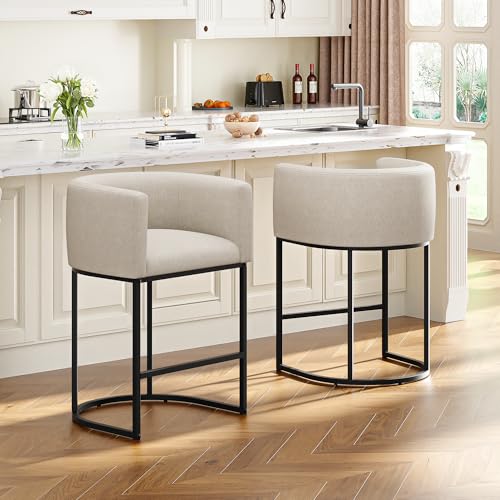

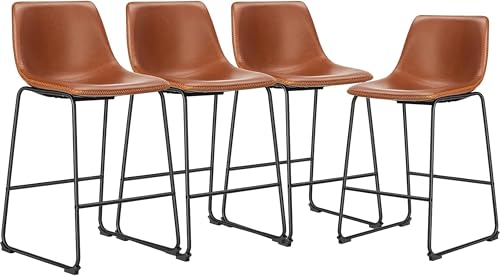
As an Amazon Associate we earn from qualifying purchases at no extra cost to you. Ratings are shown as listed on Amazon.
Getting the Height Right: Counter vs. Bar vs. Extra-Tall
Modern bar stools are sold in three standard height ranges, and the names are often used interchangeably by retailers, so always check the seat height, not the product title.
| Surface Type | Surface Height (Floor to Top) | Correct Stool Seat Height | Ideal Clearance (Seat to Underside) |
|---|---|---|---|
| Counter Height | 34 to 36 inches | 24 to 27 inches | 10 to 12 inches |
| Bar Height | 40 to 42 inches | 29 to 32 inches | 10 to 12 inches |
| Extra-Tall / Commercial Bar | 43 to 46 inches | 33 to 36 inches | 9 to 11 inches |
To measure correctly, measure from the floor to the underside of the countertop overhang, then subtract 10 to 12 inches. That result is your target seat height. For example, a 36-inch granite counter with a 1.5-inch overhang has an underside height of 34.5 inches, so you want a seat height of about 24 to 24.5 inches.
Why 10 to 12 Inches Matters
Less than 9 inches of clearance traps your thighs and forces you to hunch. More than 13 inches and you will be reaching up for the counter, straining your shoulders and lower back. If your household has a large height range among users, aim for the lower end of the seat height range and add an adjustable-height option with a gas lift (usually adjustable by 6 to 9 inches) rather than a fixed stool.
Measuring for Fit: Spacing, Traffic Flow, and Room Size
Height is only one dimension. Modern stools with wide molded shells or splayed metal legs need more floor space than they appear to in photos.
- Seat-to-seat spacing: Allow at least 6 inches between seats, and 8 to 10 inches if the stools have arms or swivel. For comfortable elbow room, plan 26 to 30 inches of width per stool along the counter.
- Counter overhang: You need at least 12 to 15 inches of knee clearance under the counter for a comfortable sit. A shallow 8-inch overhang will push you too far from the surface.
- Traffic clearance behind: Leave 36 inches from the back of the stool to the wall or furniture behind it if people need to walk through. For a walkway with no stool traffic, 32 inches is the absolute minimum.
- Weight capacity and stability: Most modern bar stools are rated for 250 to 300 pounds. Heavy-duty steel bases and solid wood frames often support 330 to 350 pounds. Four-leg bases are the most stable on uneven floors; pedestal and single-column bases need a wider footprint (at least 17 to 19 inches diameter) to prevent tipping.
In a typical 10×12 ft kitchen with a 7-foot island, you can fit three 20-inch-wide stools comfortably (60 inches of stools + 12 inches of spacing between them = 72 inches total). Trying to fit four in the same space leaves only 3 inches between seats, which feels cramped and makes getting in and out difficult. For galley kitchens under 9 feet wide, choose backless stools that tuck fully under the overhang to reclaim 12 to 14 inches of floor space when not in use.
Modern Materials Compared: What Holds Up and What Feels Cold
Modern bar stools rely on metal, molded plastic, wood, and upholstery in different combinations. Each has a clear trade-off for weight, maintenance, and comfort.
| Material / Construction | Pros | Cons | Best For | Typical Price Range |
|---|---|---|---|---|
| Powder-Coated Steel Frame | Strongest, highest weight limit, resists chipping better than chrome | Hard without padding, can feel cold, weld points may loosen if hardware is thin | Daily heavy use, families, commercial look | usually $120–$350 per stool |
| Molded Polypropylene / ABS Plastic | Lightweight (often 8–12 lbs), easy to clean, weather-resistant, inexpensive | Can flex under heavier weight, static, less premium feel, UV fading if cheap | Small spaces, renters, easy cleaning | usually $70–$220 per stool |
| Solid Wood (Ash, Oak, Walnut) | Warm to touch, repairable, stable, ages well | Heavier (15–25 lbs), needs coasters to prevent floor scratching, sensitive to humidity | Mid-century and Scandinavian interiors | usually $250–$600 per stool |
| Engineered Wood (Plywood, MDF with Veneer) | Lower cost than solid wood, stable shape, lighter than solid wood | Veneer can chip on edges, cannot be sanded or refinished many times | Budget wood look without solid wood cost | usually $100–$280 per stool |
| Upholstered Seat (Fabric, Faux Leather, Leather) | Most comfortable for long sitting, adds color and texture | Requires cleaning, faux leather peels in 3–5 years in sunny or hot kitchens, fabric absorbs odors | Comfort priority, bar-height dining | usually $180–$500 per stool |
Comfort Details That Matter More Than Looks
- Foam density: Look for high-density foam of 1.8 to 2.2 lbs per cubic foot for the seat. Low-density foam under 1.5 lbs feels soft initially but compresses within 12 to 18 months and leaves you sitting on the board.
- Seat shape: A slight waterfall edge and subtle contour (5 to 10 degrees of dishing) reduces pressure on thighs far more than extra padding. Flat plywood seats become uncomfortable after 30 minutes even with a cushion.
- Footrest height: The footrest should sit 10 to 12 inches below the seat. If it is too low, shorter users cannot reach it and legs dangle; too high and knees sit above hip level.
- Backrest height: Low backs (6 to 9 inches above seat) give lumbar support and still tuck under counters. Full backs (12 to 16 inches above seat) are best if you sit for more than an hour. Backless is the only option if your counter clearance is tight or you need to tuck stools away completely.
- Swivel vs. fixed: A 360-degree swivel with memory return is convenient for islands where people enter from the side, but it adds 2 to 4 pounds, a potential wobble point, and requires periodic tightening. Fixed four-leg stools are more stable for kids.
Decision Matrix: Which Modern Bar Stool Fits Your Situation
| Your Situation | Best Choice | Why |
|---|---|---|
| Small apartment or 10×10 ft kitchen | Backless molded plastic or metal, 17–19 inch wide seat, stackable | Tucks flush under counter, light to move, saves up to 14 inches of floor depth |
| Kids and pets | Powder-coated steel frame with polypropylene or performance fabric seat, no swivel | Wipe-clean, no peeling, no pinch points, resists tipping and chewing |
| Renters who move often | Lightweight metal or plastic, 10–14 lbs, knock-down flat-pack | Easy to carry through 28–30 inch doorways and up stairwells, low replacement cost if damaged |
| Back pain or long meals at the island | 24–26 inch wide seat with full back, footrest, and 1.8+ density foam | Distributes weight, supports lumbar, keeps feet from dangling which reduces lower back strain |
| Open-plan living where stools are visible | Solid wood or wood + upholstered seat with warm metal accents | Looks like dining furniture, not just bar equipment, and ties to table materials |
Assembly, Moving, and What Actually Wears Out First
Modern bar stools almost always ship flat-pack in a box weighing 15 to 35 pounds per pair. Expect 15 to 30 minutes assembly per stool with included Allen keys. Common issues are uneven leg levels and stripped screws from overtightening, so hand-tighten and then give a quarter turn with a proper wrench. Check that all floor glides or felt pads are installed before first use; bare metal feet will scratch wood and tile in days.
Before buying, measure your narrowest doorway, hallway turn, and elevator opening. Assembled four-leg wood stools are often 19 to 22 inches wide at the feet and will not fit through a 29-inch doorway without being tilted. Stackable plastic stools and stools that ship with legs separate solve this.
Durability realities: On metal stools, the first failure is usually the weld at the footrest or the swivel mechanism developing play after 18 to 24 months of daily use. On faux leather, peeling at the seat edge from friction and sun starts around year 3. On solid wood, the first wear is the finish on the footrest bar where shoes rub. Molded plastic rarely breaks structurally but shows scratches and can yellow near sunny windows. Ask if replacement glides, screws, and foot caps are available before you buy; these $5 parts extend life by years.
Frequently Asked Questions
Can I use counter stools at a bar-height table with a cushion?
Adding a 3 to 4 inch cushion will not safely convert a 24-inch counter stool for a 42-inch bar. It raises your center of gravity, makes the stool unstable, and usually blocks the view over the counter. Choose the correct fixed height or an adjustable-height stool.
How many modern bar stools should I put along an island?
Divide your usable overhang length by 26 to 30 inches per stool. A 6-foot (72-inch) overhang fits two stools generously or three snugly. Do not block the last 6 inches at each end or users will hit the island legs.
Are backless stools uncomfortable?
For under 30 minutes they are fine, especially with a contoured seat and proper footrest. For longer sitting, eating, or working from the island, a low or full back reduces fatigue significantly.