Key takeaways
- For two to four people: A set of six is often enough if you do not mind washing between courses or replacing a broken piece.
- For regular dinners of six: Twelve pieces split between two useful styles provide a practical starting point.
- For gatherings of eight or more: Aim for at least eight matching glasses of the style used most, and consider a second set of tumblers for water and nonalcoholic drinks.
- For easy replacement: Favor a simple, ongoing design or buy a few extra tumblers. Coordinated colors do not have to come from one boxed set if the shapes and tones work together.
The best colored glassware set for entertaining is a coordinated set of 12–16 glasses with durable color, a useful mix of capacities, and dishwasher-safe construction—unless you host only a few people or prioritize hand-finished detail. For frequent gatherings, compare how the color is applied as carefully as the shape: color throughout the glass is less vulnerable to surface wear than a decorative coating, while thick, sturdy rims are easier to live with than delicate stems.
Our top picks

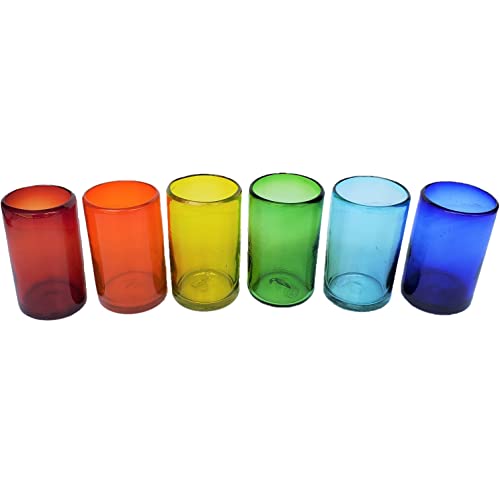

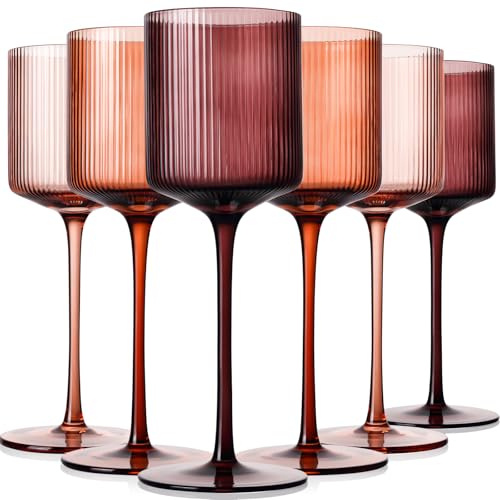
As an Amazon Associate we earn from qualifying purchases at no extra cost to you. Ratings are shown as listed on Amazon.
Choose by how you entertain
| Your situation | Best fit | What to check |
|---|---|---|
| Weekly dinners for 4–6 | 12-piece set, usually six tumblers and six wine glasses | Dishwasher guidance and stackable or compact shapes |
| Parties for 8–12 | 16–24 matching tumblers, or two coordinated sets | At least 8–12 pieces in the glass type guests use most |
| Small kitchen or limited storage | One versatile 10–14 oz tumbler style | Glass height, base width, and cabinet shelf clearance |
| Careful, formal service | Thin-rimmed stemware or hand-finished colored glass | Hand-wash requirements and replacement availability |
| Children, outdoor meals, or frequent washing | Thicker tumblers with color integrated into the glass | Stability, rim thickness, and manufacturer’s care instructions |
Compare the construction before the color
Colored glass can get its appearance in different ways. In glass colored throughout the material, the tint is part of the glass itself, so ordinary washing will not rub off a surface color. A surface-applied finish can create vivid or metallic effects, but may need gentler care. A colored stem or base paired with a clear bowl is another option: it adds a coordinated accent while keeping the drinking area clear.
| Construction | Color durability | Care and trade-off | Good for |
|---|---|---|---|
| Color integrated into glass | Color is not a separate coating to wear away | May still require careful handling; confirm dishwasher instructions | Regular hosting and long-term use |
| Surface-coated or decorated glass | Depends on finish and washing conditions | Hand-washing may be recommended, especially for metallic details | Occasional entertaining or a specific decorative look |
| Colored stem or base, clear bowl | Depends on whether the colored section is integrated or coated | Check care instructions and inspect the join and stem | Tables where wine color and clarity matter |
What thickness and capacity mean in daily use
Glass thickness is rarely listed in a consistent way, so use visible construction and product dimensions as clues rather than relying on a label like “heavy duty.” A broad, stable base and a substantial rim usually feel more reassuring for everyday serving than an especially thin, lightweight glass. Thicker glass is not unbreakable, though: sudden temperature changes, hard knocks against a sink, and crowding glasses in a dishwasher can still cause chips or cracks.
Capacity matters as much as the set’s appearance. A 10–14 oz tumbler handles water, juice, and many mixed drinks without taking over a cabinet. For ice-heavy cocktails or generous pours, a 14–16 oz tumbler offers more room. Wine glasses commonly fall around 12–18 oz in stated capacity; that is the bowl’s full volume, not a recommended pour. Larger bowls need more storage space and can be awkward in compact dishwashers.
| Glass type | Useful capacity | Typical height to plan for | Hosting role |
|---|---|---|---|
| Short tumbler | 8–12 oz | 3.5–4.5 in | Juice, spirits, small water servings |
| Everyday tumbler | 10–14 oz | 4.5–5.5 in | Water, soft drinks, everyday cocktails |
| Tall tumbler | 14–16 oz | 5.5–6.5 in | Iced drinks and cocktails with plenty of ice |
| Wine glass | 12–18 oz | 7–9 in | Wine service; allow extra cabinet and dishwasher clearance |
These are practical shopping ranges, not guarantees for every design. Measure your cabinet shelf and dishwasher rack before buying, especially for tall stemware. Leave roughly ½ inch of vertical clearance above stored glasses so they are not forced against a shelf, and check that the base fits comfortably between dishwasher tines without being wedged. Follow the maker’s stated dimensions and loading guidance when available.
Dishwasher safety: read the exact care label
“Dishwasher safe” is useful only when it applies to the entire glass, including its colored finish. Check whether the listing says top-rack only, recommends a gentle cycle, or advises hand-washing. Decorative metallic bands and surface-applied color deserve particular caution. For any glass, avoid overcrowding, keep pieces from touching, and use a cycle that does not expose delicate stemware to unnecessary movement. If the care instructions are unclear, hand-washing is the safer default.
How many pieces do you actually need?
Piece counts can disguise a poor match. A 12-piece set may mean 12 identical tumblers, or six tumblers plus six wine glasses. Read the breakdown and confirm whether the count includes multiple sizes. For a dinner with eight guests, six of each style leaves you short even if the box says “12 pieces.”
- For two to four people: A set of six is often enough if you do not mind washing between courses or replacing a broken piece.
- For regular dinners of six: Twelve pieces split between two useful styles provide a practical starting point.
- For gatherings of eight or more: Aim for at least eight matching glasses of the style used most, and consider a second set of tumblers for water and nonalcoholic drinks.
- For easy replacement: Favor a simple, ongoing design or buy a few extra tumblers. Coordinated colors do not have to come from one boxed set if the shapes and tones work together.
Best set types by priority
Best for frequent, low-fuss hosting
Choose machine-made tumblers with color integrated into the glass, a stable base, and a 10–14 oz capacity. A 12- or 16-piece count makes it easier to serve a group without reserving every glass for a single drink. This is the most practical route when dishwasher care and replacement matter more than delicate detailing.
Best for a polished mixed table
Pair colored tumblers with clear or subtly accented stemware in a complementary shade. This keeps the table coordinated without making every glass compete with patterned linens or colorful dishes. Before combining sets, compare the actual tones under your dining-room lighting: jewel colors and smoky neutrals can look different in daylight and warm evening light.
Best for compact storage
Select one shorter tumbler style in a consistent size rather than a large assortment of specialty glasses. Check the height and rim diameter, and avoid buying tall wine glasses if your cabinet or dishwasher cannot accommodate them. A restrained set is easier to stack in a cupboard, although glassware should not be stacked unless the manufacturer explicitly says it is safe to do so.
Best for decorative or occasional use
Hand-finished glasses, painted details, and metallic accents can be striking, but they may trade convenience for appearance. Buy them for the occasions when you will handle and wash them carefully, not as your only everyday set if you host often.
Final buying checklist
- Is the color integrated into the glass or applied as a finish?
- Does the care label explicitly confirm dishwasher safety for the colored parts?
- Do the capacities suit your usual drinks and serving style?
- Does the stated piece count include the mix of glass types you need?
- Will the tallest glass fit your cabinet shelf and dishwasher rack?
- Can you replace individual pieces, or would one break leave the set mismatched?
For most frequent hosts, the strongest all-around choice is a coordinated set of sturdy, color-through-glass tumblers plus a smaller number of stemmed glasses if wine service is important. Confirm the dimensions and care label before choosing a shade; those details matter more over years of entertaining than a short-lived color trend.