Key takeaways
- Keep a clear path for the footrest to extend and retract; do not force it against a table.
- With power recliners, follow the manual for pinch points and never leave children or pets near moving parts.
- Choose rounded corners or soft edges if there are small children in the room.
- Use locking casters and keep hot drinks on stable surfaces.
- Keep cords for power recliners away from table legs and casters.
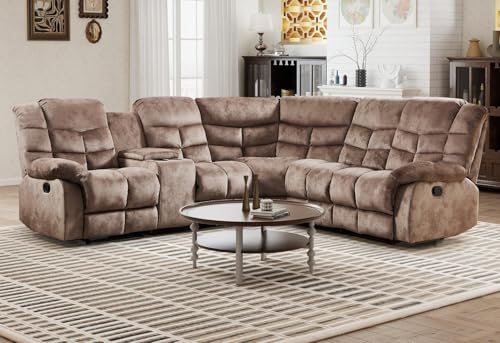
The best coffee table for a reclining couch is a low, lightweight table you can move, such as a lift-top, nesting or wheeled table, placed far enough from the couch that the footrest can fully extend; a fixed, heavy or tall table close to the sofa is the usual mistake. Measure the couch with the footrest open before you buy, because a recliner can add roughly 20 to 40 inches or more to its depth.
Our top picks



As an Amazon Associate we earn from qualifying purchases at no extra cost to you.
At a glance: coffee table types for a recliner
| Type | Best for | Typical stated features | Limits |
|---|---|---|---|
| Nesting or stacking tables | Flexible spaces; pulled out only when needed | Two or three tables of graduated size; light frames | Smaller tops; less storage |
| Lift-top coffee table | Eating, laptop work, storage | Top rises to a desk or dining height; hidden storage; makers list lift mechanism | Mechanism adds weight; top needs room to lift |
| Wheeled or caster coffee table | Moving out of the way when reclining | Locking casters; light frame | Locks need to hold; check floor type |
| Narrow or slim coffee table | Tight room layouts | Narrow depth, often 16 to 20 inches | Less surface; may feel small |
| Round or oval table | Traffic flow and kids | No sharp corners; usually a pedestal or tripod base | Round shapes can waste corner space |
| Ottoman or tray table | Soft-edge safety and casual use | Upholstered or tray top; makers list tray or storage design | Less stable surface for hot drinks unless a tray is used |
Why a recliner changes the choice
With a reclining couch, the footrest swings up and out in front of the seat. Makers publish both the seated depth and the fully extended depth in their specification sheets, and the extended figure is the one to use. A standard coffee table sits roughly 14 to 18 inches high and may be 16 to 24 inches or more in depth. Place it too close and the footrest can hit it. Place it too far away and it is hard to reach. Many shoppers leave a gap of at least a foot between the extended footrest and the table, and then choose a table that is easy to slide aside.
Measure in this order
- Extend the footrest fully and measure from the front of the couch base to the end of the footrest.
- Note the couch seat height and the highest point of the extended footrest.
- Decide the gap you want between footrest and table, for example about 12 inches.
- Measure the available floor distance in front of the couch and subtract footrest depth and gap.
- Choose a table whose depth fits the remaining space and whose height sits at or below seat height.
Options in detail
Nesting and stacking tables
Nesting tables slide together for storage and spread out when needed. Makers commonly list the top sizes for each piece. They suit recliners because you can pull one out for a drink and slide it away before reclining.
Lift-top tables
A lift-top table raises the surface toward your lap, which can help when eating or using a laptop from a sofa. They tend to be heavier and the lifted top extends toward the couch, so check the lifted position against the footrest as well as the closed position.
Wheeled tables
Casters let you roll the table away before reclining. Look for locking wheels, particularly on hard floors, and check the maker’s stated weight capacity. If you have children, use the locks and avoid heavy items on top.
Slim and C-shaped side tables
C-shaped or sled-base tables slide under the front of a couch or alongside the arm. Reclining couches often have a base that sits close to the floor, so check the clearance under the sofa and the table base height before expecting it to slide under.
Materials and care
Common materials include solid wood, engineered wood, metal and glass. Solid wood and metal tables are generally sturdier. Glass tops look light but can chip or break in a room with a footrest nearby; look for tempered glass if the maker states it, and consider rounded corners where recliners move. Wipe surfaces following the maker’s care instructions, and use coasters on wood finishes.
Safety notes
- Keep a clear path for the footrest to extend and retract; do not force it against a table.
- With power recliners, follow the manual for pinch points and never leave children or pets near moving parts.
- Choose rounded corners or soft edges if there are small children in the room.
- Use locking casters and keep hot drinks on stable surfaces.
- Keep cords for power recliners away from table legs and casters.
Budget tiers
| Tier | What you typically get | Trade-off |
|---|---|---|
| Budget | Simple nesting tables, engineered wood or metal frames, small tray tables | Lighter build; finish may wear sooner |
| Mid-range | Lift-top or wheeled tables, solid wood or sturdier metal, better hardware | Heavier; more moving parts |
| Premium | Solid hardwood, stone or heavy glass tops, custom sizes | Heavy and harder to move; costly if it must be replaced |
Pick X if…
| Pick this | If you… |
|---|---|
| Nesting tables | want to pull a surface out only when needed |
| Lift-top table | eat or work from the sofa and want storage |
| Wheeled table | need to roll it aside before reclining |
| Slim or C-shaped table | have a tight room and want a table close to the arm |
| Round or ottoman table | have children or heavy foot traffic |
Fit and compatibility notes
- Use the couch’s extended footrest depth, not the seated depth, in your measurements.
- Choose a table that is the same height as or lower than the seat, so the footrest clears it.
- For wall-hugger recliners, which move forward less, a shallower gap may be sufficient; check the maker’s stated clearance.
- If the couch is a sectional with multiple recliners, check each seat’s extended footprint.
- Check rug thickness if you plan to use casters.
Alternatives
- Side tables beside the arm: keep drinks within reach with no table in front.
- Recliner with built-in console or cup holders: avoids a coffee table entirely.
- Tray tables or lap desks: portable surfaces that store away.
- Cube ottomans with trays: soft edges and movable seating.
Layout ideas for common room sizes
In a small living room, a pair of nesting tables or a single wheeled table lets you reclaim space when the footrests are up. In a medium room, a lift-top or oval table placed beyond the footrest gap gives a central surface. In a large room with a sectional, a pair of smaller tables can work better than one large table because each can be moved independently. Keep at least a walking path on the side of the sofa that people use to enter.
If more than one person reclines at the same time, plan for the longest extended footprint across the row, because the footrests may all open together. Place a rug beneath the table zone and keep the footrest area uncluttered so it can extend freely. For power recliners, make sure the outlet and cord path do not run through the table’s path, and follow the maker’s instructions for the power supply.
Buying checklist
- Extended couch depth, seat height and footrest height from the maker’s specifications.
- Table height, depth and weight capacity as listed.
- Locking casters if the table rolls.
- Edge shape and material, especially with children or pets.
- Assembly requirements and whether hardware is included.
Frequently Asked Questions
How far should a coffee table be from a reclining couch?
Leave enough room for the footrest to fully extend with clearance, often at least a foot beyond the extended footrest. Use the maker’s stated extended depth rather than the seated depth.
What height should a coffee table be for a recliner?
Choose a table at or below the seat height, commonly around 14 to 18 inches, so the footrest passes over it. Check your couch’s specifications for the footrest height.
Are lift-top tables good with recliners?
They can be, if the lifted top and the footrest do not collide. Test the lifted position against the extended footrest measurement before buying.
Is a round or rectangular table better?
Round tables are easier to walk around and have no sharp corners, while rectangular tables offer more surface. The key factor is the depth available in front of the couch.
Can I put a coffee table under a reclining couch?
Only slim tables with low bases will slide close, and many reclining couches have mechanisms underneath. Check the clearance under the couch in the maker’s specifications.
Are glass coffee tables safe with recliners?
Glass can chip or break if hit by a moving footrest, so look for tempered glass with rounded edges if the maker states it. A wood or metal table is more forgiving in a room where footrests move.
More from Amazon
Programs that pair well with the guide above. Offers and eligibility are set by Amazon and may change.
Collect the home and kitchen items you want in one registry that guests can shop from.
Create a wedding registrySet up recurring deliveries of everyday items on eligible products. Terms and savings are set by Amazon.
Explore Subscribe & SaveFree shipping on eligible items, Prime Video and more. Eligible new members can start with a free trial.
Start a Prime free trialAudiobooks and podcasts to listen to on the go. Eligible new members can start with a free trial.
Try Audible freeAs an Amazon Associate we earn from qualifying purchases.