Key takeaways
- Weight and thickness: Anything under roughly 1mm will telegraph the foam underneath and wear thin at the seat edge. Look for descriptions in the 1.2mm range or fabrics explicitly labeled upholstery-grade rather than apparel or quilting cotton.
- Weave tightness: A dense plain weave resists snagging from belt buckles and pet claws. Loose, slubby textures look lovely in photographs but catch and pull once chairs get pushed under a table daily.
- Yardage math: Budget roughly half a yard per standard drop-in dining seat, plus 20% for pattern alignment and mistakes. A 57-inch-wide bolt covers two seats side by side, so buying in 2-yard increments usually cuts waste.
- Stretch and forgiveness: Fabrics with slight give conform around curved seat fronts without puckering. Rigid, canvas-stiff material fights you at the corners and shows every fold.
- Color strategy: Mid-tone neutrals and muted blues hide crumbs and shadowing better than pale cream or true black, both of which show every mark and every speck of lint.
What's inside
Dining chairs live a harder life than any other seat in the house. They absorb olive oil splashes, red wine near-misses, the scrape of denim, and the daily weight of people leaning back mid-conversation. Yet most fabric shopping happens visually — a swatch that flatters the walls, a colorway that photographs well — and the durability question only surfaces later, usually when a seat cushion starts pilling after eight months. The gap between “beautiful on the roll” and “still beautiful in year three” is where most reupholstery projects go wrong.
This guide approaches fabric the way a furniture specifier would: weight and weave first, color second. Below you’ll find fabrics sold by the yard that hold up to real dining use, plus two ready-made upholstered chair sets for anyone who would rather skip the staple gun entirely. Each pick is assessed on hand-feel, thickness, how it behaves around tight corners, and whether the finish reads as considered rather than crafty.
As an Amazon Associate we earn from qualifying purchases.



🛒 Best Price Today on Amazon
Prime members get fast, free shipping on everything above, plus member-only deals. New members get a 30-day free trial — cancel anytime.
How to Choose a Fabric For Upholstered Dining Chairs (2026)
- Weight and thickness: Anything under roughly 1mm will telegraph the foam underneath and wear thin at the seat edge. Look for descriptions in the 1.2mm range or fabrics explicitly labeled upholstery-grade rather than apparel or quilting cotton.
- Weave tightness: A dense plain weave resists snagging from belt buckles and pet claws. Loose, slubby textures look lovely in photographs but catch and pull once chairs get pushed under a table daily.
- Yardage math: Budget roughly half a yard per standard drop-in dining seat, plus 20% for pattern alignment and mistakes. A 57-inch-wide bolt covers two seats side by side, so buying in 2-yard increments usually cuts waste.
- Stretch and forgiveness: Fabrics with slight give conform around curved seat fronts without puckering. Rigid, canvas-stiff material fights you at the corners and shows every fold.
- Color strategy: Mid-tone neutrals and muted blues hide crumbs and shadowing better than pale cream or true black, both of which show every mark and every speck of lint.
The Best Fabric For Upholstered Dining Chairs (2026)s Reviewed
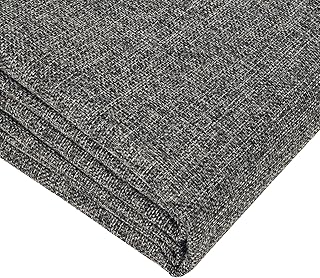
Heavy Linen Fabric, 1.2mm Dark Grey
At 1.2mm thick with a genuine linen hand, this is the most architectural option here — it holds a crisp fold at the seat corner and its dry, matte surface reads far more expensive than the price suggests. The dark grey is a smart choice for households with kids or pets, since it absorbs visual noise instead of broadcasting it.
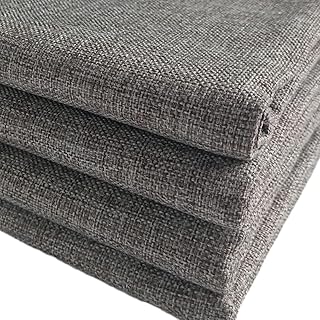
Faux Linen Needlework Fabric, Grey Blue
The 3.3-yard cut makes this the efficient pick if you’re doing a full set of four to six seats in one session, with enough left over for a matching bench or cushion. The grey-blue leans slightly cool and dusty, which pairs beautifully with warm oak and walnut rather than competing with them.
TinaKim Thick Chair Upholstery Fabric, Flaxen
Purpose-built for upholstery rather than adapted to it, this has the substance and slight stretch that makes stapling around curves genuinely pleasant. The flaxen tone is the closest thing to a universal neutral in this lineup — warm enough for farmhouse schemes, restrained enough for minimalist ones.
LaSilk Premium Upholstery Fabric, Navy Blue
Sold in single-yard increments, this is the one to reach for when you need to redo one damaged chair without committing to a full bolt. The thickened faux linen has a deep, saturated navy that stays true rather than fading toward slate, and it hides wear at the front seat edge exceptionally well.
COLAMY Wooden Dining Chairs, Set of 6, Beige
For anyone who’d rather buy the result than build it, this six-piece set delivers the upholstered-seat look with solid wood legs and foot pegs that add real lateral stability. The beige is a safe, warm neutral, though it’s the pick that will most reward a fabric protector spray on day one.
Frequently Asked Questions
How much fabric do I need for four dining chairs?
Plan on 2 to 2.5 yards of 57-inch-wide fabric for four standard drop-in seats. Add extra if your chairs have tall upholstered backs or if you’re working with a directional pattern that needs matching.
Is linen durable enough for everyday dining chairs?
Heavy linen and faux linen blends hold up well, provided the thickness is genuinely upholstery-grade. Lightweight dressmaking linen will abrade at the seat edge within a year of regular use.
Should I treat the fabric before installing it?
Yes — applying a fabric protector while the material is still flat is far easier and more even than treating an installed seat. It’s a ten-minute step that meaningfully extends the life of lighter colors.
Can I upholster over the existing fabric?
You can on a simple drop-in seat, and it saves time. But if the old fabric is stained or the foam is compressed, strip it back — layering over a lumpy base shows through no matter how good the new material is.
Final Thoughts
For the best balance of substance and style, the Heavy Linen 1.2mm in Dark Grey and the TinaKim Thick Chair Upholstery Fabric in flaxen are the two that behave most like true upholstery goods, handling curves cleanly and wearing evenly. If reupholstery isn’t your project, the COLAMY six-chair set gets you to a finished, cohesive dining room without a single staple.