Key takeaways
- Check tablecloth clip size, edge shape, fabric layers and finish compatibility before buying. Includes a contact and clearance worksheet.
What's inside
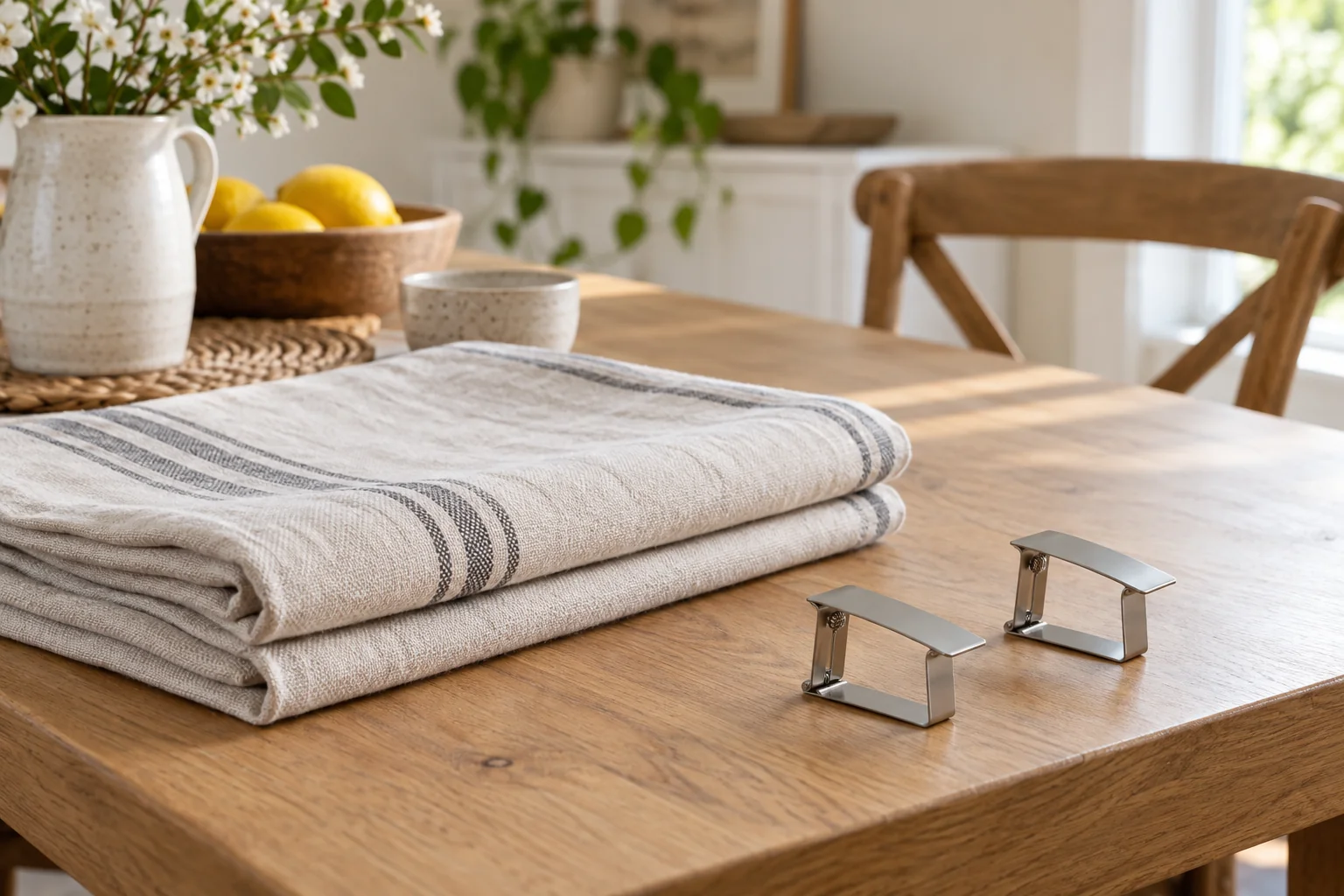
Check the complete contact area before fitting a clip
A tablecloth clip must match more than the table’s advertised thickness. Check the edge shape, the room beneath it, the fabric layers and whether the table maker permits that type of contact on the finish. A clip that opens far enough may still sit badly on a curved or beveled edge.
Begin with the clip’s stated size range and the exact table location where it would attach. Do not force a clip over an edge to find out whether it fits. This guide is a purchase and compatibility check, not an instruction to modify a clamp or a table.
Use a published size limit as one check
Coghlan’s tablecloth clamps, item 527, are specified for tables up to 2 inches or 5.1 cm thick. That is a product-specific maximum. It does not mean the clamps suit every surface finish, every edge shape or a table with additional padding above it.
Other clips may have a minimum as well as a maximum, or may be intended for a particular banquet-table edge. Record the actual product code and instructions. A listing saying fits most tables leaves the central measurement unanswered.
Check whether the quoted capacity includes fabric or is defined as bare-table thickness. If the maker does not say, ask. Do not use an assumed compression of the cloth or pad to make an over-limit arrangement look acceptable.
Measure where the clip will sit
Use a protected measuring method that will not mark the finish. Record the top’s thickness at the contact point and inspect the underside without moving heavy furniture unsafely. An apron, reinforcing rail or decorative molding may prevent the lower part of the clip from seating as intended.
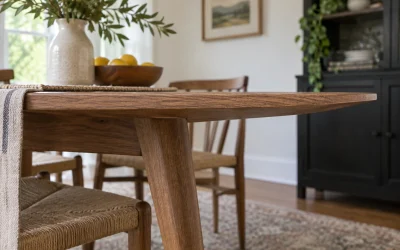
For a beveled edge, note both the thin outer lip and the thicker section farther inward. The clip’s reach determines which part it contacts. A single measurement taken at the thinnest visible point can therefore be misleading.
Include the intended cloth and any permitted table protector in your plan. A seam, folded hem or doubled corner can add thickness locally. Choose the attachment position before deciding which measurement represents the setup.
Use a contact worksheet
| Check | Record | Pass condition |
|---|---|---|
| Clip identity | Maker, product code and size range | Instructions match the item being bought |
| Edge section | Thickness and side profile | Within the permitted geometry |
| Fabric layers | Cloth, hem and protector arrangement | Included as the supplier requires |
| Underside access | Apron and molding positions | Clip can seat without obstruction |
| Surface compatibility | Table finish and clip contact material | Contact is permitted |
| Use location | Seat, corner or passage nearby | No snagging or interference |
Keep any unresolved field open. Being within a thickness range does not compensate for an unknown finish restriction. Ask the furniture and accessory suppliers about the specific combination rather than requesting a general assurance that the clip is safe.
A worked example with a beveled edge
Illustrative setup: a tabletop has a 20 mm outer lip and a 35 mm main section farther inward. A proposed clip reaches beyond the lip, so using 20 mm as the sole fit measurement would miss the thicker contact area. The cloth also has a doubled hem at the proposed location.
The buyer records both dimensions and sends a side-view photograph to the clip supplier. The next question is whether that profile and fabric arrangement fit the intended contact shape. There is no justified answer from maximum opening alone.
Suppose another location avoids the hem but puts the clip beside a chair arm. That location needs a practical seating check too. A secure cloth is not useful if the accessory catches clothing or interferes with pulling the chair out.
Protect the finish without improvising extra layers
Do not add adhesive foam, rubber scraps or folded fabric as an automatic protective fix. Those materials can alter fit, pressure or finish compatibility. Use only protection that both relevant instructions permit, and include it in the dimensional check.
When a manufacturer-approved initial fitting is possible, use the empty table and follow the prescribed method. Stop if the clip requires excessive force, rocks against the edge or leaves a mark. An inconspicuous trial does not authorize contact that the table maker has already prohibited.
Recheck when the table setup changes
A different tablecloth, a new pad or installed extension leaves can change the attachment locations. Repeat the relevant entries instead of assuming last month’s fit remains valid. Remove clips according to their instructions before folding or moving a table where that is required.
If no compatible clip is confirmed, consider a cloth size or purpose-designed alternative that the table and textile suppliers permit. Do not bend spring steel or reshape a plastic clip to stretch its stated range.
Save the final product code, permitted contact locations and cloth setup together. The decision should say why the clip fits this table, not merely that its package carries a large maximum thickness number.