Key takeaways
- Compare forced-air laboratory ovens for materials testing, with fan circulation, 300°C ranges, chamber sizes, and controls for drying and curing work.
Materials testing puts steady, repeatable heat at the center of the work. Whether the task is drying a sample before weighing, curing a coating, conditioning a polymer, or heat treating a small component, the oven has to hold the set temperature evenly across the whole chamber, not just near the heating element. A forced-air laboratory oven uses a fan to circulate hot air continuously, which reduces hot and cold spots compared with a still-air chamber and helps every sample on every shelf see close to the same conditions.
This guide explains the factors that matter most for testing work, then looks at three forced-air models: two 45-liter horizontal blast drying ovens with digital control up to 300 degrees Celsius, and a cube-shaped 14-inch chamber oven with an adjustable fan and a large viewing window.
How to Choose a Forced-Air Laboratory Oven for Materials Testing
Check the temperature range against your test methods
Begin with the highest and lowest temperatures your methods call for. Many drying, curing, and conditioning procedures sit well below 300 degrees Celsius, while others need headroom above a routine drying temperature. The ovens in this guide reach 300 degrees Celsius, listed as 572 degrees Fahrenheit, with a lower end a set amount above room temperature. Match that range to your written procedures, and leave margin for methods you may add later.
Look for fan circulation and temperature uniformity
Forced-air circulation is the defining feature to confirm. A fan-driven hot air circulation system moves heated air around the chamber and across the shelves, which supports uniform drying and more consistent results between samples placed in different positions. Check whether the listing describes the circulation system clearly, whether fan speed can be adjusted, and how the controller handles deviation. A controller with temperature correction or self-setting functions helps keep the displayed value aligned with conditions inside the chamber during long runs.
Size the chamber and shelves for your samples
Chamber volume alone does not tell the whole story. Look at the internal dimensions, the number of trays or shelves, and the load each tray can carry. A 45-liter chamber with two adjustable trays suits batches of small parts, containers, or instruments spread across two levels. A cube-shaped chamber suits taller or bulkier items that would not fit between closely spaced shelves. Measure your largest sample or fixture, including any stand or tray it sits on, and compare it with the chamber dimensions before ordering.
Check controls, timing, and safety features
Digital control with a clear display makes it easier to set and repeat a procedure. Look for button or knob controls that can be operated accurately, a timing function for runs that end on schedule, and alarm functions that flag a problem. Overheat protection, a secure door latch, and heat dissipation features that support stable long-term operation all matter in a busy laboratory. A viewing window is also worth checking, since it allows a sample to be observed during heating without opening the door and disturbing chamber conditions.
1. SODONAD Horizontal Electric Blast Drying Oven 45L

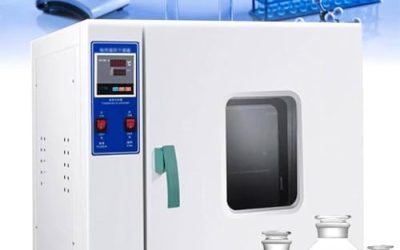
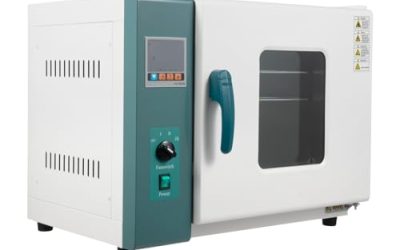
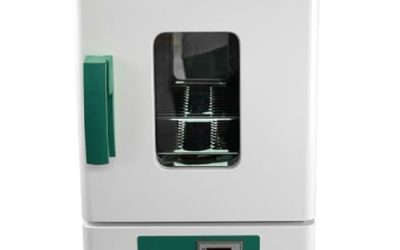
The SODONAD horizontal electric blast drying oven is a 45-liter, 12-gallon forced-air convection model built for laboratory drying, baking, wax melting, and heat treatment work. The listing describes a hot air circulation system for uniform drying, with a maximum temperature of 572 degrees Fahrenheit and a minimum set point 18 degrees Fahrenheit above room temperature. Power is listed at 1000 watts on 110 volts, in a freestanding horizontal format.
For materials testing, the two adjustable trays are a practical detail, since each tray is listed as bearing up to 33 pounds, allowing heavier fixtures or multiple containers to be spread across two levels. Temperature and time are set with buttons below the display screen, an arrangement the maker presents as straightforward to operate. Double-row heat dissipation holes are included to exhaust hot air during operation and support stable running over longer procedures.
- View on Amazon: https://www.amazon.com/dp/B0DPHG2J32
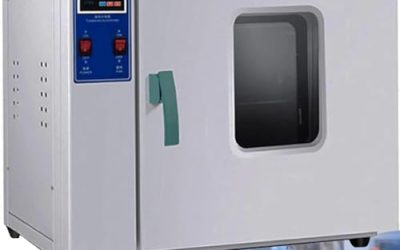
2. sertheha Digital Lab Forced Air Convection Drying Oven 45L

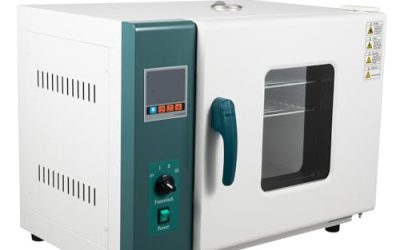
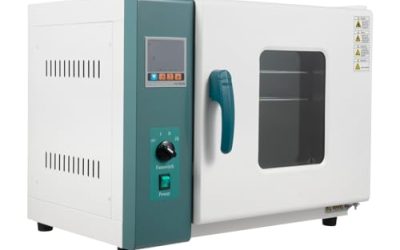
The sertheha drying oven, model 101-0AB, is another 45-liter, 12-gallon forced-air convection option with a stated temperature range from room temperature plus 10 degrees Celsius to 300 degrees Celsius, also expressed as room temperature plus 18 degrees Fahrenheit to 572 degrees Fahrenheit. It runs at 1000 watts on 110 volts, with button control and a side-opening door.
Construction is listed as cold plate with stainless steel, a combination aimed at a durable exterior and a chamber surface suited to repeated heating and cleaning cycles. The tray maximum loading is listed at 15 kilograms, or 33 pounds, which gives a clear limit to work to when loading dense materials, metal parts, or filled containers. This model suits a laboratory that wants the same core 45-liter format and 300-degree ceiling, with the full specification set out in metric and imperial units for comparison against written test methods.
- View on Amazon: https://www.amazon.com/dp/B0DK539497
3. Sidawhope Digital Forced Air Convection Drying Oven RT-300

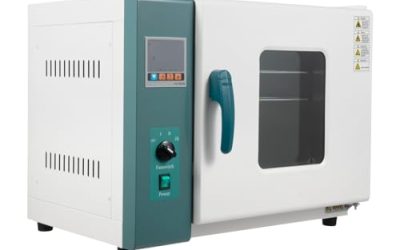
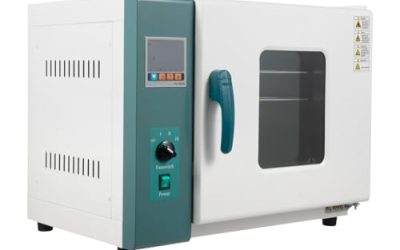
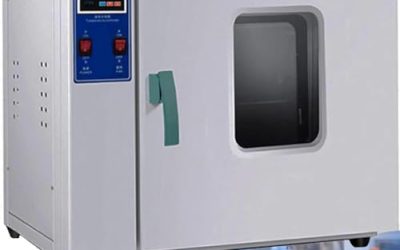
The Sidawhope RT-300 takes a different shape, with a chamber measuring 14 by 14 by 14 inches and a large toughened glass window in the door. That window allows the contents to be observed during a run without opening the door, which helps when a test involves watching a coating cure, a sample change appearance, or a material soften at a known point in the cycle.
Temperature control covers room temperature to 300 degrees Celsius, with an adjustable fan speed switch, a timing function, temperature deviation correction, and temperature control self-setting. Power is listed at 1 kilowatt. Overheat protection and a secure door latch are included. The cube chamber and adjustable airflow make this model a strong fit for single larger items, small kiln-style work, and procedures where visual checks during heating are part of the method.
- View on Amazon: https://www.amazon.com/dp/B0CGMVSCFB
Forced-Air Laboratory Ovens at a Glance
| Oven | Chamber | Temperature range | Power | Notable feature |
|---|---|---|---|---|
| SODONAD Horizontal Blast Drying Oven | 45 L / 12 gal, 2 trays | Up to 572°F | 1000W, 110V | Hot air circulation, display with button control |
| sertheha Digital Lab Drying Oven 101-0AB | 45 L / 12 gal | RT+10°C to 300°C | 1000W, 110V | Cold plate and stainless steel build, side-opening door |
| Sidawhope RT-300 | 14 x 14 x 14 inch chamber | RT to 300°C | 1 kW | Adjustable fan, toughened glass viewing window |
Frequently Asked Questions
Why choose a forced-air oven over a gravity convection oven for materials testing?
A forced-air oven uses a fan to circulate heated air, which supports more even temperatures across shelves and sample positions. That consistency matters when results from different samples, or from repeat runs, need to be compared. Gravity convection relies on natural air movement and can leave larger differences between the top and bottom of the chamber.
What temperature range do materials testing ovens need?
It depends on the method. Routine drying often uses moderate temperatures, while curing, conditioning, and some heat treatment procedures run higher. The ovens in this guide reach 300 degrees Celsius. Check each written procedure you follow, confirm the required temperature and hold time, and choose an oven whose stated range covers those values with room to spare.
How should samples be loaded for even results?
Spread samples across the trays without blocking airflow, leave space between containers, and stay within the tray load limit stated for the oven. Avoid packing the chamber tightly, since crowded loading restricts circulation. Keep samples away from direct contact with chamber walls where possible, and use the same loading pattern for repeat runs so conditions stay comparable.
Disclosure: As an Amazon Associate, we earn from qualifying purchases.
More from Amazon
Programs that pair well with the guide above. Offers and eligibility are set by Amazon and may change.
Collect the home and kitchen items you want in one registry that guests can shop from.
Create a wedding registrySet up recurring deliveries of everyday items on eligible products. Terms and savings are set by Amazon.
Explore Subscribe & SaveFree shipping on eligible items, Prime Video and more. Eligible new members can start with a free trial.
Start a Prime free trialAudiobooks and podcasts to listen to on the go. Eligible new members can start with a free trial.
Try Audible freeAs an Amazon Associate we earn from qualifying purchases.