Key takeaways
- Find the best laboratory drying ovens for academic laboratories, with simple controls, safe operation, and bench-friendly sizes for teaching labs.
The best laboratory drying ovens for academic laboratories have to do two jobs at once: support real teaching and research, and survive daily use by many different hands. In a university or college lab, the same oven may dry glassware for an undergraduate practical in the morning, condition samples for a student project in the afternoon, and hold materials for a research group in the evening. Controls need to be clear enough for a new student to follow, safety features need to be built in rather than assumed, and the unit needs to be robust enough for shared use across semesters.
Academic labs also have practical constraints that shape the choice. Bench space is shared, budgets are set by department, and equipment is often moved between rooms or stored between terms. A compact benchtop oven that runs on a standard 110-volt supply, warms up in a predictable way, and is easy to clean after a class will serve a teaching lab better than a large industrial unit that needs a dedicated circuit and a permanent home. The picks below focus on that balance: clear digital control, useful capacity for class batches, and features that help students learn good practice.
How to Choose a Drying Oven for an Academic Lab
Simple, readable controls
Students and new researchers should be able to set a temperature and a time without a long training session. A digital display with button controls, a clear set point, and a timer is easier to teach than a small analog dial with no numeric feedback. A PID controller is a plus because it holds temperature steadily and gives students a stable result to observe. Keep a one-page instruction sheet beside the oven with the standard set points for each practical.
Safety for shared use
Over-temperature protection and an over-temperature alarm are essential in a teaching lab, where a mistyped set point is a realistic risk. A viewing window lets students check samples without opening the door, which keeps the chamber temperature stable and reduces burn risk. The door handle, the exterior temperature during a run, and the placement of the oven away from walkways all matter when many people pass the bench.
Capacity for class batches
A teaching practical often needs the same glassware or the same sample set for a whole class group. Count the pieces in a typical batch before choosing a size. A 45-litre oven with two shelves can dry a full class set in one run, while an 18-litre oven suits a small group or a single project bench. Check the load limit per shelf as well as the total volume, because a shelf full of beakers and flasks is heavier than it looks.
Temperature range for teaching methods
Most teaching methods use drying between 100 and 150 degrees Celsius, with some gentle drying near 60 degrees Celsius and some heat treatment near 250 degrees Celsius. A range from room temperature plus 10 degrees Celsius to 300 degrees Celsius covers that teaching range comfortably. If the department also runs materials or soils work, confirm that the upper end of the range reaches the highest temperature in the method.
Durability and easy cleaning
Shared equipment gets more wear than a single-user instrument. A stainless steel or galvanized steel chamber, removable shelves, and a smooth exterior are easier to clean after a spill. Trays that lift out let technicians wash them separately and inspect the chamber. Avoid an oven with fragile internal fittings that a hurried student could bend or break.
Bench fit, power, and storage
Measure the bench before ordering, including the depth needed for the door to open and for ventilation around the unit. A 110-volt, 1000-watt or 600-watt oven fits a standard lab supply, but check the circuit load if several ovens share one bench. A lighter benchtop unit is easier to move between teaching rooms or into storage between terms, while a heavier 71-pound unit is better left in one place.
Product Picks
1. SODONAD 45L Horizontal Electric Blast Drying Oven, Model 101-0AB

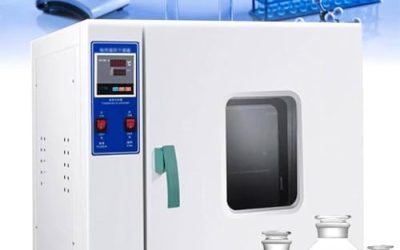
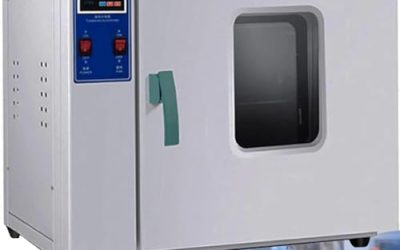
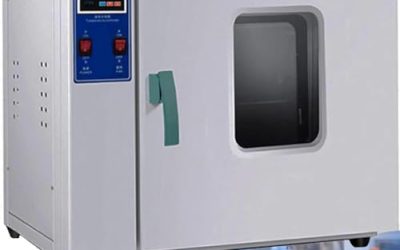
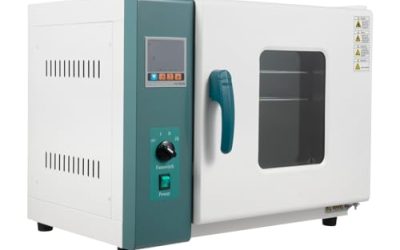
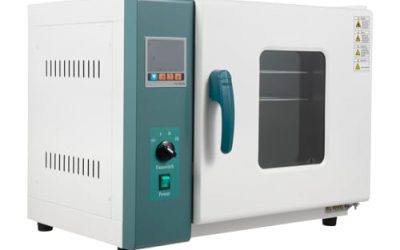
The SODONAD 45-litre oven is the best fit for an academic lab that needs to dry a full class batch in one run. It is a forced-air convection oven rated at 110 volts and 1000 watts, with a temperature range from room temperature plus 10 degrees Celsius to 300 degrees Celsius, or room temperature plus 18 degrees Fahrenheit to 572 degrees Fahrenheit. The listing states a temperature fluctuation of plus or minus 1 degree Celsius and a temperature resolution of 0.1 degrees Celsius, which gives students a stable, readable set point to work with.
Two adjustable trays, each rated to 15 kilograms, hold a large load of glassware or sample containers. A large double-layer tempered glass observation window lets a class see the load without opening the door, which is useful for teaching and for keeping the chamber stable. Heat dissipation holes and a top drainage hole help moist air leave the chamber during drying.
This oven suits a teaching lab with regular practical classes and a research group that shares the same bench. The main limitation is its size and weight: at 71 pounds, with external dimensions of 46.5 by 65 by 49.5 centimetres, it needs a sturdy, permanent bench position and should not be moved between rooms often. The listing also describes the oven as suitable for schools and research institutes, which matches academic use directly.
2. Microyn 18L Digital Bench-Top Gravity Convection Drying Oven, Model MT-WHL-25AB

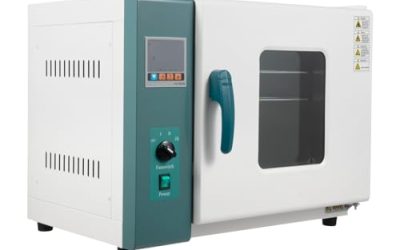
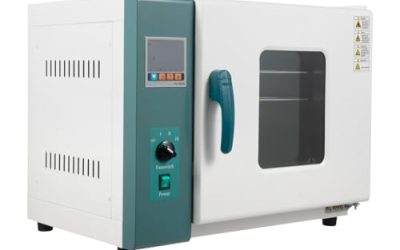
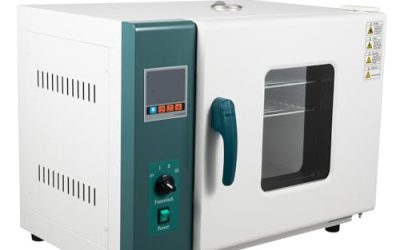
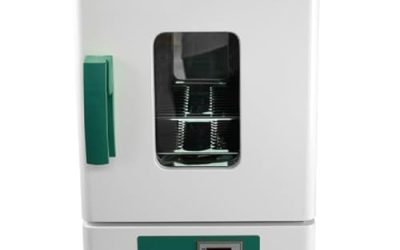
The Microyn 18-litre oven is the compact teaching option. It is a gravity convection oven rated at 600 watts and 110 volts, with a temperature range from room temperature plus 10 degrees Celsius to 300 degrees Celsius, controlled by a PID micro-computer controller with over-temperature protection. The inner chamber measures 260 by 260 by 260 millimetres, and the unit includes two shelves, each rated to 15 kilograms, plus a viewing window.
Gravity convection is easy to explain in a teaching setting: heated air rises naturally through the chamber, so students can see why load placement and spacing matter. With no fan, there is one less moving part to maintain, and the smaller chamber warms up in a way that suits short practical sessions. The programmable timer runs to 9999 minutes, so a long drying step can be set and left to finish at a defined time.
This oven suits a small teaching group, a student project bench, or a department that needs a second oven for a single course. The limitation is capacity: 18 litres will not hold a full class batch, so it works best alongside a larger oven or for small-group work. Loads should be kept light and spaced apart so the natural convection can reach every container.
Comparison Table
| Product | Key Features | Best For |
|---|---|---|
| SODONAD 45L, Model 101-0AB | 45L forced-air convection, 110V, 1000W, RT+10 to 300 degrees C, plus or minus 1 degree C fluctuation, 0.1 degree C resolution, 2 trays at 15 kg each, observation window | Full class batches in teaching labs |
| Microyn 18L, Model MT-WHL-25AB | 18L gravity convection, 600W, 110V, RT+10 to 300 degrees C, PID control, over-temperature protection, 2 shelves at 15 kg each, viewing window | Small groups, project benches, and second ovens |
Frequently Asked Questions
What size drying oven does a teaching lab need?
Count the glassware or samples in a typical practical batch, then choose a chamber that holds that batch on its shelves with room for air to move. A 45-litre oven suits a full class group, while an 18-litre oven suits a small group or a single project.
Is a digital controller important for students?
Yes. A digital display with a clear set point and timer is easier to teach and easier to repeat than an analog dial. Students can record the exact set temperature and time in their lab notes, and the next group can follow the same settings.
What safety features should an academic drying oven have?
Look for over-temperature protection, an over-temperature alarm, a viewing window, and a door that stays secure during a run. Keep the oven away from walkways, post a simple instruction sheet beside it, and train every new user before their first run.
Can students use the oven for research projects as well as practicals?
Yes, provided the project method fits the oven temperature range and the load fits the chamber. A research group that needs long, stable runs should check the timer range and the temperature stability figures in the listing before relying on the oven for project work.
How should a shared academic oven be maintained?
Wipe the chamber after spills, check the door seal regularly, and keep shelves clean and undamaged. Record a temperature check with a reference thermometer at the start of each term and after the oven is moved. Store the manual with the unit so every user can find the use steps.
Conclusion
For academic laboratories, the best laboratory drying ovens for academic laboratories are the ones that are simple to teach, safe for shared use, and sized to the class batch. The SODONAD 45-litre oven is the strongest pick for a teaching lab that dries a full class set in one run, with forced-air convection and a clear digital controller. The Microyn 18-litre oven is the right companion for small groups, project benches, and departments that need a compact second unit. Either way, post clear instructions beside the oven, keep loads spaced for even heating, and check temperature with a reference thermometer at the start of each term.
Disclosure: As an Amazon Associate, we may earn from qualifying purchases.
More from Amazon
Programs that pair well with the guide above. Offers and eligibility are set by Amazon and may change.
Collect the home and kitchen items you want in one registry that guests can shop from.
Create a wedding registrySet up recurring deliveries of everyday items on eligible products. Terms and savings are set by Amazon.
Explore Subscribe & SaveFree shipping on eligible items, Prime Video and more. Eligible new members can start with a free trial.
Start a Prime free trialAudiobooks and podcasts to listen to on the go. Eligible new members can start with a free trial.
Try Audible freeAs an Amazon Associate we earn from qualifying purchases.